Read Time
For many travelers, the idea of trekking in the Himalayas brings equal parts excitement and uncertainty. Questions quietly arise: Is the Ghorepani Poon Hill Trek Difficult? Will it be too hard? Am I fit enough? What about the altitude?
Will it be too difficult?
This is usually the first question people ask. The fear is that Himalayan trekking means long, exhausting days or technical climbs. In reality, not all treks in Nepal are extreme. Routes like the Ghorepani Poon Hill Trek are specifically designed to be achievable, with well-marked trails, manageable daily distances, and regular rest stops. The focus is on steady walking rather than physical toughness, making the journey feel challenging enough to be rewarding—but never overwhelming.
Am I fit enough?
Many travelers worry they need to be “very fit” or athletic to trek in the mountains. The truth is, you don’t need special training or prior trekking experience. If you can walk comfortably for several hours a day, handle stairs at a relaxed pace, and enjoy being active, you already have the foundation you need. Trekking here is not a race; guides set a gentle pace, and frequent breaks allow your body to recover naturally.
How will my body react to the altitude?
Altitude is another common concern, especially for those who haven’t been above 2,500 meters before. On beginner-friendly treks like Poon Hill, altitude gain is gradual, sleeping elevations remain moderate, and the highest point is reached only for a short sunrise hike. This slow ascent gives your body time to adapt, and serious altitude issues are rare. Mild breathlessness is normal, but it passes quickly with rest and hydration.
Together, these concerns are completely valid—and reassuringly manageable. With a sensible itinerary, proper pacing, and attentive guidance, trekking in the Himalayas becomes less about fear and more about discovery. What often begins with uncertainty transforms into confidence, as each step proves that the mountains are not as intimidating as they first appear.
The beauty of the Ghorepani Poon Hill Trek lies in its balance. It offers a genuine Himalayan experience without demanding extreme endurance or technical skills. This is a trek designed not to test limits, but to welcome you into the mountains at a gentle, human pace. This trek is widely regarded as easy to moderate, making it one of Nepal’s most approachable Himalayan routes.
Well-suited for:
- First-time trekkers in Nepal
- Families with older children
- Active seniors
- Travelers with average fitness and a love for walking
You don’t need prior trekking experience or special training. What truly matters is:
- Walking steadily
- Taking regular breaks
- Letting the mountains set the rhythm
Many guests start with hesitation — and finish with confidence.
Terrain: Varied, Scenic & Well-Defined
The trail unfolds gently through changing landscapes, keeping each day interesting without feeling overwhelming.
Expect to walk on:
- Stone staircases (notably the Ulleri section)
- Forest trails shaded by rhododendrons and oak trees
- Village paths connecting Gurung and Magar settlements. Open ridgelines with wide mountain views
While there are uphill climbs, they are short, structured, and broken by tea houses. These natural rest points turn effort into enjoyment — a cup of tea, a friendly smile, and another beautiful view waiting just ahead.
Altitude: Safe, Gradual & Beginner-Friendly
Altitude is often the biggest concern for first-time trekkers, and understandably so. Many people associate Himalayan trekking with extreme heights and difficult acclimatization. The Ghorepani Poon Hill Trek, however, is specifically known for being one of the safest and most altitude-friendly routes in Nepal, making it an excellent choice for beginners.
What makes this trek reassuring is the controlled and gradual ascent. Rather than gaining height too quickly, the trail climbs steadily over several days, allowing your body to adapt naturally to the thinner air.
Key altitude points to note:
- Highest point: Poon Hill at 3,210 meters (10,531 feet)
- Sleeping elevations: Always lower than the highest viewpoint, which supports better acclimatization
- Ascent profile: Slow, progressive altitude gain with no sudden jumps
Because of this thoughtful elevation profile, the risk of serious altitude-related issues is very low. Most trekkers experience little more than mild breathlessness during uphill sections, which is completely normal at higher elevations and quickly resolves with rest.
The early morning hike to Poon Hill is often the most anticipated moment of the trek. While the climb may feel slightly more challenging due to the altitude and the early hour, it is short, well-paced, and non-technical. After enjoying the sunrise views, the trail descends again, allowing your body to recover easily.
Fitness: What You Really Need
One of the most reassuring aspects of the Ghorepani Poon Hill Trek is that it does not require peak physical fitness or an athletic background. This trek is designed for ordinary travelers with an active lifestyle, not seasoned mountaineers. If you consider yourself “comfortably active,” you are already on the right track. You are well-prepared for this trek if you can:
- Walk for 5–7 hours a day at a relaxed pace, with regular breaks for tea, meals, and rest
- Climb and descend stairs steadily without the need to rush or push yourself
- Enjoy walking-based activities such as long city walks, nature trails, or light hiking in your daily life
The key is endurance rather than intensity. Trekking days are broken into manageable sections, and guides maintain a slow, consistent pace that allows everyone to walk comfortably. You are never expected to hurry, compete, or keep up with faster trekkers.
Simple preparation before your trip can make the experience even more enjoyable. Regular walking, short hikes, stair climbing, or light cardio activities like cycling or swimming help build confidence and leg strength. Even 20–30 minutes a day, a few weeks before departure, can make a noticeable difference.
Final words on Ghorepani Poon Hill Trek Difficult
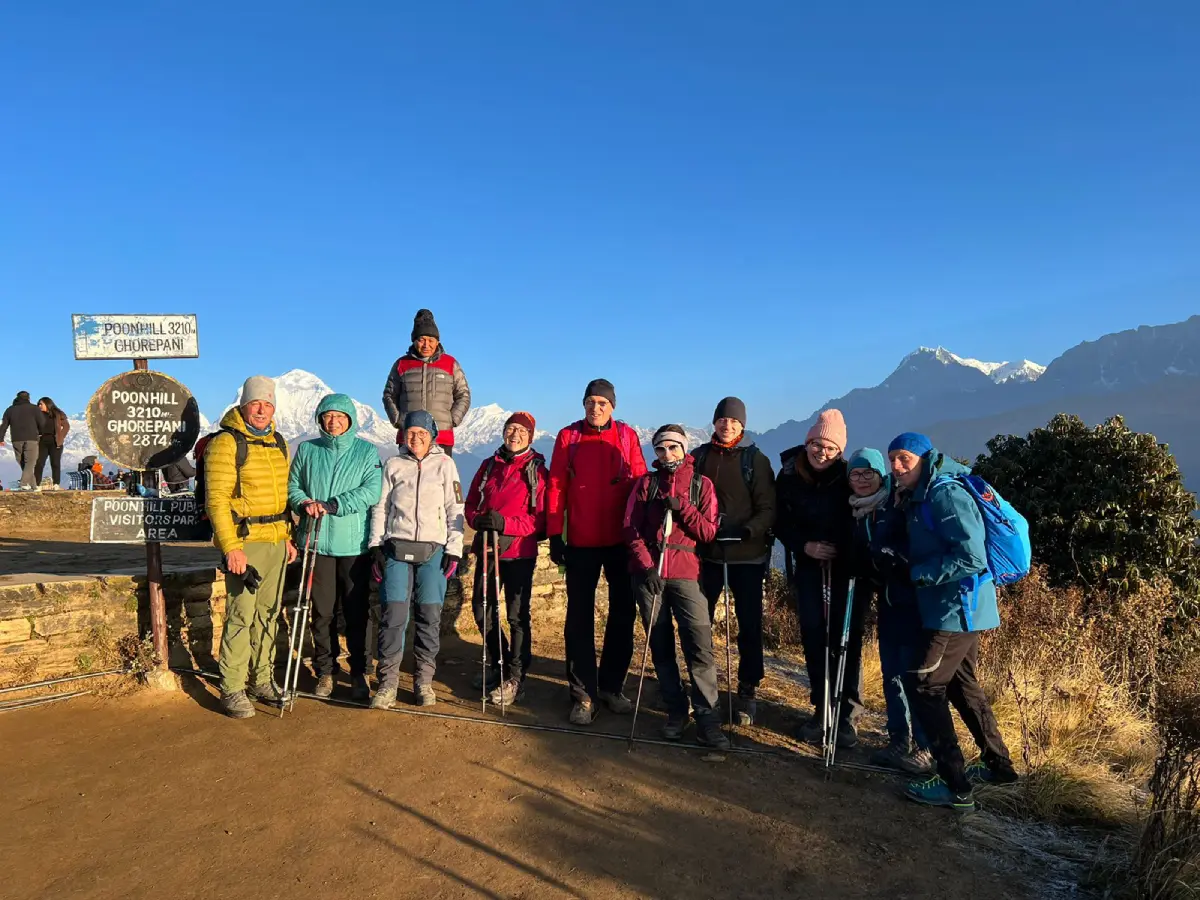
The most demanding moment isn’t the climb – it’s waking up early for the Poon Hill sunrise. But standing quietly as Annapurna, Dhaulagiri, and Machhapuchhre emerge in golden light, surrounded by cool mountain air and hushed anticipation, makes every step worthwhile. It’s a moment that stays with you long after the trek ends.
The Ghorepani Poon Hill Trek isn’t about pushing yourself to extremes. It’s about walking mindfully, breathing deeply, and connecting with the mountains – one step at a time.
If you’re looking for a Himalayan journey that feels achievable, rewarding, and deeply memorable, this trek may be exactly what you’ve been searching for.
Explore our detailed Ghorepani Poon Hill Trek itinerary and discover how we strike a balance between comfort, safety, and authentic mountain experiences every day.
FAQ for Ghorepani Poon Hill Trek Difficult
Is the Ghorepani Poon Hill Trek difficult for beginners?
The trek is easy to moderate and suitable for beginners with average fitness. Trails are well-marked, and tea houses are available along the route.
How challenging is the Ghorepani Poon Hill Trek?
While there are uphill sections, especially to Poon Hill viewpoint, the overall difficulty is manageable for most trekkers.
Do I need prior trekking experience for Poon Hill?
No. Basic fitness and stamina are enough to enjoy the trek safely. It’s ideal for first-time trekkers.
What is the elevation gain on the trek?
Poon Hill reaches 3,210 meters (10,532 ft). The gradual ascent makes it less strenuous than higher Himalayan treks.
How can I make the Ghorepani Poon Hill Trek easier?
Walk at a steady pace, take breaks, stay hydrated, wear proper trekking shoes, and trek during the best seasons (March–May, September–November).
Is the trek safe during monsoon season?
Heavy rainfall can make trails slippery and challenging. Avoid monsoon opt for spring or autumn for safer trekking conditions.