Read Time
One of the questions we hear most from trekkers is, “How far will we actually walk each day?” There’s no single answer because the total distance depends on your itinerary, where you start the trek, and whether you include side trips like Tsum Valley. In this guide, we’ve broken everything down using the routes we regularly operate, so you’ll know what to expect before you arrive in Nepal.
Throughout this guide, we’ll explain the total trekking distance, daily walking hours, altitude gain, route variations, and what you can realistically expect on the trail. The information is based on the routes we regularly operate and the questions our guides answer most often during the trek.
Quick Summary
The Manaslu Circuit Trek covers 150–177 km (93–110 miles). Most itineraries take 14–18 days. Expect to walk 5–7 hours daily. The biggest challenge is crossing Larke Pass (5,106 m), not the distance itself. Adding the Tsum Valley extension increases the trek by 45–60 km.
Manaslu Circuit Trek Distance at a Glance
| Detail | Information |
| Distance | 150–177 km |
| Duration | 14–18 days |
| Walking Hours | 5–7 hours |
| Highest Point | Larke Pass (5,106 m) |
| Difficulty | Moderate to challenging |
Manaslu Circuit Trek Distance and Duration: How Long Does It Take?
Most people complete the Manaslu Circuit Trek in about two weeks, although the exact number of days depends on the itinerary you choose. Some trekkers prefer a shorter schedule, while others add extra acclimatization days or include Tsum Valley.
If you’re short on time, some agencies offer a compressed 12-day version. This option is generally recommended only for trekkers with previous high-altitude experience because it reduces the time available for acclimatization. Since acclimatization is critical for a safe and enjoyable trek, it’s not something you should rush.
On the other end, extended itineraries stretch to 18 to 22 days when you add the Tsum Valley. This beautiful, less-visited side route follows an ancient trade path toward Tibet. Tsum Valley adds roughly 4 to 5 extra trekking days and gives you a very different cultural experience with older monasteries, fewer trekkers, and a slower pace.
In addition, weather plays a role in the overall Manaslu Circuit Trek distance experience. Snowfall near Larke Pass or delays on the road journey from Kathmandu to the trailhead can add a day or two. It’s a good idea to include at least one buffer day, especially during the shoulder seasons (March and November), when mountain weather can change quickly.
Therefore, the duration of the Manaslu Circuit Trek depends on three main factors:
- Your chosen itinerary
- Your acclimatization schedule
- Whether you include the Tsum Valley extension
It’s also a good idea to keep one or two extra days in your overall travel plan. Road conditions between Kathmandu and the trailhead can occasionally cause delays, especially during the monsoon season or after heavy rainfall. Weather at higher elevations, particularly around Larke Pass, may also affect your schedule if snowfall or strong winds make crossing the pass unsafe. Having a buffer day gives you more flexibility and helps you enjoy the trek without feeling rushed.
What Is the Total Distance of the Manaslu Circuit Trek?
The Manaslu Circuit Trek distance is generally between 150 and 177 kilometers (93 to 110 miles), depending on the itinerary you choose. This range exists for a simple reason: there’s no single, universally agreed starting and ending point.
Some itineraries begin the walking distance from Soti Khola, while others start the road-drive further ahead at Machha Khola, shaving off roughly 10 to 14 kilometers of trail walking. Similarly, the trek can end at Dharapani or continue on to Besisahar, adding distance if you’re linking into the Annapurna region.
Furthermore, the Tsum Valley extension adds approximately 45 to 60 kilometers, depending on how far into the valley you trek. This is one reason you’ll see different total distances across websites. Another reason is that trekking companies don’t always measure the route the same way. At Euro Asia Treks, we calculate the distance based on the actual walking sections of the trek rather than including road transfers. When comparing itineraries, it’s worth checking whether the published distance refers only to trekking days or also includes the driving portions.
Therefore, most trekkers can think of the classic Manaslu Circuit Trek distance as 150–160 km. If you include the Tsum Valley extension, add another 45–60 km. Focus on daily elevation gain, not just total distance. That’s what makes the trek challenging.
If you’re planning the complete journey, our 23 Days Manaslu Circuit Trek itinerary shows how these daily distances fit into a full trekking schedule, including acclimatization days and village-by-village stops.
Manaslu Circuit Trek Distance: Day-by-Day Breakdown
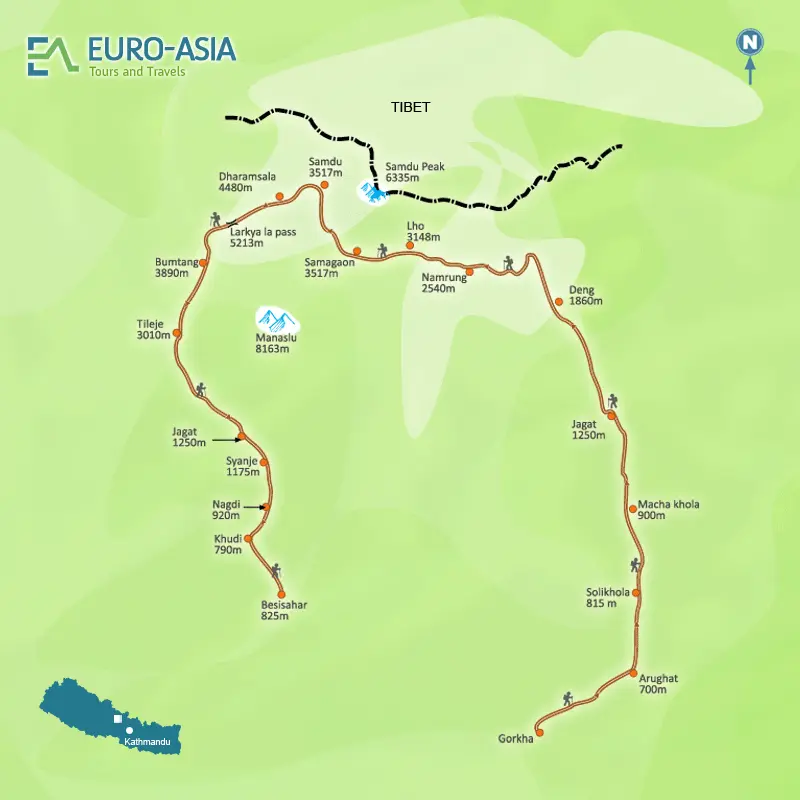
Here’s a realistic look at the Manaslu Circuit Trek distance based on a standard 15-day itinerary from Soti Khola to Besisahar, excluding the Tsum Valley extension. Actual distances may vary slightly depending on trail conditions and your agency’s itinerary.
| Day | Route | Distance | Walking Hours | Elevation | Difficulty |
| 1 | Kathmandu to Soti Khola (drive) | 141 km (drive) | — | 700 m | Easy |
| 2 | Soti Khola to Machha Khola | 14 km / 8.7 mi | 6–7 hrs | 869 m | Moderate |
| 3 | Machha Khola to Jagat | 21 km / 13 mi | 6–7 hrs | 1,340 m | Moderate |
| 4 | Jagat to Deng | 20 km / 12.4 mi | 6–7 hrs | 1,860 m | Moderate |
| 5 | Deng to Namrung | 19 km / 11.8 mi | 5–6 hrs | 2,630 m | Moderate |
| 6 | Namrung to Lho | 17 km / 10.6 mi | 5–6 hrs | 3,180 m | Moderate |
| 7 | Lho to Samagaon | 8 km / 5 mi | 4–5 hrs | 3,530 m | Moderate |
| 8 | Samagaon (acclimatization day) | Short hikes | 3–4 hrs | 3,530 m | Easy |
| 9 | Samagaon to Samdo | 10 km / 6.2 mi | 4–5 hrs | 3,875 m | Moderate |
| 10 | Samdo (acclimatization/side trip) | Short hikes | 3–4 hrs | 3,875 m | Easy |
| 11 | Samdo to Dharamsala (Larke Phedi) | 8 km / 5 mi | 4–5 hrs | 4,460 m | Moderate |
| 12 | Dharamsala to Bimtang via Larke Pass | 15 km / 9.3 mi | 8–9 hrs | 5,106 m (pass) → 3,720 m | Hard |
| 13 | Bimtang to Tilije | 20 km / 12.4 mi | 6–7 hrs | 2,300 m | Moderate |
| 14 | Tilije to Dharapani | 8 km / 5 mi | 3–4 hrs | 1,860 m | Easy |
| 15 | Dharapani to Besisahar (drive) then Kathmandu | Drive | — | 760 m | Easy |
Notice how the daily distance actually drops as you gain altitude, even though the difficulty increases. That’s intentional. Shorter distances at higher elevation give your body time to adjust to thinner air, and it’s exactly why day 12 (crossing Larke Pass) is the longest walking day despite a modest 15-kilometer distance. At 5,106 meters, every kilometer takes noticeably more effort and more time than the same distance would at lower elevation.
Average Walking Hours on the Manaslu Circuit Trek
On the Manaslu Circuit, you’ll walk an average of 5 to 7 hours per day. However, the exact walking time depends on your location along the trail. Lower valley days, especially during the first week, are generally easier. The trails are gentler, and the altitude has less impact on your pace.
Although the Manaslu Circuit Trek distance is important, daily elevation gain often has a bigger impact than the number of kilometers you walk.
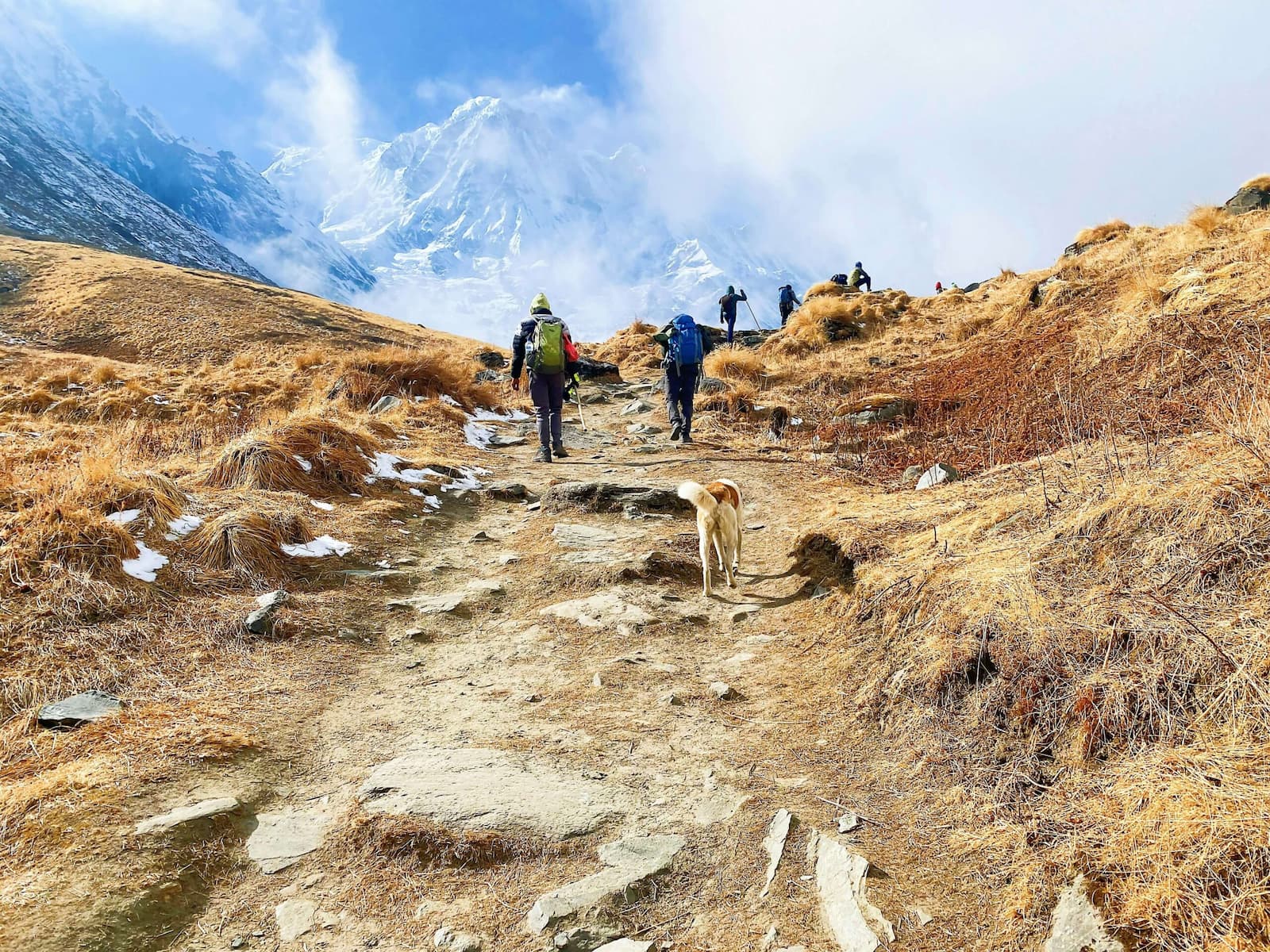
As you continue beyond Namrung toward Samagaon, your pace naturally slows because of the increasing altitude. In fact, altitude affects your walking speed more than the actual distance. For example, walking 10 kilometers at 3,800 meters takes much longer than walking the same distance at 1,500 meters. Your body works harder because there is less available oxygen at higher elevations.
Trail conditions also influence how long you’ll walk each day. During spring and autumn, most sections of the trail are dry and comfortable to hike. After heavy rain, lower areas can become muddy, while snow near Larke Pass often slows progress. Our guides adjust the pace according to trail conditions so trekkers can walk safely without feeling rushed.
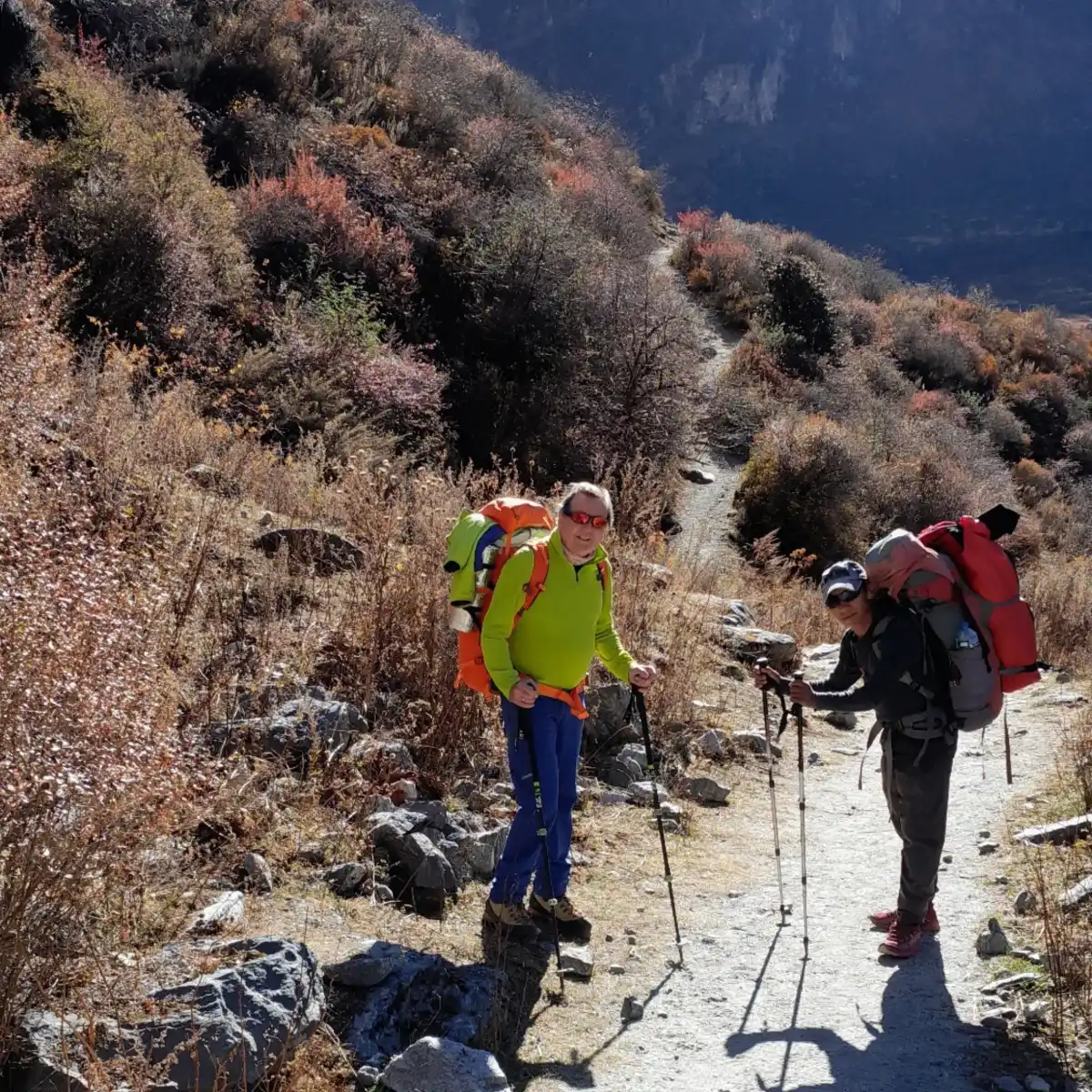
Physical fitness certainly helps, but success on the Manaslu Circuit depends just as much on pacing and acclimatization. Our local guides have seen first-time trekkers complete the route comfortably by walking at a steady rhythm, while experienced hikers sometimes struggle because they try to move too quickly. Instead of focusing on speed, keep a comfortable pace, take regular breaks, and listen to your guide’s advice. This approach helps your body adapt to the altitude and makes the overall trekking experience safer and more enjoyable.
On most Manaslu Circuit departures, it’s completely normal for the group to spread out on longer climbs. Faster trekkers usually wait at tea houses, suspension bridges, or village entrances until everyone catches up. This relaxed pace helps the group stay together without putting pressure on slower walkers, giving everyone enough time to rest, take photos, and enjoy the mountain scenery.
What Our Guides Have Learned From Leading the Manaslu Circuit
Every trekking season teaches us something new. One lesson never changes: trekkers rarely remember the total distance. They remember the long climb to Larke Pass, the changing altitude, and the feeling of reaching the top after hours of steady walking.
We’ve also noticed that the people who enjoy the trek the most aren’t usually the fastest. They keep a comfortable pace, drink enough water, take the acclimatization days seriously, and listen to their guide. This approach helps them finish the trek with more energy and enjoy the journey instead of rushing to the next village.
If you’re preparing for the Manaslu Circuit, don’t focus only on the number of kilometers you’ll walk each day. Pay equal attention to altitude, weather, and recovery. In our experience, those factors have a much bigger impact on the trek than the distance itself.
Why Altitude Makes the Manaslu Circuit Trek More Challenging
Distance alone doesn’t tell the full story of the Manaslu Circuit’s difficulty. What makes this trek genuinely challenging is the combination of rising altitude with sustained daily walking, especially in the final third of the route.
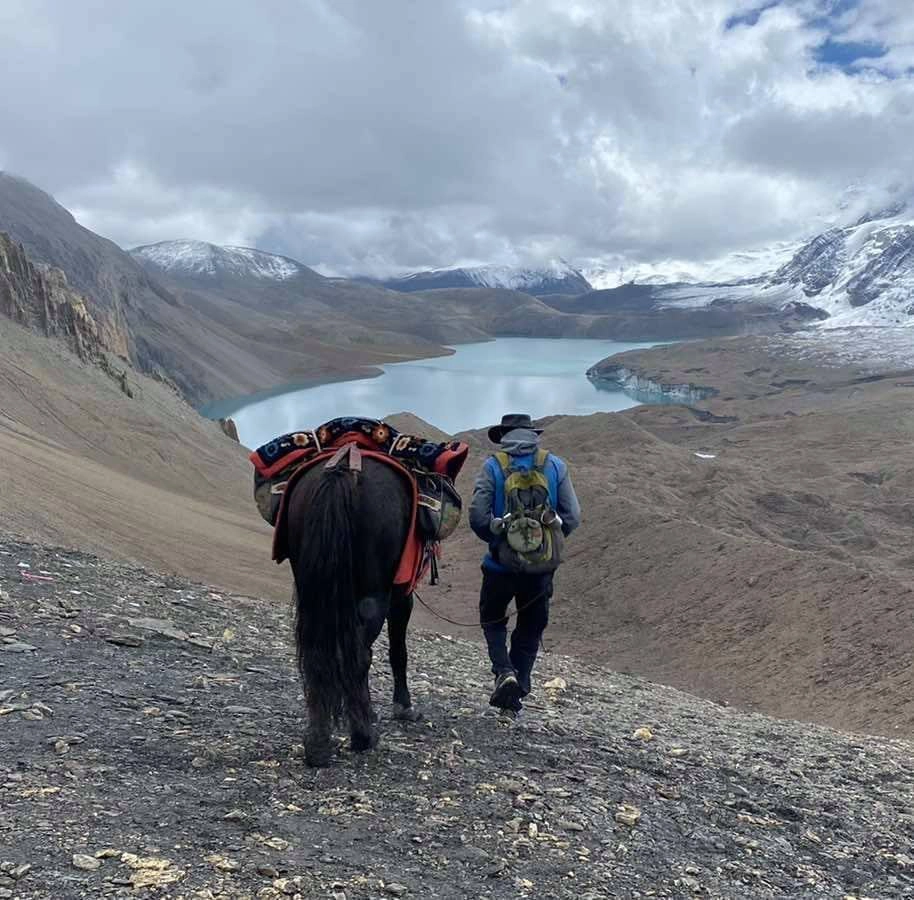
By the time you reach Samagaon, you’re already above 3,500 meters, and the air noticeably thins from here onward. Each subsequent day pushes higher: Samdo at 3,875 meters, then Dharamsala at 4,460 meters, before the big push over Larke Pass at 5,106 meters, the trek’s highest point.
Larke Pass day is where distance and altitude collide hardest. Although it’s only about 15 km, you’ll climb from 4,460 m to 5,106 m before descending to Bimtang at 3,720 m. The entire journey happens in a single day, often in freezing pre-dawn temperatures. This is why guides start clients walking well before sunrise, to cross the pass before afternoon winds pick up and to avoid getting caught by shifting weather at that elevation.
Most trekkers notice the biggest change after Samdo. Even though the daily distance becomes shorter, every uphill section feels slower because of the thinner air. That’s completely normal and one reason guides encourage a steady pace instead of trying to walk quickly.
Many first-time trekkers expect the longest day to be the hardest because of the distance. In reality, altitude changes everything. Even a short uphill section above 4,000 meters can feel much more demanding than several kilometers at lower elevations. That’s why we always encourage trekkers to focus on steady breathing and consistent pacing instead of speed.
This is exactly why acclimatization days at Samagaon and Samdo aren’t optional extras. They give your body time to adjust before the demanding altitude gain toward Larke Pass, and skipping them significantly raises the risk of altitude sickness.
Is the Manaslu Circuit Trek Distance Difficult?
Yes, the Manaslu Circuit Trek is considered a moderately difficult to challenging trek, largely because of the altitude gain rather than the distance itself. It’s generally regarded as more demanding than the Everest Base Camp Trek, mainly due to the technical, high-altitude crossing at Larke Pass.
That said, it’s absolutely achievable for beginners with reasonable fitness, as long as they prepare properly and don’t rush the acclimatization schedule. During previous Manaslu treks, first-time trekkers regularly completed the route successfully by maintaining a steady pace, staying hydrated, and following the acclimatization schedule.
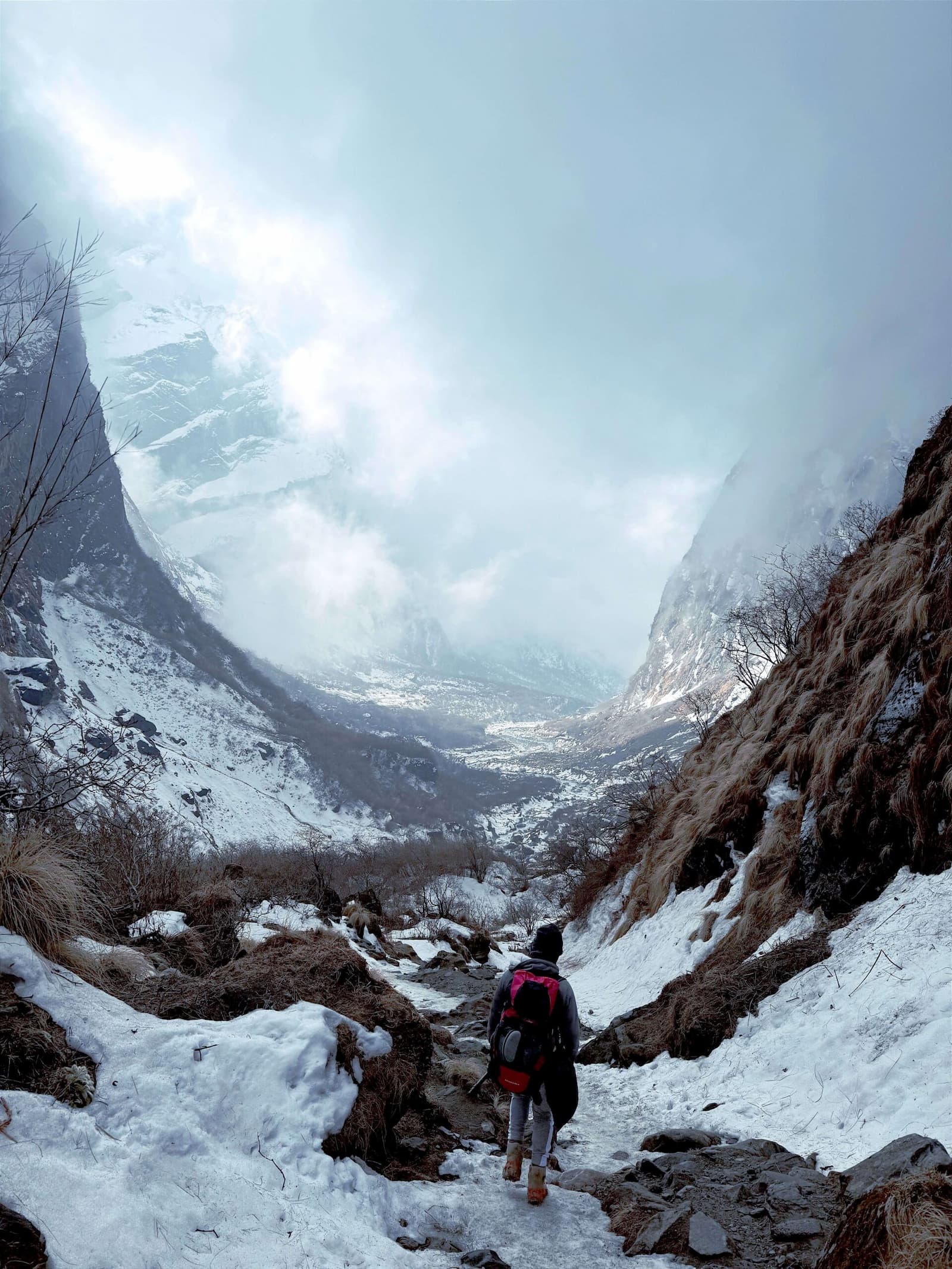
Although the overall distance is manageable for most people with good preparation, several factors make the trek more demanding than the numbers alone suggest:
- Walking at high altitude where oxygen levels are lower.
- Crossing Larke Pass (5,106 m), which combines a long ascent with a steep descent.
- Consecutive days of trekking with limited opportunities for complete rest.
- Changing mountain weather that can affect trail conditions.
- Remote villages with basic facilities compared to more developed trekking routes in Nepal.
In general, trekkers with some hiking experience and general cardiovascular fitness (regular walking, hiking, or stair climbing for a few months beforehand) typically manage the trek comfortably. You don’t need to be an athlete, but you do need consistent lower-body endurance and the patience to move slowly at altitude.
Finally, if you have any pre-existing respiratory or cardiac conditions, it’s worth discussing the trek with a doctor beforehand, since altitude affects individuals differently regardless of general fitness level.
Manaslu Circuit Trek vs Other Popular Treks
If you’re deciding between the Manaslu Circuit and other well-known Nepal treks, here’s how the distance and difficulty compare:
| Trek | Total Distance | Duration | Highest Point | Difficulty |
| Manaslu Circuit Trek | 150–177 km / 93–110 mi | 14–18 days | 5,106 m (Larke Pass) | Moderate–Hard |
| Everest Base Camp Trek | 130 km / 80 mi | 12–14 days | 5,364 m (Kala Patthar) | Moderate–Hard |
| Annapurna Circuit Trek | 160–230 km / 99–143 mi | 15–20 days | 5,416 m (Thorong La) | Moderate–Hard |
| Annapurna Base Camp Trek | 70–90 km / 43–56 mi | 7–12 days | 4,130 m (ABC) | Moderate |
| Langtang Valley Trek | 65–75 km / 40–47 mi | 7–10 days | 4,984 m (Kyanjin Ri) | Easy–Moderate |
The Manaslu Circuit sits in similar territory to Everest Base Camp and Annapurna Circuit in terms of distance and altitude, but it sees far fewer trekkers on the trail. If crowds are a concern for you, that’s a real point in Manaslu’s favor. It also has a stronger cultural dimension than EBC, passing through Tibetan-influenced villages that feel less commercialized than the Everest region.
Similarly, compared to shorter options like Langtang or ABC, Manaslu demands more preparation and a longer time commitment, but rewards you with more varied terrain and a genuine high-pass crossing.
How to Prepare for the Manaslu Circuit Trek
You don’t need to be an athlete to complete the Manaslu Circuit. However, preparing a few months in advance makes the trek much more enjoyable. Regular walking, hiking, climbing stairs, and carrying a small backpack will help your body handle the long days on the trail.
Training
- Start training 8–10 weeks before your Manaslu Circuit Trek to build endurance gradually.
- Walk or hike 3–4 days per week to prepare for long trekking days.
- Practice climbing stairs or hiking with a loaded backpack to simulate trekking conditions.
- Include leg and core strength exercises to improve balance and stability on uneven trails.
- Increase your walking distance gradually to avoid injuries before the trek.
Acclimatization
- Never skip the acclimatization days at Samagaon and Samdo.
- These rest days help your body adjust to the higher altitude before crossing Larke Pass.
- Follow the “climb high, sleep low” principle whenever possible.
- Always pay attention to symptoms of altitude sickness and inform your guide if you feel unwell.
Hydration
- Drink at least 3–4 liters of water every day during the trek.
- Proper hydration helps your body adapt to higher elevations more efficiently.
- Avoid excessive alcohol because it increases dehydration and may worsen altitude sickness.
- Carry a reusable water bottle and use water purification tablets or a filter when needed.
Essential Gear
- Wear well-broken-in trekking boots to prevent blisters during long walking days.
- Pack a warm down jacket for cold mornings and nights above 3,000 meters.
- Bring a four-season sleeping bag suitable for sub-zero temperatures.
- Use trekking poles to reduce pressure on your knees during steep descents.
- Carry a waterproof rain jacket because mountain weather can change quickly.
Nutrition
- Eat carbohydrate-rich meals to maintain energy throughout the trek.
- Don’t skip meals, even if your appetite decreases at higher altitude.
- Include warm soups and local meals like dal bhat for sustained energy.
- Carry energy snacks such as nuts, chocolate, or energy bars for long trekking days.
According to the Nepal Tourism Board, all foreign trekkers on the Manaslu Circuit must obtain the required permits and trek with a licensed guide.
Expert Tips for the Manaslu Circuit Trek Distance
After leading many groups across the Manaslu Circuit, we’ve found that trekkers who keep a steady pace and give themselves time to acclimatize usually enjoy the journey far more than those who try to rush. On this trek, consistency is much more important than speed.
One thing our guides consistently recommend is starting Larke Pass day very early. On most departures, we leave Dharamsala between 3:00 and 4:00 AM, depending on the weather and trail conditions. An early start gives trekkers firmer snow underfoot, calmer weather, and a much better chance of crossing the pass before the strong afternoon winds arrive. It also allows enough time to descend safely to Bimthang before temperatures begin to drop later in the day.
Before every departure, our guides also check the latest trail and weather conditions with local teahouse owners and guides already on the route. If there’s fresh snowfall near Larke Pass, a landslide on the lower trail, or road delays, we adjust the daily schedule whenever necessary. This helps trekkers stay safe and enjoy a smoother journey throughout the Manaslu Circuit.
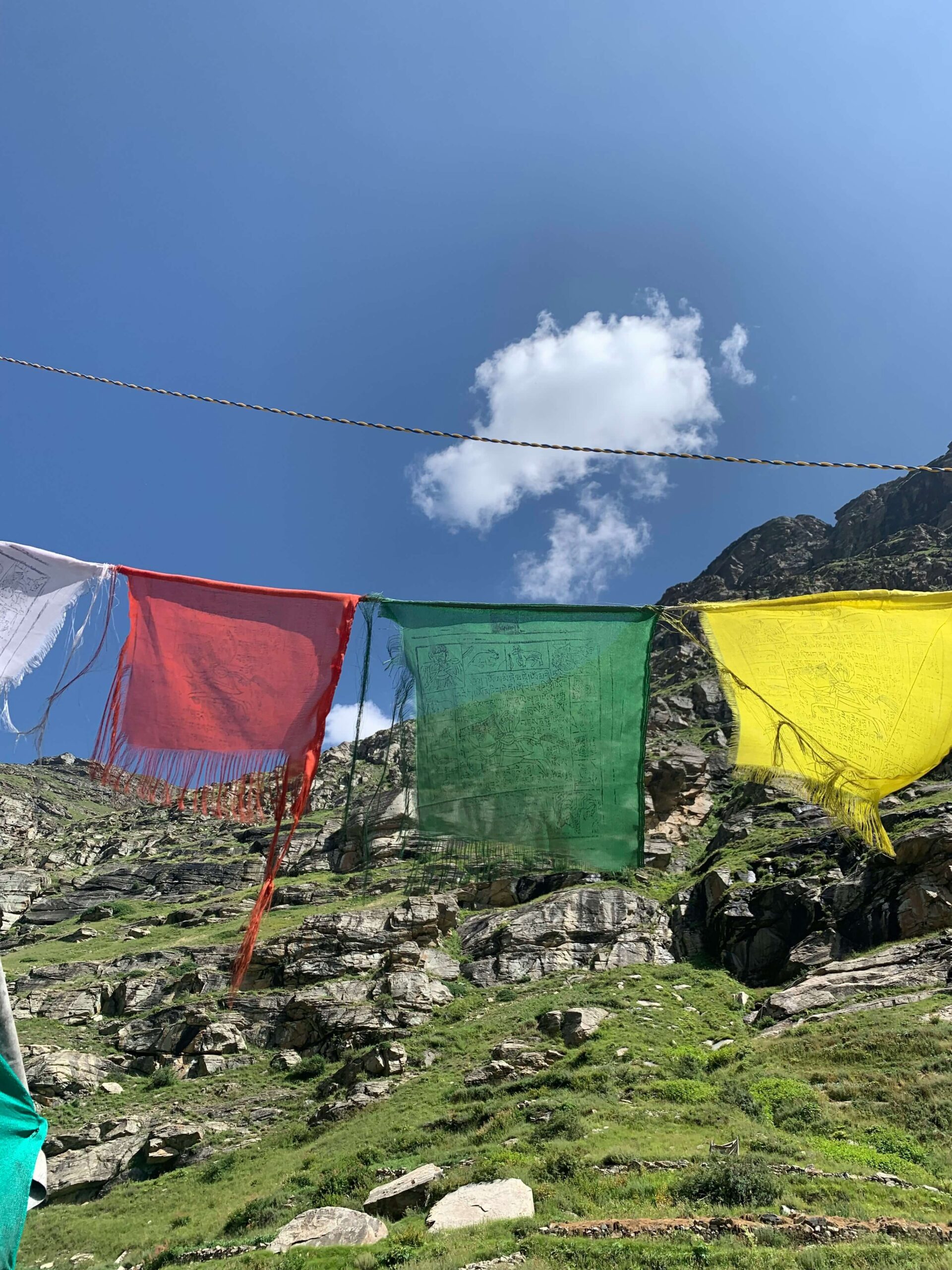
Second, don’t compare your pace to other trekkers. Altitude affects everyone differently. Even strong hikers sometimes need extra rest days. Less experienced trekkers can also complete the route comfortably with proper pacing and acclimatization. Your body’s response to altitude isn’t a reflection of your fitness.
In addition, pack a physical map or download offline maps before you go. Cell service disappears for long stretches, and while the trail is well-marked, having your own reference builds confidence.
Also, bring cash in Nepali rupees. There are no ATMs past Arughat, and teahouses in remote villages don’t take cards.
Finally, trust your guide’s judgment on rest days and pacing. Local guides read altitude symptoms and weather patterns from experience that no blog post can replace.
Frequently Asked Questions (FAQs)
How Long Is the Manaslu Circuit Trek?
Most itineraries run 14 to 18 days, depending on whether you choose a standard route, a shorter version, or add the Tsum Valley extension.
How Many Kilometers Do You Walk Each Day on the Manaslu Circuit Trek?
Daily distances range from about 8 to 21 kilometers, with shorter distances at higher altitude to support acclimatization.
What Is the Highest Point of the Manaslu Circuit Trek?
Larke Pass, at 5,106 meters (16,752 feet), is the highest point and the trek’s most physically demanding day.
Is the Manaslu Circuit Trek Difficult Because of Its Distance?
Not primarily. The real difficulty comes from altitude gain and the Larke Pass crossing, not the total distance walked.
What Is the Best Season to Trek the Manaslu Circuit?
Spring (March–May) and autumn (September–November) offer the most stable weather and clearest mountain views.
Do You Need a Guide for the Manaslu Circuit Trek?
Yes, a licensed guide is mandatory since this is a restricted area requiring special permits.
What Permits Are Required for the Manaslu Circuit Trek?
You’ll need a Restricted Area Permit, MCAP (Manaslu Conservation Area Permit), and ACAP (Annapurna Conservation Area Permit) if exiting through Annapurna.
Conclusion
The Manaslu Circuit Trek distance of approximately 150–177 km (93–110 miles) is only one part of what makes this adventure unique. While the daily walking distance is manageable for most trekkers, the combination of altitude, long trekking days, and the crossing of Larke Pass (5,106 m) makes proper preparation essential.
Over the years, we’ve found that trekkers who prepare for the altitude—not just the distance—usually enjoy the Manaslu Circuit the most. The kilometers are manageable, but good pacing, acclimatization, and local guidance make the biggest difference to a successful journey.
Once you understand how the distance, altitude, and daily walking hours fit together, planning the Manaslu Circuit becomes much easier. You’ll know what to expect each day and can choose an itinerary that matches your fitness level and travel plans.
Key Takeaway: The Manaslu Circuit Trek covers 150–177 km, but altitude makes it more challenging than distance alone. Train well, acclimatize properly, and trek with a licensed guide for a safer and more enjoyable experience.
Plan Your Manaslu Circuit Trek Distance Adventure
Ready to Plan Your Manaslu Circuit Trek?
At Euro Asia Treks, we offer professionally guided Manaslu Circuit itineraries with experienced local guides, permit assistance, comfortable teahouse accommodation, and flexible schedules to suit different fitness levels.
Whether you’re looking for the classic Manaslu Circuit, an extended trek through Tsum Valley, or advice on permits and the best trekking season, our team is here to help.
Ready to plan your Manaslu adventure? Explore our 23 Days Manaslu Circuit Trek itinerary for a complete day-by-day experience, or contact Euro Asia Treks to plan a trek that matches your fitness level and schedule.