-

Duration
7 Days -

Accomodation
3-Star Hotels (Pokhara) + Mountain Teahouses -

Starts from
Kathmandu -
Ends at
Kathmandu -

Transportation
Private Vehicle -

Max. Altitude
3210 m -

Group size
Private Trips -

Trip type
Trekking in Nepal

Trip Grade
EasyThe 5-day Ghorepani Poon Hill Trek provides a low-altitude route for trekkers exploring the Annapurna Conservation Area in Nepal. Beginner trekkers choose Ghorepani Poon Hill trail for its easy-to-walk stone paths, moderate elevation gain, and well-developed infrastructure. The trek begins from Pokhara, the primary lakeside city that serves as the gateway to the Annapurna mountain range.
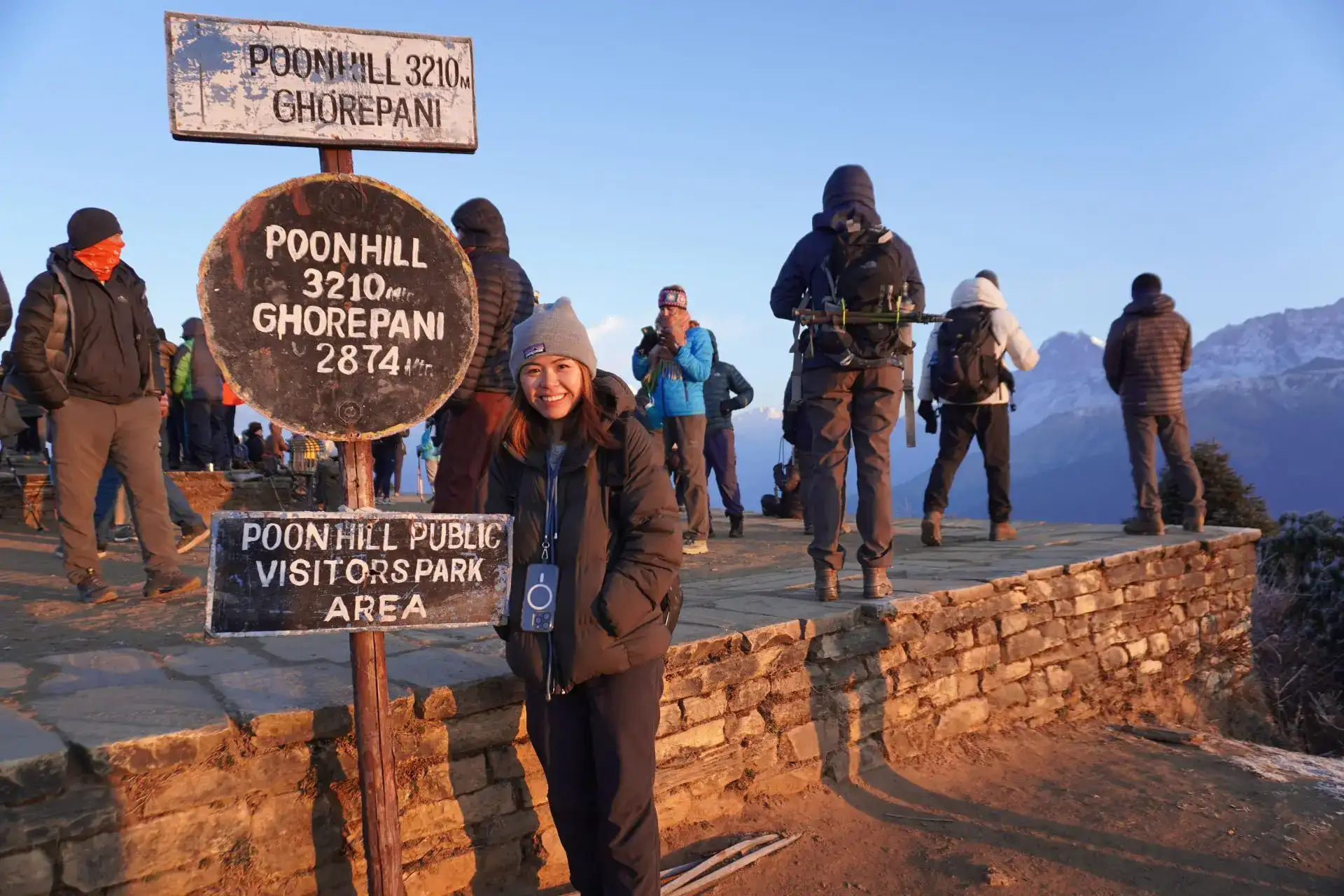
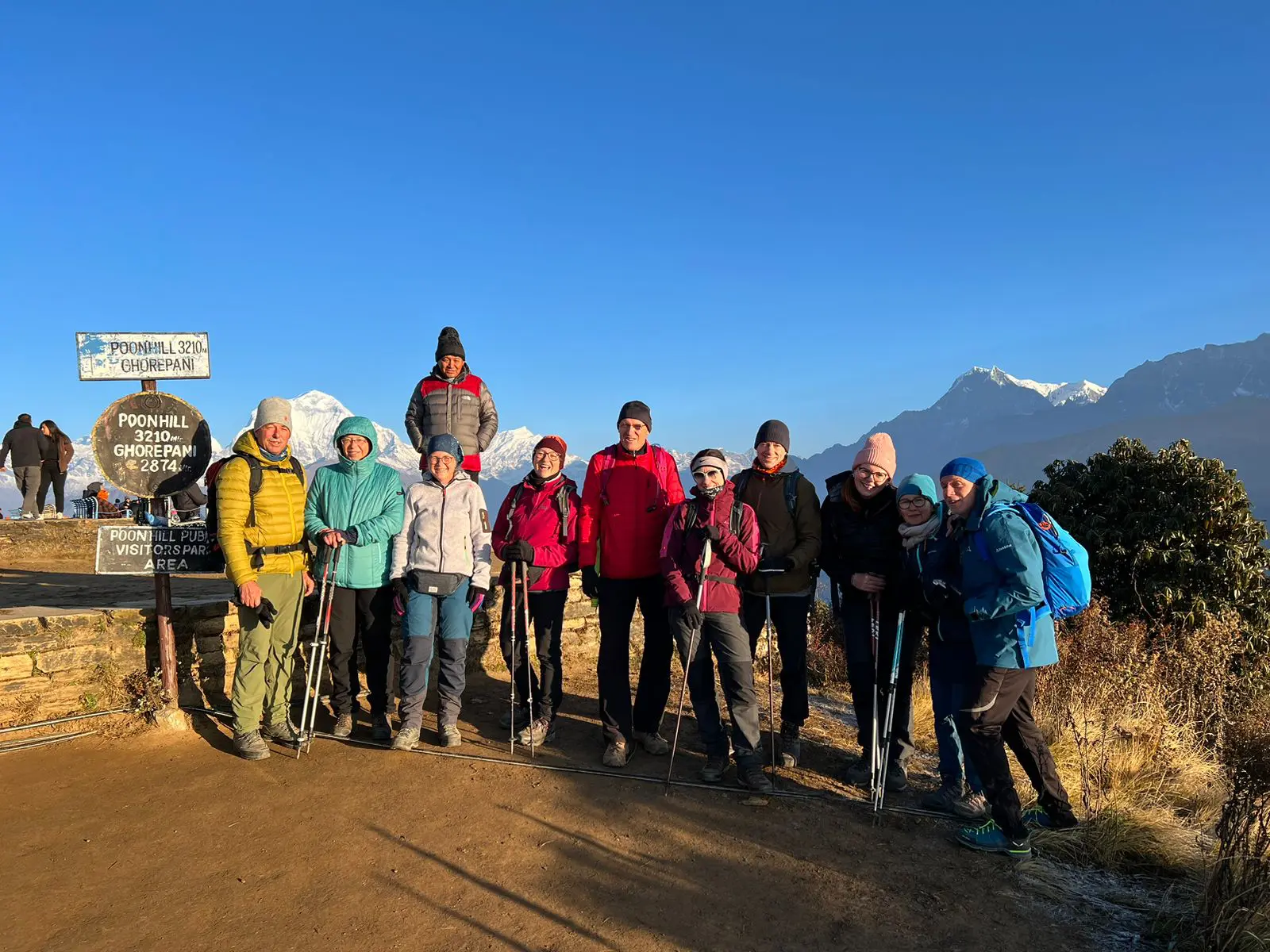
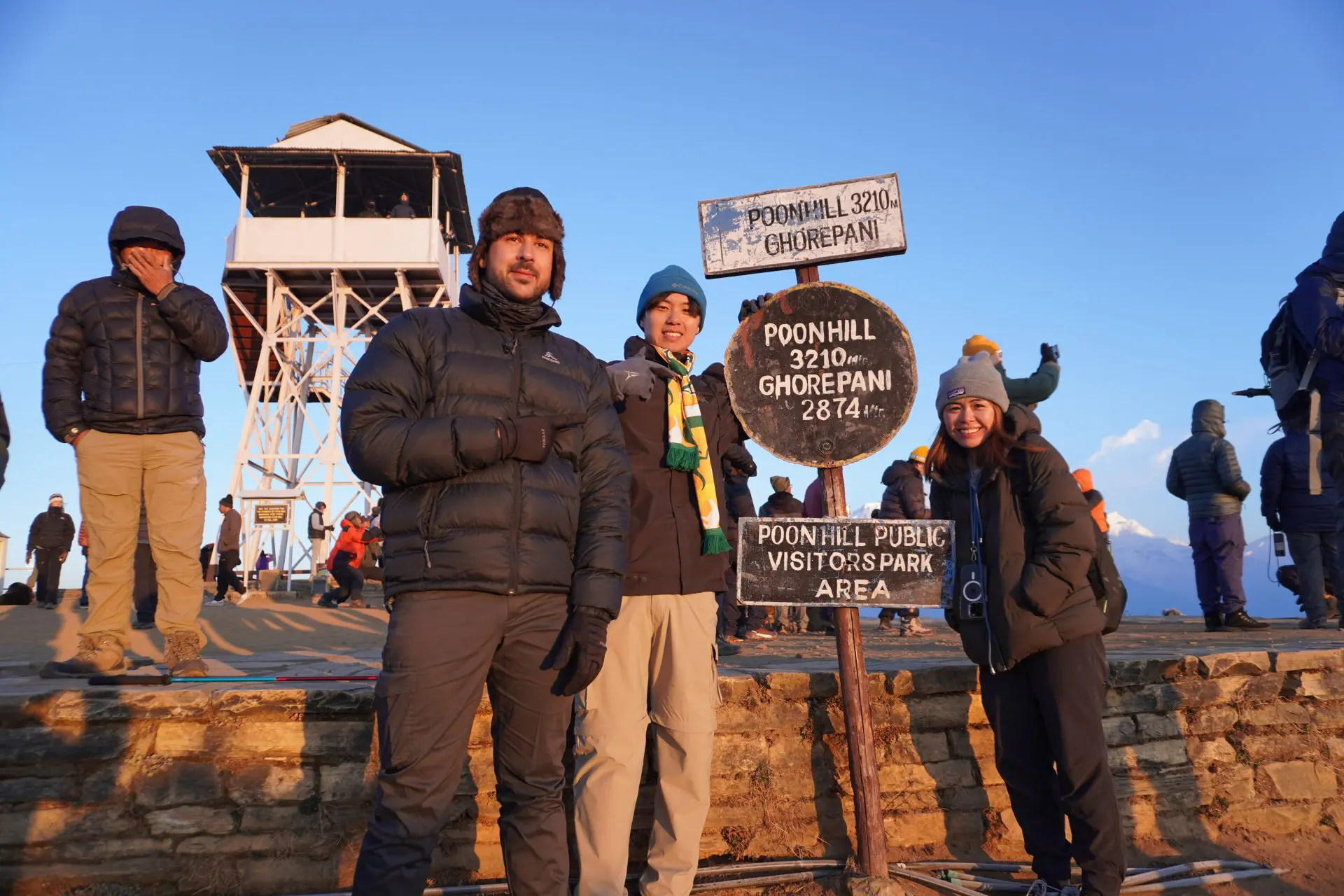
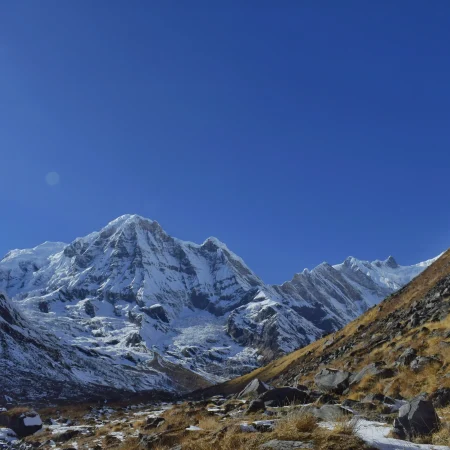
The trail reaches its highest point at the Poon Hill viewpoint, which stands at 3,210 meters above sea level. From this summit, trekkers witness a panoramic sunrise over two of the world’s fourteen highest peaks: the 8,167-meter Dhaulagiri and the 8,091-meter Annapurna I. Unlike the more strenuous climb to Annapurna Base Camp, this route maintains a safer altitude profile to help prevent the symptoms of mountain sickness.
The path navigates through the world’s largest rhododendron forests, which display vibrant red and pink blooms during the spring months of March and April. Along the way, the route passes through the traditional Gurung and Magar villages of Ulleri and Ghandruk.
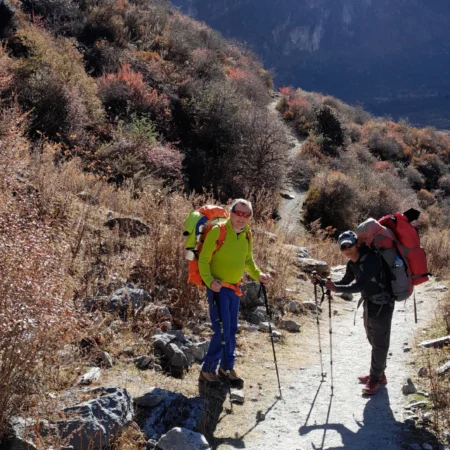
Local families operate teahouses in these villages, providing hot meals and clean beds, so travelers can experience the Himalayas without carrying heavy camping equipment.
Over 50,000 people complete this journey annually, establishing the trail as the most popular short-distance hike in the region. Beginners achieve a major mountain milestone by reaching the Poon Hill summit . By following this established trail, hikers gain a deep introduction to Nepalese culture and Himalayan geography in a short timeframe.
Journey to Ghorepani Poon Hill Trek
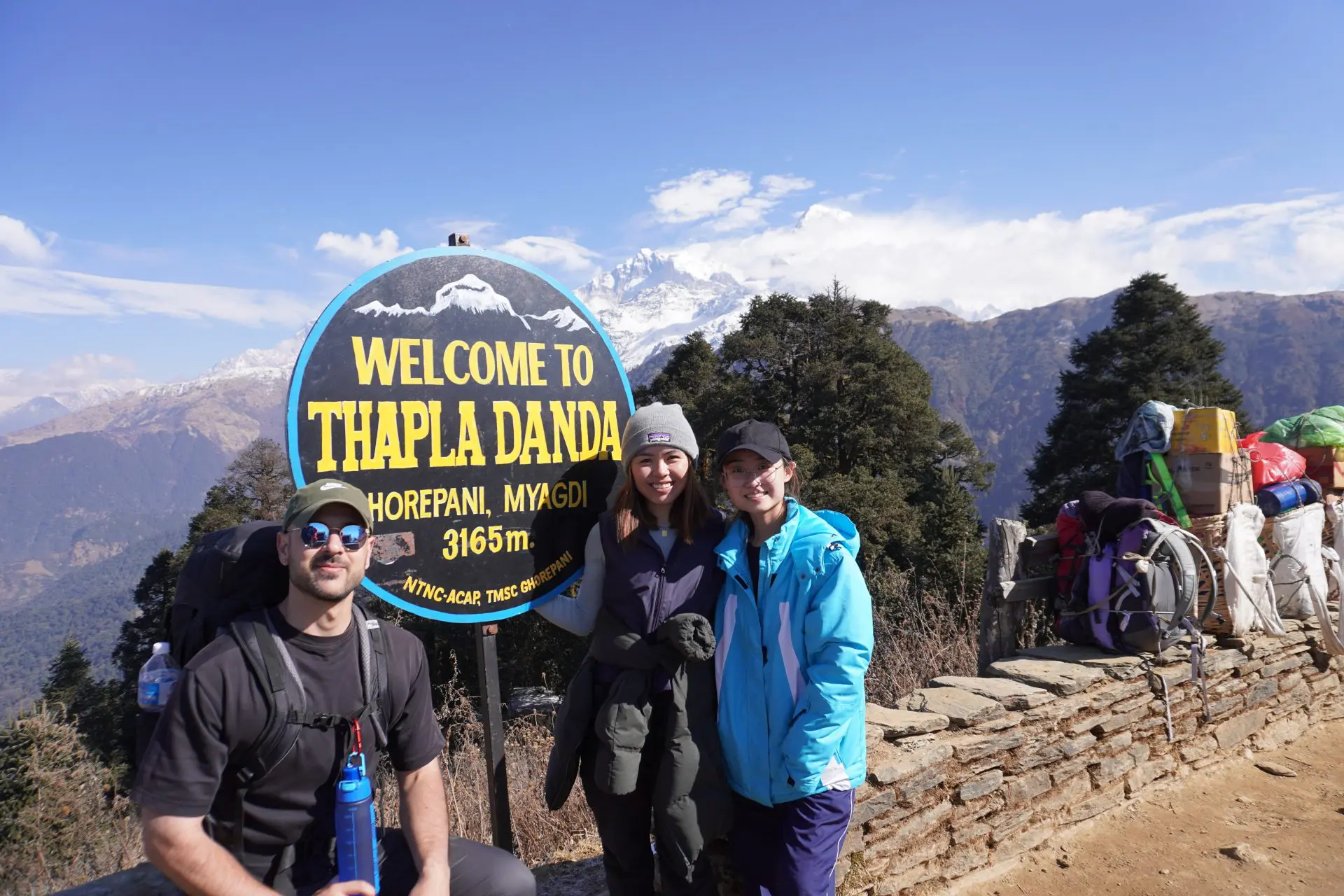
We embark on our Ghorepani Poon Hill Trek from one of the most attractive cities of the world, Pokhara. Initially, we take a short drive towards Suikhet Phedi. Then, start trekking through the west of Henjakot to arrive at Dhampus.
This place offers dazzling views of snow-capped mountains like Mt. Machapuchare (Fishtail Mountain) and Mt. Annapurna South. The next day, we will be passing through beautiful rhododendron forests to reach Landruk Village, which is locally inhabited by Gurungs.
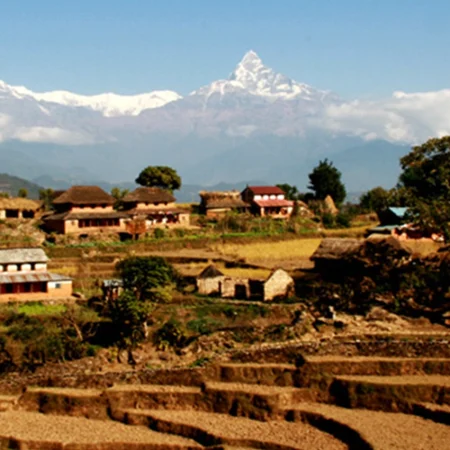
On the following day, after having our usual breakfast, we head towards the beautiful Ghandruk village. Ghandruk village exhibits terrace fields with the views of the glorious Himalayas at the backdrop.
The Ghorepani quest begins the next day with approx. 8 hours of walking through Tadapani, forests in Deurali, and finally arrive at the Magar village of Ghorepani.
Further, we will be hiking early in the morning towards Poon hill to capture the best sunrise views over the Himalayas. We will be returning to Ghorepani for further exploration of the village and head towards Birethanti the next day.
The trails generally involve descending through stone-paved staircases and the sight of breathtaking views. Finally, we conclude our trek after arriving at Birethanti and driving back towards Pokhara City. By doing so, we plan on ending our dramatic experience trek in the heartland of the Annapurna region.
Why Book with Euro Asia Tours & Travels?
- Euro Asia Tours & Travels brings nearly 30 years of Himalayan expertise. Established in 1995, the company has crafted exceptional travel experiences in Nepal, Bhutan, and Tibet for three decades. This longevity ensures travelers benefit from deep logistical knowledge and established local networks.
- Official government affiliations verify our authority and safety standards. We hold active memberships with the Nepal Tourism Board (NTB), Trekking Agencies’ Association of Nepal (TAAN), and Nepal Mountaineering Association (NMA). These credentials guarantee that every trek meets strict regulatory and safety protocols.
- Local experts tailor itineraries to your specific needs. Our team of travel experts and guides designs customized trips that match your personal interests, dates, and group size. Travelers enjoy unique, flexible journeys rather than rigid, pre-packaged schedules.
- Euro Asia implements specific sustainability policies to minimize environmental impact during treks. Guests contribute to the preservation of local culture and nature simply by choosing an eco-conscious operator.
Free Online Pre-Trip Briefing & Consultation
Schedule a complimentary online briefing to clarify trail conditions and equipment needs before you commit. Our expert guides conduct these no-obligation sessions to review your readiness and answer questions without requiring a deposit or reservation.
Talk to Expert – No Booking Required
Meet Your Guide:
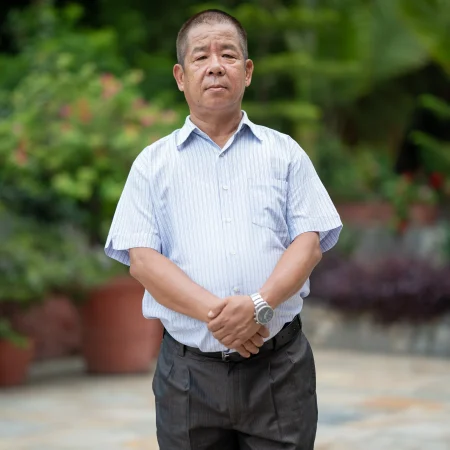
Hailing from the majestic Solukhumbu region, Narte Rai brings over 40 years of trekking experience across Nepal’s most iconic trails, including Annapurna, Everest, Langtang, and Mustang. Starting his journey as a porter, Narte’s dedication and hard work led him to become a licensed NTB guide, earning a reputation for his calm, friendly, and safety-focused approach.
With extensive high-altitude experience, Narte ensures every trek is not only safe but also enjoyable. Guests particularly appreciate his thoughtful care: he knows when to pause for rest, making even the most challenging uphill stretches feel manageable. His English language skills help him connect with international travelers, sharing insights about Nepal’s culture, mountains, and local life.
For Narte, guiding is more than a job. It’s a passion shaped by years of experience, hard work, and a love for the mountains. His goal is simple: to make every trek an unforgettable adventure, leaving guests with lasting memories of Nepal.
Trip Highlights
- Trekkers can see a panoramic sunrise view of the Himalayas: Poon Hill, at an altitude of 3,210 meters, reveals a 180-degree vista of the Annapurna and Dhaulagiri ranges at dawn. The sun illuminates Mt. Dhaulagiri (8,167m) and Mt. Annapurna I (8,091m) in golden hues before the valley wakes up.
- The Annapurna Conservation Area showcases blooming rhododendron forests: Dense rhododendron forests paint the lower trails in vibrant red and pink during March and April. Hikers walk through these protected botanical tunnels that connect Tikhedhunga to Ghorepani.
- Ghandruk Village preserves traditional Gurung culture and architecture: Ghandruk, a prominent Gurung settlement, features intricate stone-roofed houses and active community museums. The village offers direct views of Mt. Machhapuchhre (Fishtail) and Annapurna South right from the teahouse courtyards.
- Stone staircases characterize the ascent to Ulleri: The trail challenges trekkers with over 3,000 stone steps leading up to Ulleri village. This vertical ascent quickly gains elevation and rewards hikers with their first clear views of Mt. Hiunchuli.
- The trek completes a circular loop in 3 to 5 days: This route fits a complete Himalayan experience into a short timeframe suitable for travelers with limited schedules. The loop starts and ends near Pokhara, minimizing transit time and maximizing mountain visibility.
Trip Detailed itinerary
-
Drive to Pokhara
Day
01
The Prithvi Highway connects Kathmandu to Pokhara via a scenic 200-kilometer route. This winding road follows the Trisuli and Marshyangdi rivers, offering travelers views of terraced fields and rural villages. The drive typically takes 6 to 8 hours depending on traffic conditions.
Pokhara serves as the essential gateway to the Annapurna region. Located at an elevation of 822 meters, the city provides a relaxing atmosphere with Phewa Lake and mountain views before the trek begins. Trekkers often use this day to finalize permits and organize trekking gear in the Lakeside area.
Private vehicles offer flexibility for stops along the way. A private vehicle allows you to stop at scenic points like Malekhu or Kurintar, unlike fixed-schedule tourist buses. This mode of transport reduces travel fatigue before the physical exertion of trekking.
-
Drive from Pokhara to Nayapul & Trek to Tikhedhunga
Day
02
Nayapul marks the official starting point of the trek. A 1.5 to 2-hour drive covers the 42 kilometers from Pokhara to Nayapul, where your permits are checked at the Birethanti checkpoint. This short drive transitions you from the city to the trailhead efficiently.
The trail to Tikhedhunga follows the Bhurungdi Khola river. Hikers walk approximately 9 kilometers along a gentle dirt trail that passes through the villages of Sudame and Hile. This section takes about 4 to 5 hours and serves as a warm-up for the steeper climbs ahead.
Tikhedhunga provides comfortable riverside accommodation at 1,540 meters. Teahouses in this village offer a resting place before the challenging ascent to Ulleri the next day. Staying here aids in gradual acclimatization and divides the long climb to Ghorepani into manageable segments.
-
Trek from Tikhedhunga to Ghorepani
Day
03
The Ulleri steps challenge trekkers with a steep 3,000-step ascent. The trail climbs sharply from Tikhedhunga to Ulleri village (2,070m), gaining over 500 meters of altitude in a short distance. This stone staircase is the most physically demanding section of the entire route.
The Annapurna Conservation Area showcases dense rhododendron forests. Beyond Ulleri, the path enters protected forests that bloom with red and pink flowers during spring (March-April). This section offers shade and cooling breezes as you hike toward Nangethanti.
Ghorepani commands panoramic views at 2,874 meters. After trekking 5 to 7 hours and covering roughly 13 kilometers, you reach the Magar village of Ghorepani. The village sits on a ridge that provides close-up views of Dhaulagiri (8,167m) and Annapurna South, setting the stage for the next morning’s hike to Poon Hill.
-
Trek from Ghorepani to Tadapani
Day
04
Poon Hill offers a panoramic sunrise over the Annapurna and Dhaulagiri ranges. Before dawn, trekkers hike 45 minutes up to Poon Hill (3,210m) to watch the sunrise illuminate Dhaulagiri (8,167m), Annapurna I (8,091m), and Machhapuchhre. This early morning excursion is the visual highlight of the entire trek.
The trail to Tadapani descends through dense rhododendron and oak forests. After breakfast in Ghorepani, the route climbs the Deurali Pass before descending into a deep, forested valley filled with waterfalls and streams. Hikers traverse this scenic 9-kilometer section in approximately 5 to 6 hours.
Tadapani sits on a ridge surrounded by close-up mountain views. Located at 2,630 meters, the village offers intimate views of Annapurna South, Hiunchuli, and Machhapuchhre directly from the teahouses. It serves as a perfect, quiet stopover before the final descent to Ghandruk.
-
Trek from Tadapani to Ghandruk
Day
05
The descent to Ghandruk passes through lush subtropical forests. The trail drops gently from Tadapani (2,630m) to Ghandruk (1,940m), covering roughly 6.5 kilometers in just 3 to 4 hours. This easier day allows for a leisurely pace through moss-covered trees and open clearings.
Ghandruk preserves the rich heritage of the Gurung community. As the second-largest Gurung village in Nepal, Ghandruk features traditional stone-slate houses, a cultural museum, and active community life. Visitors can explore the narrow alleys and observe local craftsmanship and daily traditions.
Teahouses in Ghandruk offer sweeping views of Annapurna South and Fishtail. Accommodations here provide open terraces where trekkers can relax and enjoy unobstructed views of the peaks they have walked beneath for days. The village atmosphere is lively, often with opportunities to see traditional dances.
-
Trek from Ghandruk to Nayapul to Pokhara
Day
06
Stone steps lead the final descent to Syauli Bazaar. The trail descends steeply on stone staircases through terraced fields and farming villages down to the Modi Khola river at Syauli Bazaar. This section takes about 2 to 3 hours and marks the end of the high-altitude terrain.
The walk to Nayapul follows the scenic Modi Khola river. From Syauli Bazaar, the path flattens out and follows the riverbank to Birethanti and finally Nayapul, completing the trekking circuit. This final 1.5-hour walk is relaxed and scenic, passing small riverside settlements.
A private vehicle transfers you back to Pokhara in under two hours. From Nayapul, a 1.5-hour drive brings you back to the comforts of Pokhara. This quick transfer allows time to relax at Phewa Lake or enjoy a celebratory meal in the city.
-
Drive from Pokhara to Kathmandu
Day
07
The return drive follows the Prithvi Highway for 200 kilometers. Travelers take a private car for the 6 to 8-hour journey back to Kathmandu, retracing the scenic route along the Trisuli River. Private vehicles offer the flexibility to stop at riverside restaurants or viewpoints along the way.
Tourist buses offer a comfortable and safe travel option. Buses depart early morning (around 7 AM) from the Pokhara Tourist Bus Park and arrive in Kathmandu by afternoon. These buses often feature air-conditioning and comfortable seating, making the long journey less tiring.
Kathmandu welcomes you back for a restful evening. Upon arrival, you are transferred to your hotel to rest after the long drive. The evening is free for a quiet dinner or a short stroll around the hotel area to unwind.
Trip Price details
Price includes
- Private Vehicle Transfer as per the itinerary
- Accommodation
- 3 Star hotel in Pokhara (White Pearl or Similar)
- Simple Mountain Lodges during the trek
- English Speaking Trek Guide for 7 Days
- Annapurna Conservation Area Permit
- Trekkers Information Management System Card Expenses
- Meals:
- Breakfast 5 times
- Lunch 5 times
- Dinner 4 times
Price excludes
- Meals not mentioned in the inclusion criteria
- Porter for 7 days USD 115
- Personal food or beverages
- Visa fees for Nepal
- Tips for guides
- Services not mentioned in the inclusions
Trip Information
Ghorepani Trek for Beginners at the Affordable Rate with Best Services
- The Ghorepani Trek offers beginners a manageable Himalayan challenge at an affordable rate. This route provides first-time trekkers with a safe, well-paced introduction to high-altitude hiking without technical difficulty. Our itinerary balances daily walking hours to ensure you enjoy the Annapurna views without exhaustion.
- Private vehicle transfers ensure a smooth, nausea-free journey to the trailhead. We exclusively utilize private cars or jeeps for the drive from Pokhara to Nayapul to prioritize your physical comfort. Winding mountain roads often cause severe motion sickness and vomiting for travelers on local tourist buses, which this package strictly excludes.
- Euro Asia Tours & Travels delivers premium service standards within a budget-friendly package. Our team provides experienced, English-speaking guides who manage all logistics, safety, and permits for a seamless experience. You receive high-value support and safety assurances typically reserved for luxury treks.
- Comfortable teahouse accommodations provide rest and local cultural immersion. We select clean, reputable teahouses that offer warm meals and hygienic facilities after each day’s hike. Beginners can relax in comfort while experiencing the hospitality of the Gurung and Magar communities.
Packing List for Ghorepani Poon Hill Trek
Here is a list of what you might want to pack for the Ghorepani Poon Hill Trek. Please take this as a starting point. You’ll need layers of warmer clothing for the early morning hike to Poon Hill.
General
- Down jacket (Essential for the sunrise view at Poon Hill. Rentals available).
- Daypack (30-40 liters recommended) with a waterproof rain cover.
Upper Body
- Sun hat or cap (Protects against strong UV rays at lower elevations).
- Warm beanie/Knitted hat (Mandatory for the freezing morning ascent to Poon Hill).
- Neck Gaiter/Buff (Protects against wind chill and dust on the trail).
- Headlamp (Required for the 4:00 AM hike to Poon Hill; bring extra batteries).
- Sunglasses (UV protection is vital to prevent eye strain).
Torso
- Moisture-wicking base layer (Synthetic or merino wool to manage sweat).
- Trekking shirts (2 short sleeve, 1 long sleeve for layering).
- Waterproof, windproof shell (Protects against sudden rain or wind).
- Fleece jacket or pullover (Insulating mid-layer for evenings in teahouses).
Lower Body
- Thermal base layer bottoms (Essential for sleeping and early morning hikes).
- Hiking pants (2 pairs; convertible pants are versatile for changing temperatures).
- Comfortable track pants (For relaxing inside teahouses after the trek).
- Waterproof shell pants (Optional, but recommended during monsoon or winter).
Hands
- Liner gloves (Lightweight wool or synthetic).
- Insulated outer gloves (Necessary for holding trekking poles in freezing morning temps).
Feet
- Warm woolen socks (2 pairs for evenings and colder sections).
- Hiking socks (3 pairs; synthetic blends prevent blisters).
- Sturdy hiking boots (Broken-in, with ankle support for the 3,000 stone steps to Ulleri).
- Casual shoes/Sandals (To wear in teahouses to let your feet breathe).
- Gaiters (Recommended if trekking in winter snow or monsoon mud).
- Micro Spikes/Crampons (Recommended if trekking from December to February).
Undergarments
- Quick-drying underwear (3-4 pairs; easier to wash and dry on the trail).
- Sports bras (Women; moisture-wicking fabrics reduce chafing).
First Aid Kits and Medications
(Note: Our guides carry a main medical kit. However, a personal kit is highly recommended for immediate access.)
- Blister plasters (Compeed or moleskin for friction points).
- Sunscreen (High SPF; altitude increases UV intensity).
- Lip balm (With SPF protection against windburn).
- Pain relievers (Paracetamol/Ibuprofen for muscle aches or headaches).
- Personal prescription medications (Carry sufficient supply for the entire trip).
Other Essentials
- Passport (Required for ACAP and TIMS permit checkpoints).
- Passport-sized photos (2 copies for permits or SIM cards).
- Reusable water bottle (Nalgene or metal; avoiding single-use plastic is encouraged).
- Water purification (Tablets or filtration system like LifeStraw).
- Toiletries (Toothbrush, paste, biodegradable soap, hand sanitizer).
- Quick-dry towel (Teahouses typically do not provide towels).
- Toilet paper (2 rolls; remove the cardboard core to save space).
- Wet wipes (Essential for “dry baths” on colder days).
- Trekking poles (Highly recommended to reduce knee strain on steep stone steps).
- Cash (NPR) (Small denominations for snacks, WiFi, and hot showers; no ATMs on the trail).
Optional
- Power bank (Charging facilities are limited and cost extra in teahouses).
- Camera/Phone (To capture the panoramic views of Annapurna and Dhaulagiri).
- Book/Cards (For entertainment during downtime in teahouses).
- Earplugs (Teahouse walls are thin; useful for light sleepers).
- Snacks (Chocolate bars, nuts, or energy bars for quick boosts).
Note: You can purchase or rent most gear in Thamel, Kathmandu, before the trek. Our guides can assist you in finding the right equipment at the best prices.
Accommodation during Ghorepani Poon Hill Trek
- Family-run teahouses serve as your primary accommodation. Locally managed lodges line the trail from Nayapul to Ghorepani. These establishments provide secure shelter, warm hospitality, and hygienic meals for hikers.
- Twin-sharing rooms feature basic but comfortable furnishings. Standard rooms contain two wooden beds equipped with foam mattresses and clean sheets. Heavy blankets or quilts protect you from the cold night temperatures common at 2,800 meters.
- Communal dining halls offer warmth and socialization. A central iron stove heats the dining area during the evening hours. Trekkers gather around this fire to enjoy hot meals and exchange travel stories before bed.
- Modern amenities like WiFi and hot showers incur extra costs. Most teahouses provide internet access and battery charging services for a small fee (typically 100-300 NPR). Gas or solar geysers supply hot water to help you relax after a long day of walking.
- Restroom facilities vary between Western-style and squat pans. The lodges we use in Tikhedhunga, Ghorepani & Ghandruk feature attached bathrooms with flush toilets.
Food Available on Ghorepani Poon Hill Trek
- Dal Bhat serves as the primary energy source for trekkers. This traditional Nepali staple consists of steamed rice, lentil soup, and seasonal vegetable curry. Teahouse hosts offer unlimited refills of rice and lentils to ensure hikers remain fueled for the steep climbs.
- Teahouse menus feature a diverse range of international and local dishes. Kitchens prepare favorites like vegetable momos, fried noodles (chow mein), pasta, and even pizza. This variety caters to different palates and provides comforting options after a long day of walking.
- Hot breakfast options provide essential calories for the morning ascent. Hikers choose from oatmeal porridge, Tibetan bread, pancakes, or eggs cooked to order. A substantial meal at 7:00 AM sustains your energy levels until the scheduled lunch stop.
- Vegetarian meals offer the safest and freshest dining option. Most ingredients come directly from local farms, ensuring high quality and taste. Experienced guides often recommend avoiding meat products at higher altitudes to prevent potential stomach issues.
- Warm beverages help maintain hydration and body temperature. Teahouses serve various teas, including masala chai and ginger lemon honey tea, which soothes sore throats. Hot chocolate and coffee are also available to keep you warm during chilly evenings.
Food Safety Tips
- Water purification methods neutralize harmful bacteria effectively. Chlorine tablets, iodine drops, or filtration systems like LifeStraw make tap water safe for consumption. Treating your own water prevents waterborne illnesses and reduces plastic waste in the conservation area.
- Vegetarian meals reduce the risk of food poisoning. Meat preservation becomes difficult at high altitudes due to unreliable refrigeration in remote teahouses. Choosing lentils, rice, and vegetables ensures you eat fresh, locally sourced ingredients daily.
- Freshly cooked dishes guarantee higher hygiene standards. Ordering popular items like Dal Bhat or noodle soup ensures high turnover and fresh preparation. Avoid pre-cooked foods or raw salads that may have been exposed to unwashed surfaces.
- Hand sanitizer eliminates germs before every meal. Washing hands with soap is often difficult due to cold water temperatures. Carrying a small bottle of alcohol-based sanitizer ensures your hands remain clean despite limited washing facilities.
Permits for Ghorepani Poon Hill Trek
- The Annapurna Conservation Area Project (ACAP) permit authorizes entry into the sanctuary. This mandatory document grants access to the protected biodiversity zone covering 7,629 sq. km. The fee directly funds local conservation efforts and sustainable community development projects in the region.
- The Trekkers’ Information Management System (TIMS) card tracks hiker movements for safety. This registration card adds you to a central database used by authorities to monitor trekker activity. Rescue teams rely on TIMS data to locate individuals quickly during emergencies or natural calamities.
- Officials at the Birethanti checkpoint verify documentation before you ascend. Hikers must present both valid permits at this primary gateway to avoid entry denial or heavy fines. Strict verification ensures that all travelers adhere to Nepal Tourism Board regulations.
- Euro Asia Tours & Travels manages the entire application process for you. Our team secures all necessary permits in Kathmandu prior to your arrival. This service eliminates the need for you to stand in long queues at government offices.
Best Time for Ghorepani Poon Hill Trekking
Get to know about best time for Ghorepani poon Hill Trek in details:
- Spring (March to May) showcases blooming rhododendrons against snowy peaks. Forests between Ulleri and Ghorepani explode with red and pink flowers during this season. Temperatures remain mild (10°C to 20°C), making the daily hikes comfortable and visually stunning.
- Autumn (October to November) guarantees the clearest mountain visibility. Post-monsoon skies offer crisp, unobstructed views of the Annapurna and Dhaulagiri ranges. Stable weather minimizes rain delays, ensuring your sunrise experience at Poon Hill is picture-perfect.
- Winter (December to February) offers solitude on quieter trails. Trekkers enjoy a peaceful experience with fewer crowds, though morning temperatures often drop below freezing. This season rewards prepared hikers with dramatic snowy landscapes and clear, crisp days.
- Shoulder seasons provide a balance of good weather and lower costs. Late February and early December allow you to avoid peak-season crowds while still enjoying manageable trail conditions. Teahouses are less busy, offering more personalized service and flexible room choices.
How to Prepare for Ghorepani Poon Hill Trek?
- Cardiovascular training builds the stamina required for 5 to 7 hours of daily hiking. Runners and cyclists should train 3 to 4 times a week for at least one month before the trek begins. This consistent activity strengthens your heart and lungs for the continuous physical exertion at altitude.
- Stair climbing exercises simulate the steep ascent up the 3,000 stone steps to Ulleri. Training with a weighted backpack on a StairMaster or local hill strengthens your quadriceps and calves effectively. This specific muscle targeting mimics the exact terrain you will face on the second day.
- Broken-in hiking boots prevent painful blisters and ankle injuries on the rugged trail. You must wear your new boots on several long walks prior to the trip to ensure the leather molds to your feet. Unworn footwear often causes severe discomfort that can ruin the trekking experience.
- A pre-trip medical check-up verifies your physical readiness for high-altitude activity. Doctors can assess your heart health and knee condition to ensure you can safely manage the elevation gain up to 3,210 meters. Identifying issues like asthma or joint pain beforehand allows for proper medication planning.
- Mental preparation helps you adjust to basic teahouse living conditions. Expecting simple amenities like squat toilets and communal dining halls reduces culture shock and improves your overall experience. A positive mindset overcomes the lack of luxury comforts in remote villages.
Acclimatization during the Ghorepani Poon Hill Trek
- Poon Hill’s maximum altitude of 3,210 meters presents a low risk of Acute Mountain Sickness (AMS). Most trekkers tolerate this elevation well without severe symptoms compared to higher routes like Everest Base Camp. However, mild effects like shortness of breath are normal during the steep climb.
- Gradual elevation gain allows your body to adjust naturally. Our itinerary divides the ascent into manageable daily segments, such as stopping at Tikhedhunga (1,540m) before climbing to Ghorepani (2,874m). This pacing ensures you sleep at safe altitudes before attempting the final sunrise hike. Hence, it is suitable for beginners.
- Daily hydration of 3 to 4 liters prevents altitude-related headaches. Drinking sufficient water helps your body oxygenate blood more efficiently in thinner air. Dehydration often mimics AMS symptoms, so consistent water intake is your primary defense.
- Professional guides monitor your health for early warning signs. Our team checks for symptoms like persistent dizziness, nausea, or loss of appetite every evening. Reporting these signs immediately allows the guide to adjust the pace or recommend rest.
- Acetazolamide (Diamox) serves as an optional backup for sensitive trekkers. While rarely needed for this altitude, carrying a small supply provides insurance against sudden altitude complications. Consult your doctor before the trip to determine if this medication suits your health profile.
Cultural Insights of Ghorepani Poon Hill Annapurna Region
- The Gurung and Magar communities dominate the demographics of the Ghorepani trail. These indigenous Tibeto-Burman ethnic groups inhabit the villages of Ulleri, Ghorepani, and Ghandruk. Their ancestors settled these hills centuries ago and established the unique terrace farming systems visible today.
- Ghandruk village exemplifies traditional Gurung architecture. Tightly clustered houses feature slate-stone roofs and intricate wood carvings that reflect centuries-old craftsmanship. The Old Gurung Museum in the village center displays authentic 19th-century tools, baskets, and ceremonial clothing.
- Buddhist prayer flags define the spiritual landscape of the region. Colorful flags flutter across suspension bridges and mountain passes to spread prayers via the wind. Hikers frequently encounter “Mane” walls—stone structures carved with mantras—which local custom dictates must be passed on the left (clockwise).
- Local residents practice a syncretic blend of Buddhism and Shamanism. Villagers observe rituals that mix Tibetan Buddhism with ancient Bonpo shamanistic traditions. This unique spiritual heritage influences everything from daily crop blessings to the grand funeral rites performed by local priests.
- Gurung women display their heritage through distinct traditional attire. During festivals and community gatherings, women wear the “Ghalek” (a velvet cloth draped across the shoulder) and gold ornaments. The Tamu Lhosar festival in December or January brings the entire community together for vibrant folk dances and feasting.
Ghorepani Poon Hill Trek Extensions
- Combine Poon Hill with Annapurna South Base Camp (ABC) for the classic sanctuary experience. This seamless 10-12 day itinerary connects Ghorepani directly to Chhomrong, the gateway to the Annapurna Sanctuary. Trekkers transition from the lower rhododendron forests of Poon Hill to the high-altitude amphitheater of ABC (4,130m) without needing to return to Pokhara first.
- Venture to Annapurna North Base Camp for a rugged, off-the-beaten-path adventure. Unlike the popular south side, the North Base Camp route starts from Narchyang and follows the mist-filled Miristi Khola river. This wilder, camping-style trek leads to the base of the massive north face of Annapurna I, offering solitude and raw wilderness far from the crowded tea houses of the standard circuit.
- Mulde Viewpoint offers a superior, less crowded 360-degree panorama. Located at 3,637 meters—higher than Poon Hill—Mulde Peak provides unobstructed views of over 25 peaks, including Dhaulagiri and Annapurna, in complete tranquility. A short detour from Dobato allows you to witness a sunrise just as spectacular as Poon Hill’s but without the hundreds of other tourists.
- Khopra Danda extends your journey to a dramatic ridge-line lodge. From Ghorepani or Tadapani, the trail climbs to Khopra Ridge (3,660m), where a single community lodge sits perched on the edge of a cliff. This extension brings you eye-to-level with Dhaulagiri and Annapurna South, offering one of the best “wake-up views” in the entire Himalayas.
- The sacred Khayer Lake day hike adds a spiritual dimension to the trek. From Khopra Ridge, adventurous trekkers can hike further up to Khayer Lake at 4,600 meters. This sacred high-altitude lake sits at the foot of Annapurna South and attracts local pilgrims, adding a rich layer of spiritual significance to your physical journey.
Ghorepani Poon Hill Trek for Different Age Groups
- Families with children (ages 5–12) find the moderate terrain manageable. The trail offers a safe introduction to the Himalayas without technical climbing sections. Parents often hire local horses for young hikers to ride during the steep ascent to Ulleri.
- Active seniors (ages 60+) successfully complete the trek by pacing themselves. Older adults benefit from the trek’s low maximum altitude (3,210m), which minimizes heart and lung stress. Senior trekkers reduce joint strain by using trekking poles on the stone staircases.
- Teenagers engage with the mix of physical challenge and digital connectivity. Young adults appreciate the physical exertion of the daily hikes combined with evening social time. Teahouses provide WiFi access, allowing them to share their experiences instantly.
- Couples and solo travelers enjoy the social atmosphere of communal dining. The route attracts a diverse mix of global travelers, creating a lively environment in the evenings. Solo hikers easily meet companions, while couples find privacy in private twin rooms.
Advice for All Ages
- Medical check-ups confirm fitness before departure. Consult a doctor to assess cardiovascular health, especially for seniors or those with pre-existing conditions. This step ensures your body can handle the daily physical demand.
- Porters carry the heavy loads to reduce physical strain. Hiring a porter allows hikers of all ages to walk with just a light daypack. This support significantly lowers fatigue and prevents back injuries on the trail.
- Hydration prevents fatigue and altitude sickness. Drink at least 3 liters of water daily to keep energy levels high. Dehydration affects children and seniors more quickly, so frequent water breaks are essential.
Responsible Trekking & Sustainability in Annapurna Region
- The Annapurna Conservation Area Project (ACAP) mandates strict waste disposal protocols. Hikers must carry out all non-biodegradable trash, including batteries and plastic wrappers, to designated disposal points in Pokhara. This regulation prevents pollution in remote villages like Ghorepani and Ulleri.
- Refillable water bottles reduce single-use plastic waste on the trail. Travelers use water purification tablets or fill up at ACAP-approved safe water stations to eliminate plastic bottle consumption. Reducing plastic usage protects the delicate rhododendron forests from non-decaying debris.
- Respecting Gurung and Magar culture ensures positive community interactions. Visitors dress modestly and remove shoes before entering monasteries or private homes in Ghandruk. Asking permission before taking photos of locals respects their privacy and dignity.
- Staying on marked trails prevents soil erosion and habitat destruction. Trekking guides lead groups on established paths to protect fragile vegetation and prevent landslides. Avoiding shortcuts maintains the integrity of the ecosystem for future visitors.
- Consuming meals at your teahouse supports the local family economy. Teahouse owners rely on food sales as their primary income source, as room rates are often kept low. Eating where you sleep ensures the economic benefits of tourism reach the local community directly.
- Using biodegradable soap prevents water contamination in local streams. Trekkers wash clothes and bathe away from natural water sources to protect aquatic life. Proper disposal of greywater maintains clean water access for downstream villages.
How to Identify and Prevent AMS on the Ghorepani PoonHill Trek
Although the Ghorepani Poon Hill Trek is a low-altitude trek, trekkers should still be aware of Acute Mountain Sickness (AMS), especially when ascending quickly.
Common symptoms include: headache, dizziness, nausea, and loss of appetite.
Prevention tips:
- Ascend gradually and stay hydrated.
- Avoid alcohol and smoking during the trek.
- Take regular breaks and maintain a steady pace.
- Inform your guide immediately if symptoms appear.
Since the trek does not go above 3,210 meters, AMS is rare, but awareness is still important.
Why Choose Euro-Asia Treks
Euro-Asia Treks organizes the Ghorepani Poon Hill Trek with a focus on safety, comfort, and local experience. Our licensed guides, well-designed itineraries, and attention to logistics ensure a smooth trekking experience from start to finish. We also assist with permit arrangements, transportation, and gear recommendations for your convenience.
Book Now
Ready to experience one of Nepal’s most scenic and beginner-friendly treks?
Book your Ghorepani Poon Hill Trek 2026/2027 with Euro-Asia Treks today and explore the Himalayas at your own pace with expert local guides and well-planned itineraries.
Contact us to get a customized quote or learn more about group departures and available dates.
Trip FAQ
-
How long does the trek take?
Ghorepani Poon Hill Trek is one of the most basic treks in Nepal that takes around 3-4 days to complete.
-
What makes Poon Hill special?
You can see stunning panoramic views of Annapurna and Dhaulagiri ranges from the Poon Hill viewpoint.
-
Can children and elderly participate?
Yes, it’s suitable for beginners and families. The only requirement is that they should be fit to walk.
-
Are cultural experiences part of the trek?
Absolutely! One of the major attractions of this trek is Ghandruk and Ghorepani. These Gurung villages are known for its unique cultural dresses and traditions. You can also wear a traditonal Gurung dress and click pictures with the backdrop of Himalayas.
-
What permits are needed?
TIMS and Annapurna Conservation Area Permit (ACAP) are required to trek to Ghorepani Poonhill.
-
What’s the highest point in Ghorepani Poonhill Trek?
The highest point of this trek is Ghorepani Poon Hill summit at 3,210 meters
Trip Reviews





Ghorepani Poon Hill Trek for Beginners – 7 Days
Related trips
Other similar you may be interested in
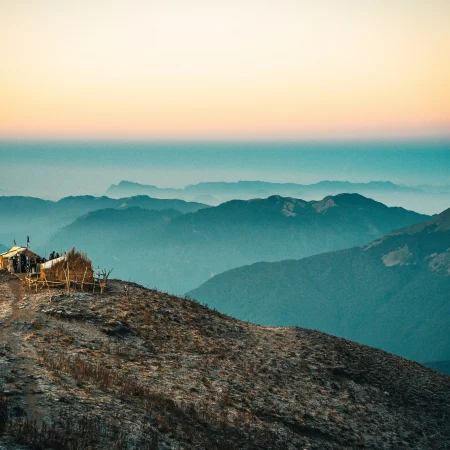
Duration: 10 Days
Max altitude: 4,130 m (Annapurna Base Camp)
Price starts from: USD 567
Annapurna Base Camp Trek – 10 Days
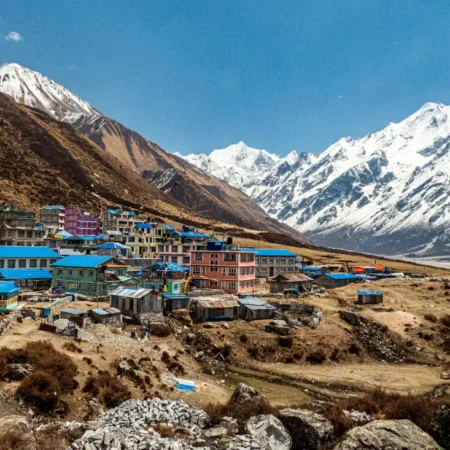
Duration: 08 Days
Max altitude: 4,200 m (Annapurna North Base Camp)
Annapurna North Base Camp Trek – 08 Days
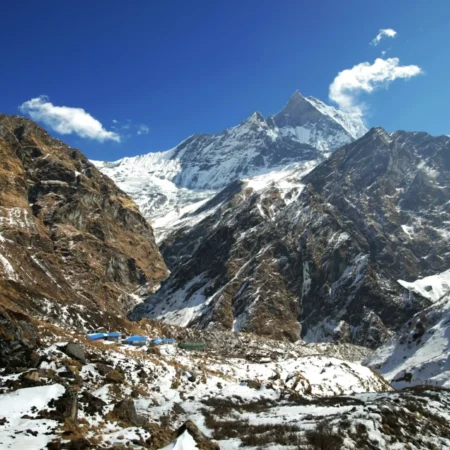
Duration: 12 Days
Max altitude: 4,500 m (Mardi Himal Base Camp)