-

Duration
15 Days -

Starts from
Varanasi -
Ends at
Kathmandu -

Trip type
Beyond Borders Heritage Tours
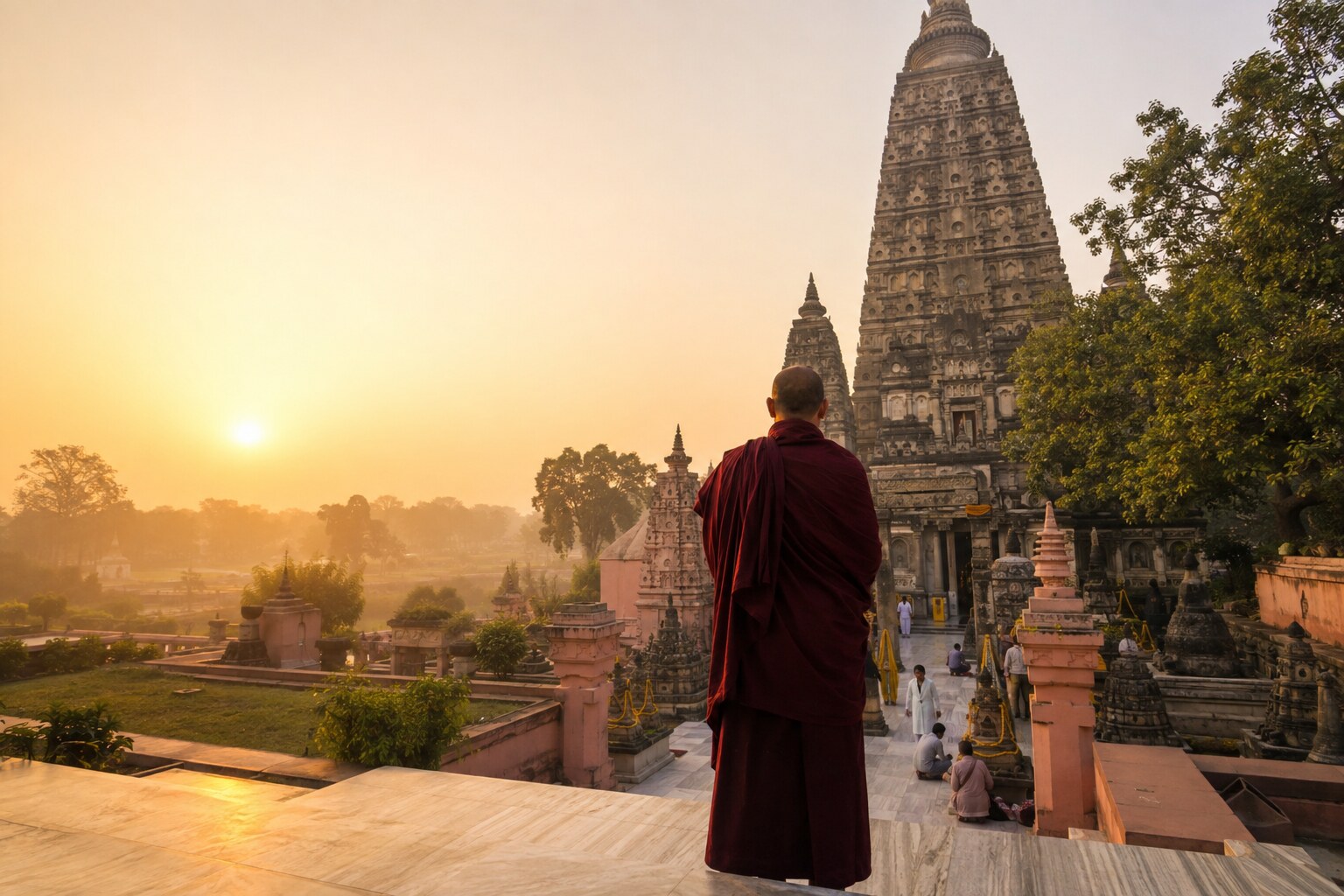
The Buddhist Pilgrimage Tour connects sacred places associated with Buddha’s birth, enlightenment, first sermon, final journey, and Mahaparinirvana. This 15-day programme begins in Varanasi, India, and ends in Kathmandu, Nepal.
In India, travellers visit Sarnath, Bodh Gaya, Vaishali, and Kushinagar before crossing into Nepal at Sunauli. The Nepal section covers Lumbini, Pokhara, Bandipur, Kathmandu, Boudhanath, and Namo Buddha. Each destination provides different religious, historical, or cultural context.
Pokhara and Bandipur provide slower cultural stops between the main pilgrimage sites. These destinations balance longer road journeys and repeated temple visits. This route suits pilgrims, families, cultural travellers, senior visitors, and private groups seeking a structured cross-border journey. Travellers should prepare for long drives, moderate walking, border procedures, and varying site conditions.
India Nepal Buddhist Tour Overview
The India Nepal Buddhist Tour combines religious visits, historical learning, and cultural sightseeing across two countries. Local guides explain each site’s importance through temples, stupas, monasteries, archaeological remains, and living Buddhist traditions.
The journey uses separate transport arrangements in India and Nepal. Travellers change vehicles after completing immigration at the Sunauli-Belahiya border. Border queues, traffic, and road conditions can affect the planned arrival time.
Euro Asia Tours & Travels coordinates hotels, guides, vehicles, and border assistance across both countries. Daily schedules consider site opening hours, religious observances, security checks, and the group’s walking pace. Hotels, meals, pacing, and selected activities can be adjusted after group requirements are confirmed.
The standard programme runs from Varanasi to Kathmandu, but the route can also operate in reverse. This Nepal India Buddhist Tour option requires revised hotels, transport, guides, and border coordination.
Buddhist Pilgrimage Tour at a Glance
These facts summarise the standard 15-day programme from Varanasi to Kathmandu. Final arrangements depend on group size, selected hotels, border conditions, and confirmed services.
No trekking is involved, but travellers should prepare for long drives and moderate walking.
| Feature | Details |
| Duration | 15 days |
| Starting point | Varanasi, India |
| Ending point | Kathmandu, Nepal |
| Countries | India and Nepal |
| Tour type | Guided private or group pilgrimage tour |
| Best travel period | October to March |
| Physical demand | Moderate sightseeing, long drives, steps, and some uneven surfaces |
| Trekking required | No |
| Accommodation | Hotels throughout, including one overnight stay near Namo Buddha |
| Transportation | Private vehicles, with separate arrangements in India and Nepal |
| Border crossing | Sunauli-Belahiya border area |
| Longest travel day | Bodh Gaya to Kushinagar through Vaishali, usually 10 to 12 hours |
| Major Indian sites | Sarnath, Bodh Gaya, Vaishali, and Kushinagar |
| Major Nepali sites | Lumbini, World Peace Pagoda, Boudhanath, and Namo Buddha |
| Suitable for | Pilgrims, families, cultural travellers, senior visitors, and organised groups |
| Customisation | Hotels, meals, pacing, activities, and route direction can be adjusted before confirmation |
India Nepal Buddhist Circuit Tour Route
The standard circuit begins in Varanasi and continues through Sarnath, Bodh Gaya, Vaishali, and Kushinagar. Travellers then cross the Sunauli-Belahiya border before continuing through Nepal.
After Lumbini, the programme visits Pokhara, Bandipur, Kathmandu, Boudhanath, and Namo Buddha. The final night is in Kathmandu before departure.
Route sequence: Varanasi → Sarnath → Bodh Gaya → Vaishali → Kushinagar → Lumbini → Pokhara → Bandipur → Kathmandu → Namo Buddha → Kathmandu
Buddha’s Life Stages Covered by This Route
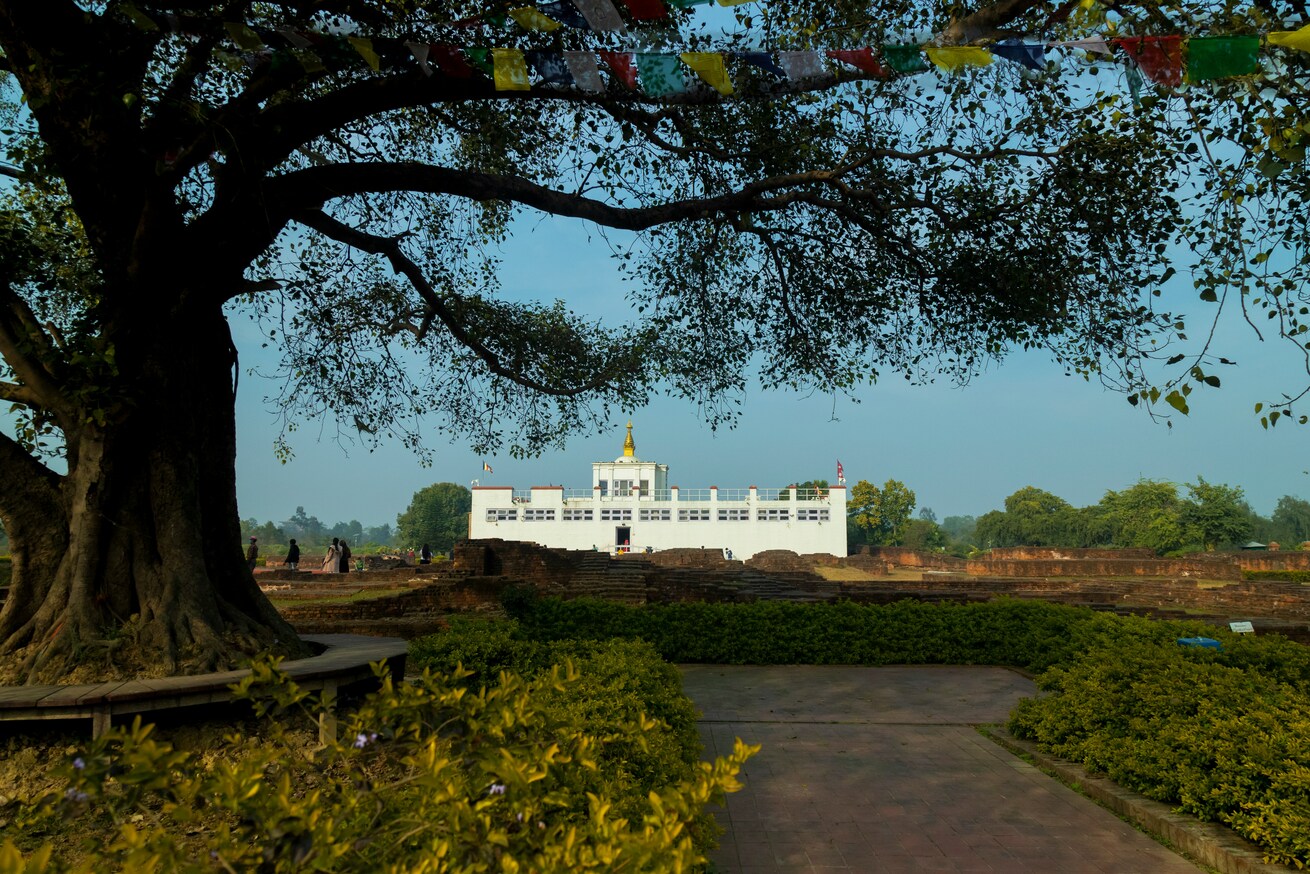
The travel order follows practical road connections rather than the chronological sequence of Buddha’s life.
| Life stage or significance | Destination |
| Birth of Siddhartha Gautama | Lumbini, Nepal |
| Enlightenment beneath the Bodhi Tree | Bodh Gaya, India |
| First sermon after enlightenment | Sarnath, India |
| Important place during Buddha’s final journey | Vaishali, India |
| Mahaparinirvana | Kushinagar, India |
| Living Tibetan Buddhist traditions | Boudhanath, Nepal |
| Buddhist tradition focused on compassion | Namo Buddha, Nepal |
Trip Highlights
- Follow Buddha’s life journey across India and Nepal during a carefully planned 15-day pilgrimage.
- Attend the evening Ganga Aarti and enjoy a morning boat ride in Varanasi.
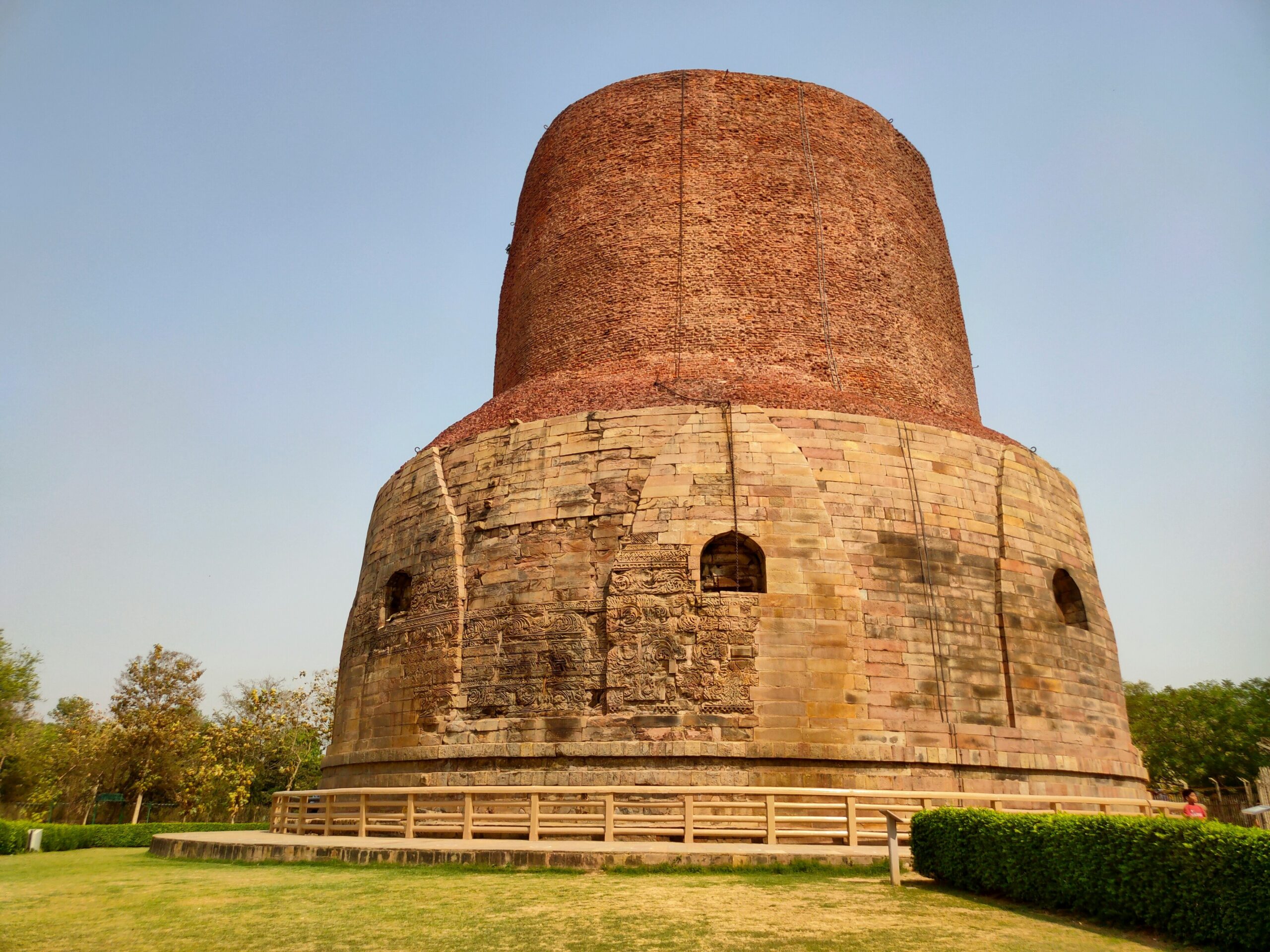
- Visit Dhamek Stupa in Sarnath, where Buddha delivered his first sermon.
- Explore Mahabodhi Temple, the Bodhi Tree, Vajrasana, and monasteries in Bodh Gaya.
- See Vaishali’s Ashoka Pillar and Kushinagar’s reclining Buddha and Ramabhar Stupa.
- Cross the India–Nepal border with coordinated assistance from local teams.
- Explore Lumbini’s Maya Devi Temple, Sacred Garden, Ashoka Pillar, and international monasteries.
- Watch the Himalayan sunrise from Sarangkot and visit Pokhara’s World Peace Pagoda.
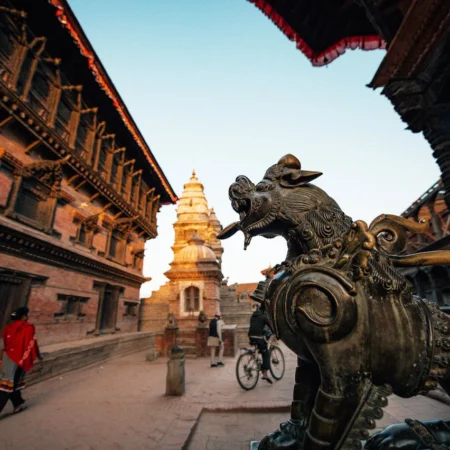
- Discover Bandipur’s traditional Newari houses, temples, and preserved hill-town culture.
- Experience living Buddhist traditions at Swayambhunath, Boudhanath, and Namo Buddha.
- Travel with local guides, private vehicles, selected hotels, and flexible pacing.
Trip Detailed itinerary
-
Arrival in Varanasi and Evening Ganga Aarti
Day
01
Arrive at Lal Bahadur Shastri International Airport, where a representative assists with your private hotel transfer. Transfer time depends on traffic.
After hotel check-in, visit the Ganges riverfront for the evening Ganga Aarti. Reaching the viewing area involves crowded lanes and steps.
Travellers with mobility concerns should request assistance before arrival. Participation depends on flight timing and local conditions.
Meals follow the confirmed package and arrival schedule. Stay overnight in Varanasi.
-
Ganges Boat Ride and Sarnath Visit
Day
02
Begin with an early boat ride on the Ganges, subject to river and weather conditions. View Varanasi’s historic ghats from the water.
After breakfast, visit Sarnath, where Buddha delivered his first sermon after enlightenment. Explore Dhamek Stupa, Mulagandha Kuti Vihara, and nearby archaeological remains.
The site involves moderate walking across paved and uneven surfaces. Return to Varanasi for meals and an overnight hotel stay.
-
Varanasi to Bodh Gaya
Day
03
After breakfast, drive approximately 255 kilometres from Varanasi to Bodh Gaya. The journey usually takes six to seven hours.
Comfort stops are arranged, although roadside facilities may be basic. Keep drinking water, medication, and essential items inside your day bag.
Check into your Bodh Gaya hotel and rest after arrival. An evening temple-area walk may be possible, depending on arrival.
-
Buddhist Pilgrimage Tour of Bodh Gaya
Day
04
Visit Bodh Gaya, where Siddhartha Gautama attained enlightenment beneath the Bodhi Tree. Explore the Mahabodhi Temple complex and see the Vajrasana.
Continue to Sujata Stupa and selected monasteries representing Buddhist traditions from several countries. Visits depend on opening hours and available time.
Expect moderate walking, security checks, and footwear removal inside selected areas. Follow local clothing, photography, and entry rules.
Stay overnight in Bodh Gaya.
-
Bodh Gaya to Kushinagar via Vaishali
Day
05
Depart early for Kushinagar through Vaishali. The full day involves roughly 370 to 400 kilometres, depending on the chosen route.
Allow 10 to 12 hours for driving, sightseeing, meals, and comfort stops. This is the itinerary’s longest and most demanding travel day.
Visit Vaishali’s Ashoka Pillar and archaeological remains linked to Buddha’s final journey. Available sightseeing time may be limited when traffic causes delays.
Continue to Kushinagar, check into your hotel, and rest overnight.
-
Kushinagar to Lumbini via Sunauli Border
Day
06
Visit the Mahaparinirvana Temple and the reclining Buddha image. Continue to Ramabhar Stupa, traditionally associated with Buddha’s cremation.
Drive approximately 170 kilometres towards Lumbini through the Sunauli-Belahiya border. Travel and immigration usually require five to seven hours.
Keep passports and visas accessible during border procedures. After immigration, change vehicles and meet the Nepal team.
Continue to Lumbini and check into your hotel. Stay overnight in Lumbini.
-
Buddhist Pilgrimage Tour of Lumbini
Day
07
Explore Lumbini, Buddha’s birthplace and a UNESCO World Heritage Site. Begin at the Maya Devi Temple within the Sacred Garden.
See the Marker Stone, Ashoka Pillar, Sacred Pond, and nearby archaeological remains. Continue to selected monasteries within Lumbini’s international monastic zones.
Lumbini’s extensive grounds require considerable walking unless local transport is arranged. Wear modest clothing, carry water, and follow site rules.
Return to your hotel and stay overnight in Lumbini.
-
Lumbini to Pokhara
Day
08
After breakfast, drive approximately 200 kilometres from Lumbini to Pokhara. The journey usually takes seven to eight hours, depending on road conditions.
The route passes lowland towns before climbing through forested hills and winding roads. Comfort and meal stops are arranged during travel.
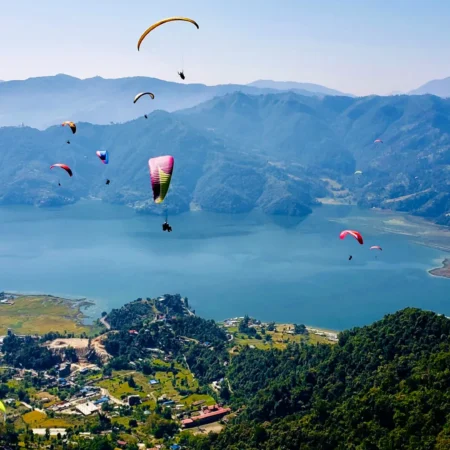
After arrival, check into your Pokhara hotel. Rest or take a short walk near Phewa Lake.
Stay overnight in Pokhara.
-
Pokhara Sunrise and World Peace Pagoda
Day
09
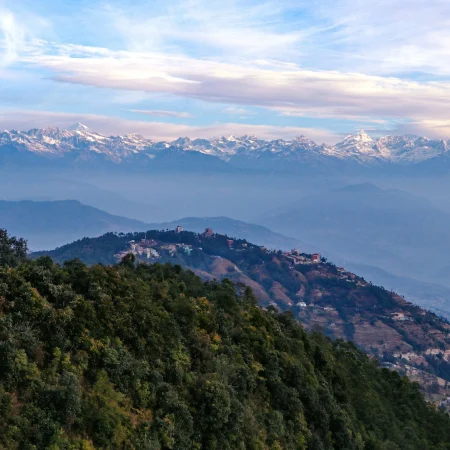
Travel to Sarangkot before sunrise for Himalayan views, weather permitting. Clear mornings may reveal Annapurna, Dhaulagiri, and Machhapuchhre. Clouds and seasonal haze can reduce visibility.
After breakfast, visit the World Peace Pagoda overlooking Pokhara Valley and Phewa Lake. Reaching the pagoda involves uphill walking and several steps.
Later, relax near Phewa Lake or visit selected Pokhara attractions. Return to your hotel and stay overnight in Pokhara.
-
Pokhara to Bandipur
Day
10
After breakfast, drive approximately 80 kilometres from Pokhara to Bandipur. Travel usually takes three to four hours, depending on highway conditions.
Explore Bandipur’s historic bazaar, traditional Newari houses, temples, and pedestrian lanes. Local sightseeing involves slopes and uneven stone surfaces.
Some hotels have limited vehicle access because the main bazaar is pedestrianised. Check into your hotel and stay overnight in Bandipur.
-
Bandipur to Kathmandu
Day
11
After breakfast, drive approximately 145 kilometres from Bandipur to Kathmandu. The journey usually takes five to seven hours, depending on traffic.
The route follows winding hill roads and river valleys. Meal and comfort stops are arranged during the journey.
Heavy traffic near Kathmandu can delay arrival. Check into your hotel, rest, and stay overnight in Kathmandu.
-
Buddhist Heritage Tour of Kathmandu
Day
12
Begin at Swayambhunath, an ancient stupa overlooking Kathmandu Valley. Use the main staircase or upper vehicle entrance, depending on mobility.
Continue to Boudhanath, one of Nepal’s important Tibetan Buddhist centres. Walk clockwise around the stupa and visit selected surrounding monasteries.
Temple entry rules and photography permissions vary between sites. Follow your guide’s instructions and respect ongoing religious activities. Return to your hotel and stay overnight in Kathmandu.
-
Kathmandu to Namo Buddha
Day
13
After breakfast, drive approximately 40 kilometres southeast from Kathmandu to Namo Buddha. The journey usually takes two hours, depending on traffic.
Visit Thrangu Tashi Yangtse Monastery and learn about the site’s Jataka tradition. Monastery activities depend on the community’s schedule and permission.
The grounds include slopes, stairs, and uneven paths. Stay overnight near Namo Buddha, following the confirmed accommodation arrangement.
-
Namo Buddha to Kathmandu
Day
14
After breakfast, spend time around Namo Buddha for quiet observation or permitted monastery activities. Participation depends on the monastery’s schedule.
Later, drive approximately 40 kilometres back to Kathmandu. The journey usually takes two hours, depending on traffic.
Check into your Kathmandu hotel and use the remaining time to rest or do some personal shopping. Stay overnight in Kathmandu.
-
Departure From Kathmandu
Day
15
Your India Nepal Buddhist Tour ends after breakfast or according to your confirmed flight schedule.
A representative assists with your transfer to Tribhuvan International Airport. Departure timing considers Kathmandu traffic and airline check-in requirements.
Before leaving the hotel, check your passport, tickets, luggage, and personal belongings.
Trip Price details
Price includes
- Fourteen nights’ hotel accommodation in the confirmed category
- Daily breakfast and meals mentioned in the final itinerary
- Airport pickup in Varanasi and departure transfer in Kathmandu
- Private transportation throughout India and Nepal
- Separate vehicles and support teams in both countries
- English-speaking local guides during scheduled sightseeing
- Entrance fees for the listed pilgrimage sites and monuments
- Morning boat ride on the Ganges, subject to weather conditions
- Sarangkot sunrise excursion and scheduled Pokhara sightseeing
- Assistance during the Sunauli–Belahiya border crossing
- Luggage coordination and vehicle change at the border
- Applicable hotel taxes and service charges
Price excludes
- International flights and airline-related charges
- Indian and Nepali visa fees
- Travel, medical, and emergency evacuation insurance
- Lunches, dinners, and drinks not mentioned in the itinerary
- Personal expenses, including laundry, telephone calls, minibar use, and shopping
- Tips for guides, drivers, hotel staff, and other service providers
- Optional activities or additional sightseeing not listed in the itinerary
- Camera, video, or special entrance fees where separately charged
- Excess baggage charges
- Hotel upgrades, room upgrades, or single supplements unless confirmed
- Medical treatment, medication, and emergency evacuation expenses
- Additional costs caused by flight delays, road blockages, border closures, natural disasters, or political unrest
Trip Information
How This 15-Day Route Differs From a Longer Buddhist Circuit Tour
This itinerary covers four principal places linked with Buddha’s birth, enlightenment, first sermon, and Mahaparinirvana. Vaishali adds context about his final journey.
Rajgir, Nalanda, Shravasti, and Kapilavastu are not included in the standard programme. Adding them requires more travel days, additional hotels, and revised transport arrangements.
The extended route should be planned separately to prevent rushed visits and excessively long driving days.
Sacred Buddhist Sites Covered in India
The Indian section visits Sarnath, Bodh Gaya, Vaishali, and Kushinagar. Each place represents a different stage of Buddha’s life and final journey.
Sarnath: Where Buddha Delivered His First Sermon
Sarnath lies near Varanasi and marks where Buddha delivered his first teaching after enlightenment. The sermon introduced the Four Noble Truths and the Noble Eightfold Path.
The pilgrimage area includes Dhamek Stupa, monastery ruins, Ashoka Pillar remains, and Mulagandha Kuti Vihara. The vihara remains active for prayer and religious observance.
Visitors should allow time for walking between separate monuments and museum areas. Confirm museum opening times and weekly closures locally. Carry drinking water and sun protection during warmer months.
Bodh Gaya: The Place of Buddha’s Enlightenment
Bodh Gaya marks where Siddhartha Gautama attained enlightenment beneath the Bodhi Tree. The Mahabodhi Temple Complex is a UNESCO World Heritage Site and active pilgrimage centre.
Central features include the Vajrasana and Bodhi Tree, where pilgrims pray, meditate, and perform religious rituals. The present tree is traditionally regarded as a descendant of the original Bodhi Tree.
Sujata Stupa and international monasteries provide further historical and cultural context. Different monasteries reflect Buddhist traditions from several countries.
Expect security screening, footwear removal, restricted items, and large crowds during important festivals. Opening times and access rules may change.
Vaishali: An Important Site in Buddha’s Final Journey
Vaishali was important during Buddha’s teaching years and his final journey towards Kushinagar. Buddhist tradition connects the area with several events from his later life.
The archaeological area at Kolhua contains an Ashoka Pillar, brick stupa, and monastery remains. Nearby sites include a Buddha Relic Stupa.
Vaishali is visited during the longest travel day, so departure timing affects sightseeing. An early start helps protect time at the site.
Expect exposed grounds, uneven surfaces, and limited shade. Carry drinking water and sun protection.
Kushinagar: The Place of Buddha’s Mahaparinirvana
Kushinagar marks the place where Buddha entered Mahaparinirvana after his final teachings. It is one of Buddhism’s four principal pilgrimage destinations.
The Mahaparinirvana Temple contains a reclining Buddha image beside the Nirvana Stupa. Ramabhar Stupa is traditionally identified as Buddha’s cremation site.
Visitors should allow quiet time at both locations when the schedule permits. Expect footwear removal, moderate walking, and outdoor exposure between monuments.
Sacred Buddhist Sites Covered in Nepal
The Nepal section combines Buddha’s birthplace with historic stupas, active monasteries, and modern Buddhist peace monuments. These sites show how Buddhist heritage continues through pilgrimage, worship, learning, and local traditions. Travellers planning further cultural experiences can also explore our tours in Nepal.
Lumbini: The Birthplace of Buddha
Lumbini marks the birthplace of Siddhartha Gautama. The Lumbini pilgrimage area holds UNESCO World Heritage status and contains important archaeological remains.
The Maya Devi Temple contains archaeological remains and the Marker Stone. Nearby landmarks include the Ashoka Pillar and Sacred Pond.
Lumbini’s monastic zones contain temples and monasteries representing Buddhist traditions from several countries. The extensive grounds require walking or locally arranged transport.
Travellers with limited mobility should confirm vehicle access before the visit.
Boudhanath Stupa: Kathmandu’s Major Buddhist Centre
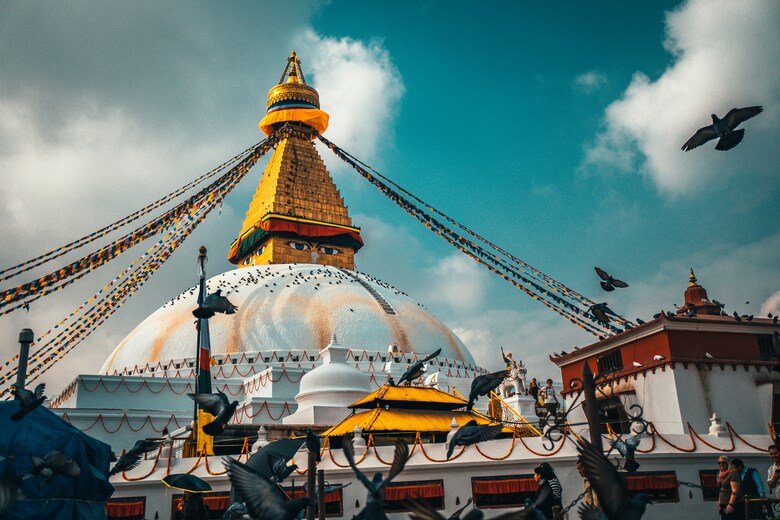
Boudhanath is an important centre of Tibetan Buddhist life in Kathmandu. The stupa forms part of Kathmandu Valley’s UNESCO World Heritage designation.
Pilgrims walk clockwise around the stupa while turning prayer wheels. Surrounding monasteries represent several Tibetan Buddhist traditions and teaching lineages.
The main circular path is mostly level but can become crowded. Visitors should respect ceremonies, photography restrictions, and monastery entry rules.
Namo Buddha: A Sacred Place Associated With Compassion
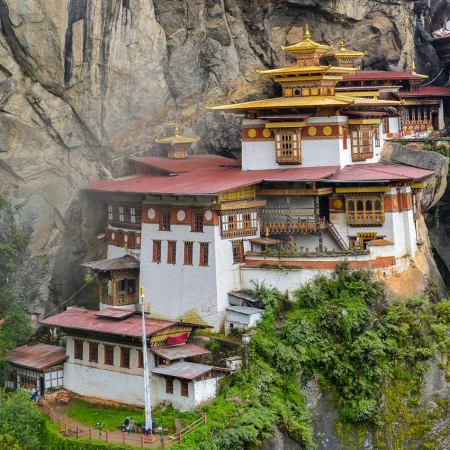
According to Buddhist tradition, Namo Buddha is linked with a Jataka story about Prince Mahasattva. The story describes his compassionate sacrifice for a starving tigress and her cubs.
The sacred area includes an ancient stupa and Thrangu Tashi Yangtse Monastery. Prayer sessions and visitor participation depend on the monastery’s daily programme and permission.
Reaching different areas involves slopes, stairs, and uneven paths. Remain quiet and follow instructions during prayers and other religious activities.
World Peace Pagoda in Pokhara
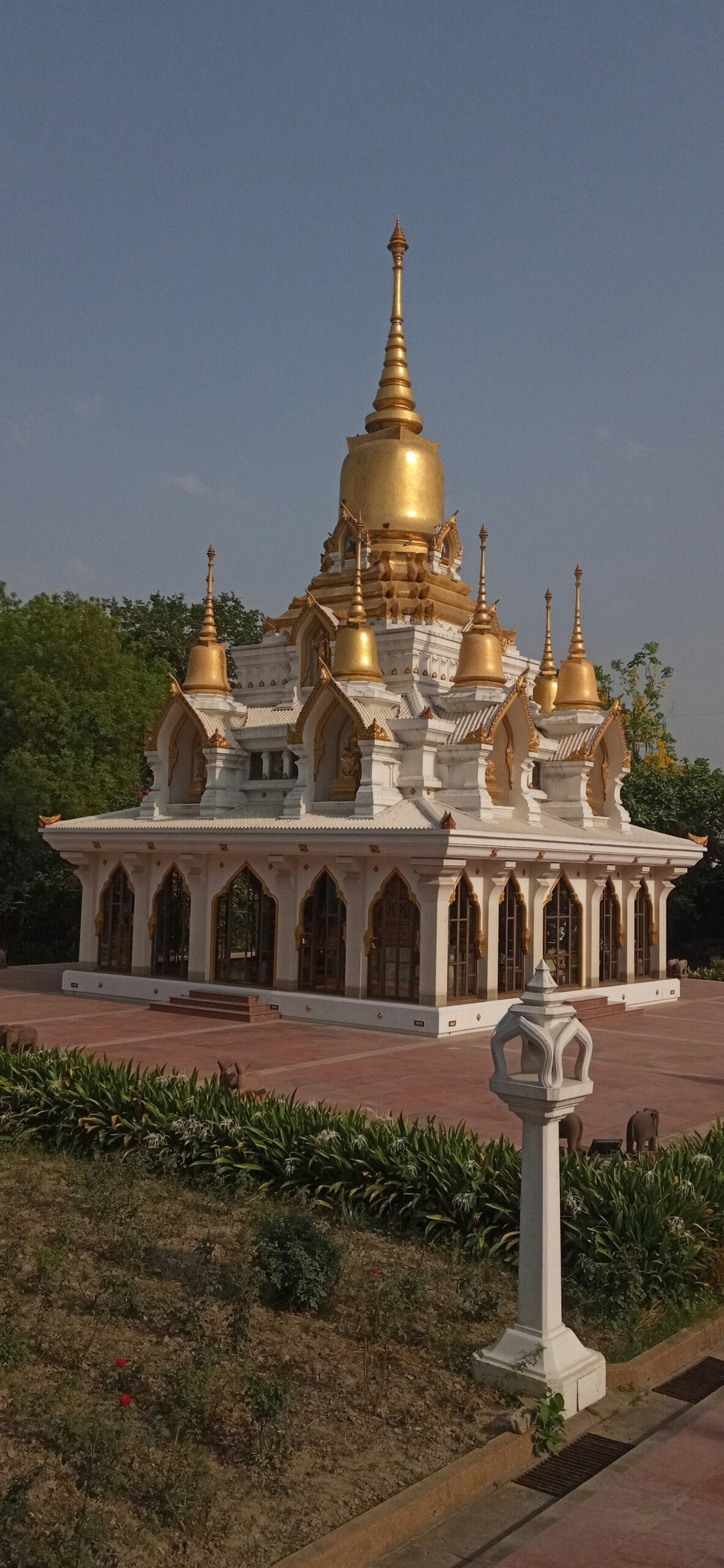
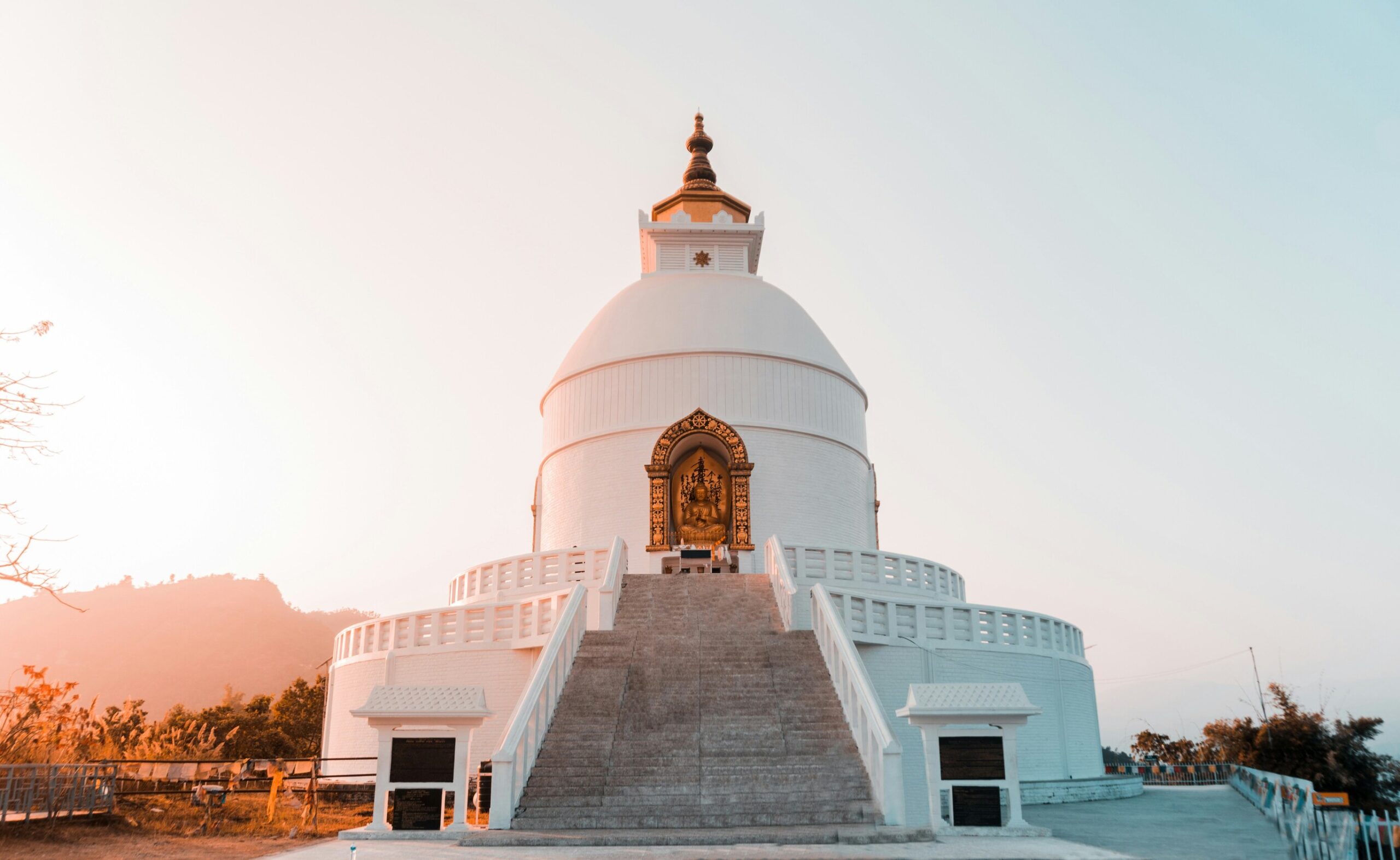
The World Peace Pagoda stands above Phewa Lake and serves as a modern Buddhist peace monument. It promotes peace through Buddhist teachings.
Buddha images around the pagoda represent important stages of his life. Visitors should walk clockwise and respect the site’s quiet atmosphere.
Vehicle access ends below the monument, followed by an uphill walk and several steps. Mountain views depend on weather and seasonal visibility.
Swayambhunath Stupa: Buddhist Heritage Above Kathmandu
Swayambhunath is an ancient Buddhist complex overlooking Kathmandu Valley. Its principal stupa forms part of the valley’s UNESCO World Heritage designation.
The site reflects Newar and Tibetan Buddhist traditions through shrines, prayer wheels, monasteries, and daily worship. Visitors should walk clockwise around the stupa.
The main eastern staircase contains many steep steps. An upper vehicle entrance provides easier access for travellers with limited mobility.
India Nepal Buddhist Tour Cost
The India Nepal Buddhist Tour cost depends on group size, travel dates, hotel category, room arrangements, and vehicle capacity. The India and Nepal sections use separate transport, guides, and local service arrangements.
Entrance fees, border assistance, meals, and applicable taxes also affect pricing. The Buddhist pilgrimage tour cost may change with hotel upgrades, single-room use, meal plans, and seasonal supplier rates.
Euro Asia Tours & Travels prepares a personalised quotation after confirming travel dates, traveller numbers, and preferred hotel category. The written quotation clearly explains inclusions, exclusions, payment terms, cancellation conditions, and any single-room supplement.
Buddhist Tour Package Prices and Booking Options
Buddhist tour package prices vary between private and group departures. Private tours offer flexible dates, pacing, hotels, and room arrangements.
Group packages may reduce shared vehicle and guide costs, but usually follow fixed schedules. Final pricing depends on confirmed group size and included services.
Before booking, review the itinerary, hotels, meals, visa responsibilities, payment schedule, and cancellation terms. Confirm every service in writing, including hotel category, meals, guides, entrance fees, and airport transfers. Review our booking conditions before confirming services or paying deposits.
What Does the Buddhist Pilgrimage Tour Package Include?
Exact inclusions depend on the confirmed quotation. The Buddhist pilgrimage tour package may include:
- Hotel accommodation in the confirmed category
- Airport arrival and departure transfers
- Private transportation throughout India and Nepal
- Local guides for scheduled sightseeing
- Entrance fees for listed monuments and pilgrimage sites
- Border assistance, luggage coordination, and the required vehicle change
- Meals specified in the final itinerary
- Applicable taxes and service charges stated in the quotation
Separate teams operate the India and Nepal sections. Border assistance provides guidance during immigration and coordination with the receiving Nepal team.
Always review the hotel category, meals, transfers, entrance fees, taxes, and guide services before confirming your booking.
What Is Not Included in the Buddhist Tour Package?
Exact exclusions depend on the confirmed quotation. Common exclusions include:
- International flights and airline charges
- Indian and Nepali visa fees
- Travel and medical insurance
- Meals and beverages not listed in the itinerary
- Laundry, telephone calls, minibar use, and personal purchases
- Guide and driver tips
- Excess baggage charges
- Optional activities and additional sightseeing
- Medical treatment and emergency evacuation
- Expenses caused by flight delays, road blockages, border closures, natural disasters, or political unrest
Euro Asia assists travellers with alternative arrangements during unexpected disruptions. However, additional hotels, meals, or transport remain chargeable unless stated otherwise.
Review all inclusions, exclusions, and disruption-related responsibilities before confirming the tour.
Private and Group India Nepal Buddhist Tour Packages
Private India Nepal Buddhist Tour packages offer flexible dates, hotel choices, sightseeing time, and travel pacing for individual groups.
Group departures suit monasteries, Buddhist societies, families, and organised communities. Shared transport and guide services may reduce each traveller’s cost.
Each guided Buddhist pilgrimage tour can consider rooming, mobility, dietary needs, and group-leader support. Final arrangements require advance confirmation.
Can This Buddhist Pilgrimage Tour Be Customised?
Yes. The tour can be adjusted for duration, travel direction, hotel category, group size, mobility, and daily pace.
Additional Buddhist Circuit sites can be added, but they require extra days and revised transport planning. A religious itinerary can prioritise prayer, meditation, and monastery time. A heritage-focused itinerary can include additional museums and archaeological sites.
Room arrangements, dietary needs, guide languages, accessibility, and group-leader support can also be considered. Every adjustment remains subject to availability and written confirmation before booking. Travellers wanting meditation and wellness activities can consider our Wellness Tour to Nepal.
Accommodation During the India Nepal Buddhist Tour
Accommodation ranges from standard hotels to upgraded properties based on the confirmed package. Hotel choice is wider in major cities than smaller pilgrimage destinations.
Single, double, twin, or triple rooms can be requested, subject to availability. Heating, air-conditioning, lifts, bathroom facilities, and room sizes differ between hotels.
Travellers needing lifts, walk-in showers, lower floors, or adjoining rooms should request them early. These requirements need written confirmation from each hotel. Never assume a hotel is fully accessible without checking its confirmed facilities.
Meals During the Buddhist Pilgrimage Tour
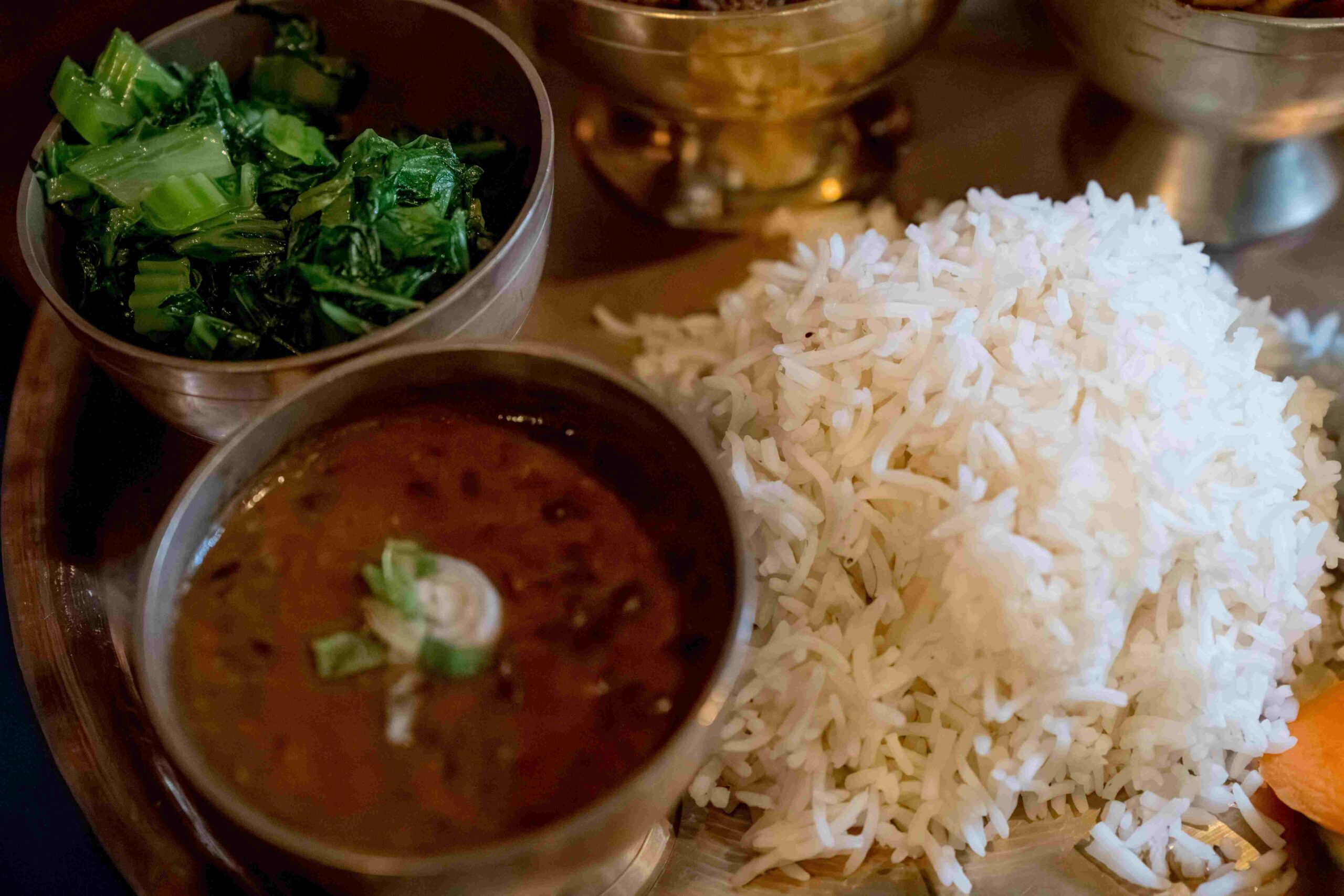
The confirmed quotation states which breakfasts, lunches, and dinners are included. Meal arrangements may differ between India and Nepal. Travellers can review our guide to popular foods in Nepal before selecting meals.
Vegetarian meals are widely available. Vegan, gluten-free, and allergy-sensitive meals require advance notice. Hotel and restaurant kitchens cannot always guarantee complete separation from allergens. Travellers with severe allergies should discuss their requirements before booking.
Choose freshly cooked food and sealed or properly treated drinking water. Carry suitable snacks during long driving days. Inform your guides about dietary requirements at the beginning of each country section.
Transportation During the India Nepal Buddhist Pilgrimage Tour
Private vehicles are arranged separately in India and Nepal. Vehicle type depends on group size, luggage, and confirmed comfort requirements.
Cars, vans, minibuses, or coaches may be used. Vehicle confirmations should state air-conditioning and luggage capacity.
Drivers and vehicles change after travellers complete immigration at the Sunauli-Belahiya border.
| Driving route | Estimated travel time |
| Varanasi to Bodh Gaya | Six to seven hours |
| Bodh Gaya to Kushinagar through Vaishali | Ten to twelve hours |
| Kushinagar to Lumbini through Sunauli | Five to seven hours, including border procedures |
| Lumbini to Pokhara | Seven to eight hours |
| Bandipur to Kathmandu | Five to seven hours |
Travel times remain approximate because traffic, roadworks, weather, immigration, and comfort stops can cause delays.
Domestic flights may replace selected road journeys after schedules, baggage allowances, and additional costs are confirmed.
India–Nepal Border Crossing at Sunauli
Travellers complete Indian departure formalities at Sunauli before proceeding to Nepal immigration at Belahiya. Each traveller must carry valid passports and visas.
After immigration, the group changes vehicles and transfers luggage between the Indian and Nepali teams. Keep passports, money, medication, and valuables personally.
Waiting times depend on queues, system availability, inspections, and group size. Border representatives provide guidance but cannot guarantee fast processing.
Eligible travellers can complete the official Belahiya visa-on-arrival application before approaching Nepal immigration.
Visa Requirements for India and Nepal
Visa requirements depend on nationality, passport type, and entry point. India’s eVisa rules require six-month validity and two blank passport pages. Check India’s official eVisa portal.
Eligible travellers can apply for Nepal’s tourist visa at Belahiya. Others must obtain approval before travel. Check Nepal’s official arrival portal.
Confirm fees, payment methods, photographs, and border requirements before departure. Each traveller remains responsible for carrying valid documents.
Best Time for a Buddhist Circuit Tour
The best time for a Buddhist circuit tour depends on heat, rainfall, visibility, and road conditions across both countries. India and Nepal experience different seasonal conditions, so travellers should prepare for each country separately. Travellers can also review these important things to know before visiting Nepal before departure.
October to March: Recommended Travel Period
October through March generally brings cooler conditions across the Indian pilgrimage route. Walking and long road journeys become more manageable.
October and November often provide Nepal’s clearest skies, according to the Nepal Tourism Board. December and January bring colder mornings around Kathmandu and Namo Buddha.
Winter fog can reduce visibility and delay transport in northern India. Popular pilgrimage sites and hotels may also become busier.
April to June: Hotter Conditions in India
April through June can become extremely hot across Varanasi, Bodh Gaya, Vaishali, Kushinagar, and Lumbini. Outdoor sightseeing becomes more tiring.
Pokhara and Kathmandu are generally milder but can still experience warm afternoons.
Plan important visits earlier, carry drinking water, and schedule regular rest. Confirm air-conditioned vehicles and avoid unnecessary midday walking.
July to September: Monsoon Considerations
July through September brings rainfall and higher humidity across much of India and Nepal. Rainfall intensity varies by destination and day.
Road delays, waterlogged streets, and slippery surfaces can affect travel. High river levels may interrupt Ganges boat rides.
Mountain visibility around Pokhara often decreases during cloudy periods. Travel remains possible with flexible schedules, rain protection, and realistic expectations.
How Difficult Is the Buddhist Pilgrimage Tour?
The Buddhist Pilgrimage Tour has a moderate difficulty level. No trekking is required, but several days include long drives and early starts.
Daily sightseeing involves moderate walking, temple steps, uneven archaeological surfaces, footwear removal, and crowded areas. Heat and humidity can increase physical strain. Day 5 may involve 10 to 12 hours of driving and sightseeing. Other travel days can exceed seven hours.
Travellers need general mobility, reasonable stamina, and patience during border procedures. Those with mobility concerns should request slower pacing and additional rest.
Is This Guided Buddhist Pilgrimage Tour Suitable for Seniors?
The tour can suit senior pilgrims, depending on their health, mobility, heat tolerance, and comfort during long journeys.
A private departure allows slower sightseeing, additional rest stops, and more flexible schedules. Extra days can reduce pressure on demanding routes.
Request hotel lifts, lower-floor rooms, walk-in showers, suitable vehicles, and dietary support before booking. Every accessibility requirement needs written confirmation.
Travellers with medical conditions should consult a qualified healthcare professional before paying non-refundable costs. The CDC recommends a pre-travel health assessment based on personal health and the planned itinerary.
Carry prescribed medication in hand luggage, with extra supplies for unexpected delays.
Walking and Accessibility at Buddhist Sites
Walking requirements vary by vehicle access, security controls, crowds, and selected monuments. These times are planning estimates for standard guided visits.
Surfaces and access may change during maintenance or local restrictions. Confirm current arrangements before booking.
| Site | Accessibility details |
| Sarnath | Walking: 45–90 minutes. Surface: Paved and uneven. Steps: Some. Rest: Limited. Vehicle access: Near entrances. Limitation: Separate monuments. |
| Bodh Gaya | Walking: 60–120 minutes. Surface: Paved and stone. Steps: Some. Rest: Available. Vehicle access: Outside security zone. Limitation: Crowds. |
| Vaishali | Walking: 30–60 minutes. Surface: Grass and uneven ground. Steps: Few. Rest: Limited. Vehicle access: Near sites. Limitation: Exposed grounds. |
| Kushinagar | Walking: 45–75 minutes. Surface: Paved and garden paths. Steps: Few. Rest: Some. Vehicle access: Near entrances. Limitation: Separate monuments. |
| Lumbini | Walking: Two–four hours. Surface: Paved paths and extensive grounds. Steps: Some. Rest: Available. Vehicle access: Restricted. Limitation: Long distances. |
| World Peace Pagoda | Walking: 30–60 minutes. Surface: Uphill paths. Steps: Several.Rest: Limited. Vehicle access: Below monument. Limitation: Uphill walking. |
| Boudhanath | Walking: 30–60 minutes. Surface: Mostly level. Steps: Few. Rest: Available nearby.Vehicle access: Outside main circle. Limitation: Crowds. |
| Swayambhunath | Walking: 30–60 minutes. Surface: Stone and paved.Steps: Many. Rest: Some. Vehicle access: Upper entrance. Limitation: Steep staircase. |
| Namo Buddha | Walking: 60–120 minutes. Surface: Slopes and uneven paths. Steps: Several. Rest: Limited. Vehicle access: Near monastery. Limitation: Different elevations. |
Wheelchair users and travellers with walking aids need a site-specific review. Guides can assist, but some physical barriers may remain.
What to Pack for a Buddha Footsteps Tour
Pack modest clothing, comfortable walking shoes, clean temple socks, a refillable bottle, and a small day bag. Protect passports, visa copies, medication, insurance details, and emergency contacts inside waterproof covers.
During warmer months, bring lightweight clothing, sun protection, hydration supplies, and a compact umbrella. Monsoon travel also requires a lightweight waterproof jacket and quick-drying clothes.
Cooler months require warm layers for mornings in Nepal. Carry hand sanitiser, tissues, charging equipment, and a universal power adapter.
Temple and Monastery Etiquette
Wear clothing that covers shoulders and knees. Remove footwear where required, and use clean socks on hot or cold surfaces.
Walk clockwise around stupas where this is the local custom. Remain quiet during ceremonies and request permission before photographing people, monks, or interiors.
Rules differ between Buddhist traditions and individual monasteries. Respect restricted areas, avoid interrupting worship, and treat donations as voluntary.
Health, Food and Drinking Water Advice
Drink sealed bottled water or properly treated water. Choose freshly cooked food and wash your hands before eating. Review official India and Nepal travel-health guidance.
Hot conditions increase hydration needs. Take regular breaks during long drives and carry suitable motion-sickness medication after professional advice.
Travellers with existing conditions should consult a qualified medical professional before departure. Carry personal medication, insurance details, and emergency contacts.
Why Book Your India Nepal Buddhist Tour With Euro Asia?
Euro Asia Tours & Travels has operated from Kathmandu since 1995. Its local team manages Nepal services and coordinates Indian arrangements through local partners.
Travellers receive support with itineraries, hotels, licensed guides, vehicles, border procedures, and special requirements. Private arrangements allow flexible pacing for groups, seniors, and individual pilgrims.
Every quotation explains confirmed services, exclusions, and payment responsibilities. The team provides assistance before departure and throughout the journey.
Plan Your India-Nepal Buddhist Pilgrimage Tour
Planning begins with your preferred dates, group size, hotel category, room arrangements, dietary needs, and mobility requirements. Share these details when requesting a quotation.
Euro Asia can adjust the route, daily pace, sightseeing time, and rest stops around confirmed requirements. Travellers seeking a Nepal India Buddhist Tour may request a reverse itinerary, subject to operational confirmation.
Review the confirmed services, exclusions, payment terms, and cancellation conditions before making a booking. You can contact Euro Asia Tours & Travels to request a quotation or discuss specific requirements.
Confirm every detail before booking flights or paying deposits.
About the Tour Review Team
Euro Asia Tours & Travels’ Kathmandu product and operations team reviewed this itinerary. The review focused on practical delivery rather than destination descriptions.
The team checked route direction, daily pacing, overnight stops, border arrangements, walking demands, hotel access, and seasonal conditions. Senior travellers’ mobility requirements were also considered.
Indian services remain coordinated through local partners. Final timings, access conditions, and supplier arrangements are reconfirmed before departure.
Last reviewed: September 2026.
Trip FAQ
-
What Is a Buddhist Pilgrimage Tour?
A Buddhist pilgrimage tour visits sacred places connected with Buddha’s life, teachings, and Buddhist heritage. This journey combines guided pilgrimage with cultural sightseeing.
-
Which Sacred Sites Does This Tour Cover?
The tour covers Sarnath, Bodh Gaya, Vaishali, Kushinagar, Lumbini, Boudhanath, Swayambhunath, Namo Buddha, and Pokhara’s World Peace Pagoda.
-
How Long Is the India Nepal Buddhist Tour?
The standard itinerary lasts 15 days. Additional pilgrimage sites or slower travel arrangements require extra days.
-
What Does the India Nepal Buddhist Tour Cost?
The cost depends on group size, hotel category, travel dates, room type, and included services. A customised quotation provides accurate pricing.
-
Where Does the Tour Begin and End?
The standard tour begins in Varanasi, India, and ends in Kathmandu, Nepal. The travel direction can be customised when required.
-
Which Visas Are Required?
Visa requirements depend on nationality. Arrange the correct India visa before arrival and confirm Nepal’s Belahiya entry requirements before travelling.
-
How Is the India–Nepal Border Crossed?
Travellers complete Indian departure and Nepal arrival formalities at Sunauli-Belahiya. The standard arrangement includes luggage assistance and a vehicle change.
-
Is the Journey Suitable for Senior Pilgrims?
It may suit seniors who can manage moderate walking and long drives. Private pacing, suitable hotels, and rest stops can improve comfort.
-
How Much Walking Is Required?
Most site visits involve 30 to 120 minutes of walking with breaks. Lumbini may require longer because its grounds are extensive.
-
Can the Tour Start in Kathmandu?
Yes. The itinerary can operate from Nepal to India, subject to hotel, transport, guide, and border arrangements. Pricing may change.
-
Can Buddhist Groups Arrange Private Departures?
Yes. Monasteries, Buddhist societies, families, and pilgrimage groups can request private dates, guides, vehicles, hotels, and customised religious activities.
-
Can Additional Buddhist Sites Be Added?
Yes. Rajgir, Nalanda, Shravasti, and Kapilavastu can be added. Extra destinations increase travel time, tour duration, and package cost.
Trip Reviews





Buddhist Pilgrimage Tour Through India and Nepal
Related trips
Other similar you may be interested in
Duration: 8 Days / 7 Nights Days
Max altitude: 3,880 m (Everest View Hotel)
Adventure Tour with Everest Helicopter | 8-Day Luxury Nepal Tour
Duration: 6 Days
Max altitude: 2,100m (Nagarkot)
Price starts from: USD 485