-

Duration
12 Days -

Accomodation
Hotel, Guest House, Lodge -

Starts from
Kathmandu -
Ends at
Kathmandu -

Transportation
Car, Bus, Plane -

Max. Altitude
1400m -

Group size
Min. 2 pax -

Trip type
Himalayan Cultural Tours

Trip Grade
EasyThe Nepal Festival Tour is a cultural journey that aligns with one (or more) of Nepal’s major festivals. Whether you’re witnessing the riot of colors during Holi, the spiritual intensity of Indra Jatra, or the family warmth of Dashain and Tihar, this immersive tour lets you celebrate like a local.
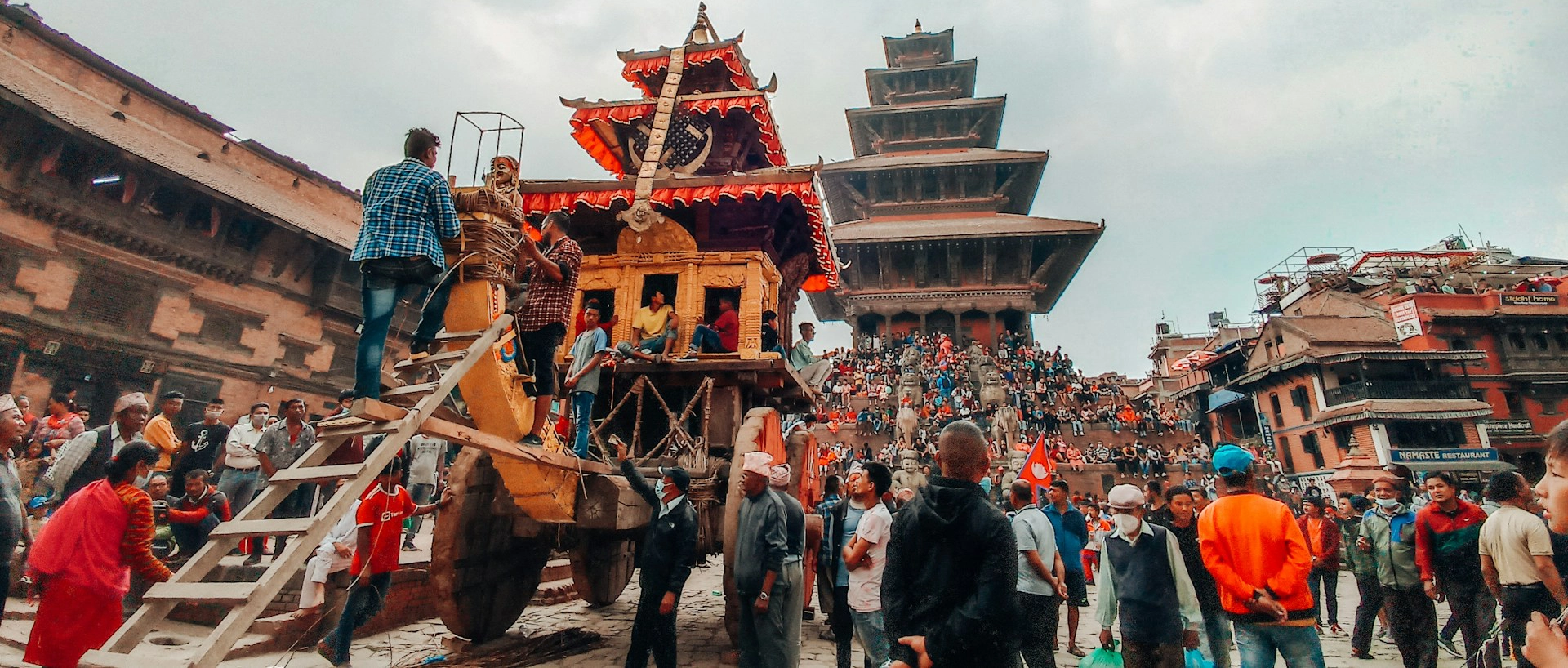
Nepal festival tour and famous temple places give us an insight into the rich culture of our country. There are festivals which are celebrated with full of life, colors, and enthusiasm. These festivals also resemble the regional, cultural, and traditional diversity of Nepal. It holds great importance for local Nepalese people. The way of celebrating the mysterious festivals is still the same as that of ancient times. This tour also gives an insight into the Nepal Kathmandu mandir.
Know more about the Heritage Festival Tour
The day after your arrival, you will embark on a sightseeing tour of UNESCO World Heritage sites. The sites have other ecstatic viewpoints around the cultural city of Kathmandu. During the initial days of your trip, you will learn about
Half-day sightseeing:
-
Kumari’s House, Kathmandu Durbar Square
Visit the residence of the Living Goddess Kumari, Nepal’s only living deity. This three-story brick building is adorned with intricately carved windows, wooden reliefs of gods, and spiritual symbols. The architectural beauty of this sacred home leaves every traveler in awe. -
Swayambhunath Stupa (Monkey Temple)
Next, explore Swayambhunath Stupa, one of the oldest and most revered stupas in Nepal. Perched atop a hill, it offers panoramic views of the Kathmandu Valley. Known as the Monkey Temple, it’s a peaceful sanctuary perfect for spiritual reflection.
Drive to Dhulikhel
After a half-day of sightseeing, we drive for a couple of hours to Dhulikhel, a beautiful hill town famous for its stunning sunrise and sunset views over the Himalayas. Watching the golden rays touch the Himalayan peaks is an experience that leaves an everlasting impression on every traveler.
Know about the Festivals and Nepal Festival Tour Experience
During this tour, you will have the unique opportunity to witness and participate in some of Nepal’s most celebrated festivals, such as Janai Purnima and Gai Jatra. Each festival has its own charm and story — from the sacred rituals of Janai Purnima to the humorous street parades of Gai Jatra.
You will also visit Pokhara, often called the Paradise of Nepal, where nature meets culture and adventure. Surrounded by serene lakes and Himalayan peaks, Pokhara offers a relaxing yet enriching experience that perfectly complements your festival journey.
The Nepal Festival Tour is not just about celebration and entertainment — it’s an educational and cultural experience that helps you understand the spiritual and social essence of Nepalese life. It’s a once-in-a-lifetime opportunity to celebrate with locals, learn their traditions, and become part of Nepal’s vibrant cultural fabric.
Best Time to Plan Your Nepal Festival Tour
-
Feb/March: Holi– Festival of Colors
-
April/May: Buddha Jayanti– Birth of Lord Buddha
-
Aug–Sept: Indra Jatra, Teej
-
Sept–Oct: Dashain– Festival of Victory
-
Oct–Nov: Tihar– Festival of Lights
(Dates vary yearly based on the lunar calendar)
Note: Festival dates in Nepal are being fixed by astrologers according to the Lunar months. We can only know the approximate dates between the months. Therefore, inquire with us for fixed festival dates and other inquiries. Janai Purnima and Gai Jatra usually fall in July and August, whereas Dashain and Tihar lie in the month of October.
Trip Highlights
- Guided in Kathmandu Valley, Dhulikhel, Bandipur, Pokhara with festival celebration and sightseeing.
- Excursion to Gosaisthan in Dhulikhel and Sunrise tour to Sarangkot.
- Visit Typical Newari Village in Kathmandu Valley.
- Country sides drive Kathmandu, Dhulikhel, Bandipur, Pokhara and Kathmandu.
- Learn and observe Nepali Culture and Festival.
- Sightseeing in holy places.
Trip Detailed itinerary
-
Arrival
Day
01
Welcome by our representative at the airport and transfer to hotel in Kathmandu. Later in the evening enjoy Welcome Dinner.
Stay overnight at Kathmandu.
-
Half day sightseeing tour to Kathmandu Durbar Square, Swyambhunath Stupa and then drive to Dhulikhel
Day
02
After breakfast we are going to do some sightseeing activities today. As planned, we are going to explore some of the most iconic UNESCO World Heritage Sites of Kathmandu city, evening drive to Dhulikhel.
Stay overnight at Dhulikhel.
-
Observe the festival of Janai Purnima and drive to Bhaktapur
Day
03
Janai Purnima:
The festival of sacred thread wore by Hindu men especially Brahmin and Chhetri is known as Janai and as it always falls under full moon which is called Purnima in Nepali thus the festival is popularly known as Janai Purnima. People in Nepal are divided into following castes : Newars, Brahmin, Chhetri, Vaishyas, Shudras and Dalits (caste-less people)which defines their status in the society though banned by law it still haunts the lives of Nepali people and this festival is especially celebrated by so called “upper caste people”. A white cotton string is worn across the chest only by men, which is given to them in a religious ceremony called “Bratabandha” which marks the starting of purity of men coming from these castes and to abide by the religious beliefs stated by religious texts. This string has three cords which symbolizes body, speech and mind and wearing them is the process of having complete control over these. This thread is required to change if it becomes impure i.e when the man is touched by the woman going through menstruation, as menstruation is regarded as impure and woman is not allowed to touch men, get into the kitchen or prayer room or to eat with other family members, touched by people from so called “lower caste” and during mourning and celebrating the birth of a child. On this day itself the tie yellow cotton thread on their hands which is celebrated as Raksha Bandhan. This thread is said to protect you from problems that might affect you which is tied by both the men and women from Brahmin and Chhetri communities. After tying the thread both Janai and Raksha Bandhan people feast themselves with Quati (a soup made with mixture of different sprouted beans) and rice. This festival not only provides you with the glimpse of people’s celebration but also helps you understand the gender and social structure that shapes the lives of Nepali people.
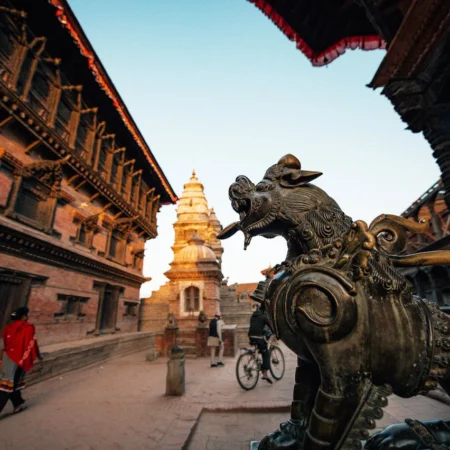
Bhaktapur Durbar Square:This durbar square will mesmerize you with the beauty of different temples and palaces. You will not only be able to see the spectacular view of 15th century architecture but also will be acquainted with the palaces and the courtyard of the ancient times. The golden gates, wooden palace studded with 55 windows, Batsala temple, Shiva temple and the National Art Gallery are the major attractions of this square. Moreover, you might not want to miss out the five storied Nyatapola Temple built in 17th century; adding on to its structure are the pair of two wrestlers, two elephants, two lions, two griffins and goddess’s tigress & lioness in each storey making it the most tallest pagoda style temple exhibiting the immense creativity and craftsmanship of Nepali in those centuries.
Stay overnight at Bhaktapur.
-
Observe Gai Jatra festival at Bhaktapur and drive to Kathmandu
Day
04
Gai Jatra was started by King Pratap Malla to comfort his wife after their son’s death to give her a message that many households in the country have lost their loved ones. Gai in Nepali means cow and Jatra means processions or celebrations thus Gai Jatra, as according to the Hindu belief cows are the means of transport for dead people to cross the holy river to reach heaven. People here believe in rebirth and reincarnation which is deeply integrated in people’s value system and still believe blindly that if you do good deeds you will be born to upper caste and have better life which is the main reason to discriminate and out caste the people from so called lower caste.
The festival was initiated to show the Queen that people were happy even if they have lost their loved ones thus people wore fancy dresses and even dressed up as another sex and as of playful characters fills the streets of Kathmandu. As people are still in the mourning period the festival should have been subtle or sober which is not the case as this festival reminds people to move on with their lives no matter how difficult or impossible it may seem. Thus the people whose family member died in that year come out in the street dressed in different clothes and colors. This festival also marks the occasion where people organize different programs to make jokes, cartoons or skit on the ongoing political and social issues.
Stay overnight at Kathmandu.
-
Observe Matya Festival in Patan
Day
05
Matya known as the festival of lights by Buddhists. Newar marks the festival of parade who visit to all the Buddhist shrines scattered around Patan which sums up to around 1300 Buddhists shrines. Men, women and children clad in colorful dresses and participate in the parade with handful of offerings to be made to Lord Buddha which comprises of rice grains, flowers, vermilion powder, sweets, incense sticks and guru patra (gift for the teacher). The one thing which is not missed by any of the parade walkers is the butter lamp which is offered to Lord Buddha which signifies overcoming of temptations and being one step near to Nirvana.
Along with these parade walkers you will be able to enjoy devil dancers or funny mask wearers walking on the streets whose costume is made of rags and worn out clothes who never misses a chance to tease and scare the children who come on their way.
Stay overnight at Kathmandu.
-
Drive from Kathmandu to Bandipur
Day
06
After having our breakfast we will drive from Kathmandu to Bandipur viewing river banks and beautiful gorges on the way. After reaching there we will be transfer to hotel for rest and later we one can explore Bandipur or can stay in hotel.
Bandipur:
Bandipur is a hilltop settlement in Tanahu District, (Gandaki Zone) of Nepal. Because of its preserved, old time cultural atmosphere, Bandipur has increasingly been coming to the attention of tourism. Originally a simple village in the early 19th century. Bandipur today is a community with town-like features: substantial buildings, with their neoclassical facades and shuttered windows and streets paved with slabs of slate.
Stay overnight at Bandipur.
-
Drive from Bandipur to Pokhara
Day
07
After having our early breakfast we head toward Pokhara and after reaching Pokhara we will have half day sightseeing tour to Devin’s fall, Seti Gorge and Gupteshwor Gupha (Cave)
Pokhara:
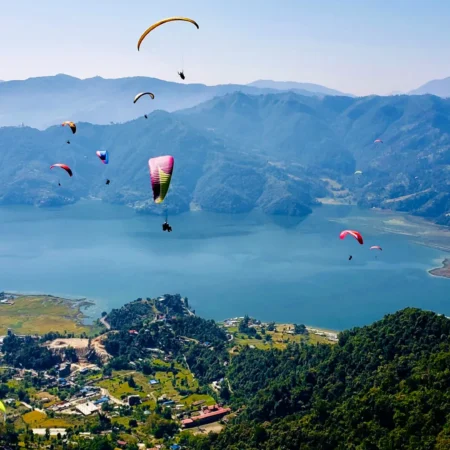
Known as the city of lakes and the starting point for trekking destination and the second largest city of Nepal is Pokhara. The Barahi temple in the middle of the big lake is the most fascinating landmark in Pokhara and the reflection of snow capped mountain in the lake is so serene and magnificent that you will remember it for your entire life. With the closer view of Annapurna range and Mt. Fish tail you will feel close to nature and mysticism. The other destinations in Pokhara that you will not want to miss out on are Devin’s fall, Bindabasini Temple, Seti George, Buddhist monasteries and the hike to Peace Pagoda which brings you close to the nature and to the different spectrum of life style in this magnificent city.
Devin’s Fall:This fall marks the falling of a Swiss national to the stream of Pardi khola on Butwal road which is approximately 2 km southwest from Pokhara domestic airport. When the stream is at full bore the sounds of water plunging over the falls makes deafening sounds but is losing its glory due to the human invasion in this natural stream.
Seti Gorge:The white water flows through this gorge which is narrow and flows through mid town. This milky white water might trigger a question in your mind is it polluted with chemicals? As the water itself is white thus called Seti; meaning white in Nepali. The best place to view this river is from the park in KI Singh Bridge north of old Pokhara to the road to Batulechaur.
Gupteshwor Gupha (cave):A sacred cave in a distance of 2 km from Pokhara airport is right across the entrance of Devin’s fall which is 3 km long. Some places have enough for you to walk past it but in some places you need to crawl. This cave is sacred to Hindus as it has phallic symbol of Lord Shiva, one of the most worshiped Hindu deity, was found here and is being preserved in its original state.
Stay overnight at Pokhara.
-
Excursion to Sarangkot
Day
08
After having breakfast we will move for excursion to Sarangkot at dawn, visit Barahi Temple and Boating at Fewa Lake.
Sarangkot:
This hill at an altitude of 1592 meters stands tall at the north of Pokhara overlooking the valley and the Fewa Lake. Sarangkot can be an attraction to you if you want to venture on a small trekking trip as long as two hours or at 45 minutes drive from the lake side, Pokhara. This is a beautiful place for sunrise and on a clear day you will be welcomed by the Himalayan range of Annapurna, Dhaulagiri and Fishtail and offers you to see the milky lake and Seti river flowing on the north making the environment more serene and magnificent.
Barahi temple on Fewa Lake:
It is the most important monument in Pokhara which no one wants to miss out on. It is placed in the middle of the Lake dedicated to the manifestation of Ajima, the protector deity representing the female power. Devotees flock into this temple to pay homage to the female force and offer animals to the goddess. Devotees are also seen feeding fishes of the lake who gather at the surroundings of the temple. You can also view the magnificent scenery of reflection of Mt. Fishtail in the lake.
Stay overnight in Pokhara.
-
Drive from Pokhara to Kathmandu
Day
09
Have breakfast in Pokhara and drive from Pokhara to Kathmandu 7-8 hours scenic drive . Lunch on the way to Kathmandu.
Stay overnight at Kathmandu.
-
Full day sightseeing tour to Bungmati, Khokana and Pashupatinath Temple
Day
10
Today after having our breakfast we will go for full day sightseeing tour in the following places:
Bungmati:
Just 10 km away towards the south of Kathmandu in Patan lies Bungmati. Still studded with charm and mysticism of rural life this place provides you with the opportunity to interact with local rural people and to observe the rural life style though within the vicinity of urban life. The culture and traditions and the wooden carvings are the attractions that you might want to pamper your eyes, mind and soul.
Khokana:A traditional Newari village towards 8km south of Kathmandu lies Khokana who offers you to view its traditional history and culture. Though very near from Kathmandu the hustle and bustle of city life has not touched its essence thus has been representing its core values, traditions and norms even today. Nominated to be listed as a World Heritage site, Khokana stands unique today for mustard oil seed industry.
Khokana:
Khokana is just in 20-30 minutes walking distance from Bungamati another Newar village. The village begins with a narrow cobbled street and in the middle of the main street lies the temple of Shekali Mai a local mother Goddess. Khokana is famous for its mustard oil, they still make in a traditional way and the mustard oil is still very popular in Kathmandu valley.
Pashupatinath:Pashupatinath, one of the holiest temple of Hindu deities Lord Shiva, has a golden roof and silver doors and is built in pagoda style. The temple is in the mid of green forest and the river Bagmati on whose bank Hindus are cremated is flowing on its side. People except Hindu are not allowed to enter the main courtyard of the temple but can be viewed from the eastern bank of the river. It is the center of the Hindu pilgrimage and annually thousands of devotees flock into the temple during Shivaratri and Teej which occurs in the month of March and August respectively.
Stay overnight at Kathmandu.
-
Move towards Patan to view Krishna Janmaasthami
Day
11
Today we will head towards Patan to view Krishna Janmashtami. Krishna Janmashtami is celebrated in the occasion of birth of Krishna, the eighth avatar of Vishnu.
Patan City:
Patan Durbar Square is an enchanting melange of Palace buildings, artistic courtyards and graceful pagoda temples. Listed as a World Heritage Site, the former Royal Palace complex is the center of Patan’s religious and social life. A museum full of bronze statues and religious monuments is one of the fascinating places to visit within Patan Durbar Square. A temple entirely built by stone in the 17th century in the name of Hindu deity Krishna, is one of the major attraction of Patan Durbar Square.
Krishna Mandir:
Krishna Janmashtami, a festival which is celebrated as the birthday of Hindu god Krishna, is celebrated all over the country. On this auspicious occasion, the head-of-the state, visits Krishna Mandir (temple) to offer prayers to the temple. He is said to be the one who commemorated Mahabharata, a great Hindu mythology, and the one who initiated Gita, the most read Hindu religious document. People song religious songs, dance and offer milk products in the temple.
Later in the evening enjoy the Farewell Dinner.
Stay overnight at Kathmandu.
-
Departure
Day
12
After breakfast drive to the airport to your own destination.
Trip Price details
Price includes
- Overnight in Kathmandu, Dhulikhel, Bandipur and Pokhara with Breakfast.
- Guided sightseeing tours and excursion.
- Entrance fees to the monuments and cities.
- All transfer by private vehicles as per program.
- International Arrival and Departure transfer in Kathmandu.
- Welcome Dinner and Farewell Dinner.
Price excludes
- Nepal entry Visa Fees.
- Lunch and Dinner in all places.
- Beverage and Tips.
- Any cost occurred due to landslide, political disorder or natural calamities, flight cancellation or any unforeseen reason, etc.
- Personal Travel insurance.
- Any services not included in cost include section.
Trip Information
What to Expect on a Nepal Festival Tour
Joining a Nepal Festival Tour means stepping into the heart of Nepal’s traditions, colors, and community spirit. These tours are more than just sightseeing — they offer a rare chance to experience the country’s culture through its celebrations. Here’s what you can look forward to:
1. Cultural Immersion and Local Celebration
Experience Nepal the way locals do — by participating in traditional rituals, dances, and celebrations. Whether it’s throwing vibrant colors during Holi, lighting oil lamps for Tihar, or watching the grand processions of Indra Jatra, every festival reveals a different side of Nepal’s spiritual and social life. These tours allow you to connect with local communities, observe ancient customs, and celebrate centuries-old traditions that still thrive today.
2. A Perfect Blend of Culture and Sightseeing
Festival tours in Nepal are often paired with visits to iconic heritage sites and natural wonders. Explore Kathmandu’s UNESCO World Heritage Sites, marvel at the serene Swayambhunath Stupa, or enjoy the breathtaking landscapes of Pokhara and Dhulikhel. This unique blend of festivity and exploration ensures that your trip is both culturally rich and visually stunning.
3. Authentic Insight into Nepalese Life
Beyond the celebrations, festival tours offer a deep understanding of Nepal’s cultural diversity and religious harmony. You’ll witness how festivals bring families, friends, and entire communities together — reflecting the unity and devotion that define Nepalese life. Every experience helps you appreciate the spiritual depth and joyful energy that make Nepal’s culture so special.
4. Guided Activities and Hassle-Free Travel
Every festival tour is led by experienced local guides who help you uncover the meaning and traditions behind each event. From organizing transport and accommodations to arranging festival-specific activities, everything is planned with care. This lets you fully enjoy the moment — whether you’re attending a sacred ceremony, exploring ancient temples, or capturing the colorful street scenes.
Why Choose Euro-Asia for the Nepal Festival Tour?
-
Authentic Local Experience: Celebrate festivals alongside local communities.
-
Expert Cultural Guides: Learn the traditions and stories behind every celebration.
-
Customized Itineraries: Align your trip with the festival that interests you most.
-
Comfortable Travel Arrangements: From transport to accommodation, we handle everything.
-
Trusted by Travelers: Over 20 years of experience organizing cultural and festival tours in Nepal.
Book Your Nepal Festival Tour Today!
Immerse yourself in the heart of Nepal’s festivals — a journey filled with devotion, dance, music, and joy. Whether it’s playing colors during Holi, lighting lamps during Tihar, or watching masked dances in Indra Jatra, every moment will bring you closer to the soul of Nepal.
Contact Euro-Asia Tours & Travels today to book your Nepal Festival Tour and be part of Nepal’s living culture.
Trip Reviews





Nepal Festival Tour – 12 Days
Related trips
Other similar you may be interested in
Duration: 8 Days / 7 Nights Days
Max altitude: 3,880 m (Everest View Hotel)
Adventure Tour with Everest Helicopter | 8-Day Luxury Nepal Tour
Duration: 6 Days
Max altitude: 2,100m (Nagarkot)
Price starts from: USD 485