-

Duration
10 Days -

Accomodation
Mountain Teahouses -

Starts from
Pokhara -
Ends at
Pokhara -

Transportation
Private vehicle -

Max. Altitude
4,130 m (Annapurna Base Camp) -

Group size
Small groups| Private Trip -

Trip type
Trekking in Nepal
Trip Grade
Easy to ModerateThe Annapurna Base Camp Trek is one of Nepal’s most iconic Himalayan journeys, offering an extraordinary blend of dramatic mountain scenery, diverse landscapes, and authentic cultural encounters. Designed for travelers seeking a deeper connection with the Himalayas, this trek leads into the natural amphitheatre of the Annapurna Sanctuary, surrounded by some of the world’s highest peaks.
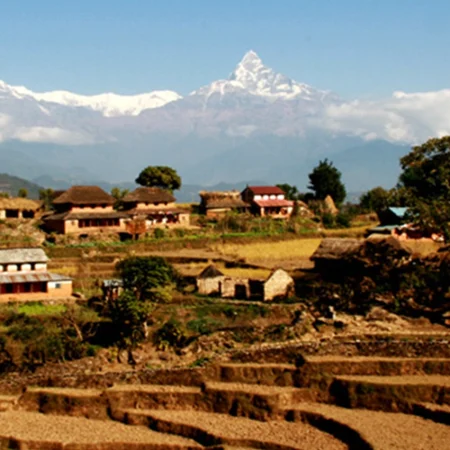
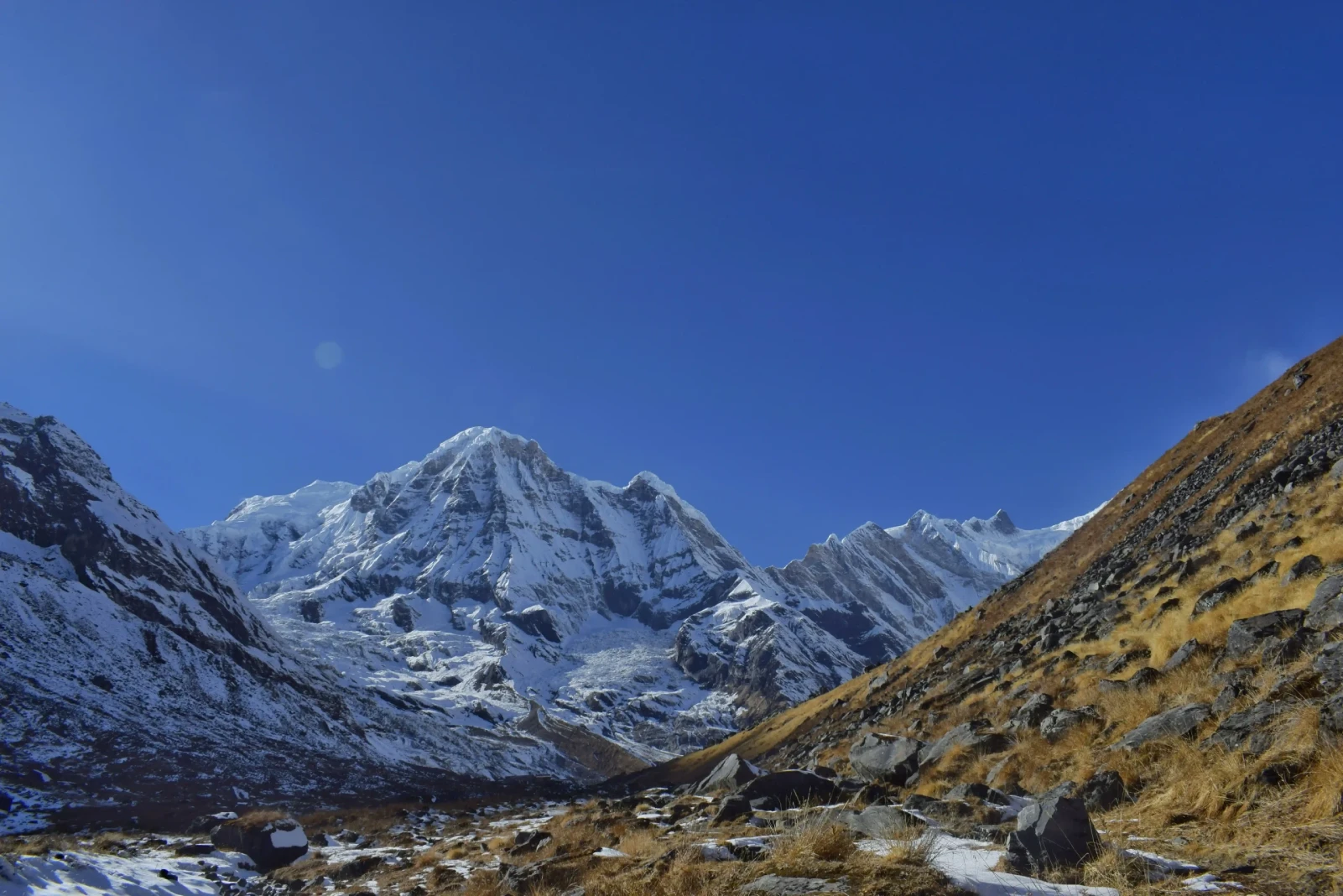
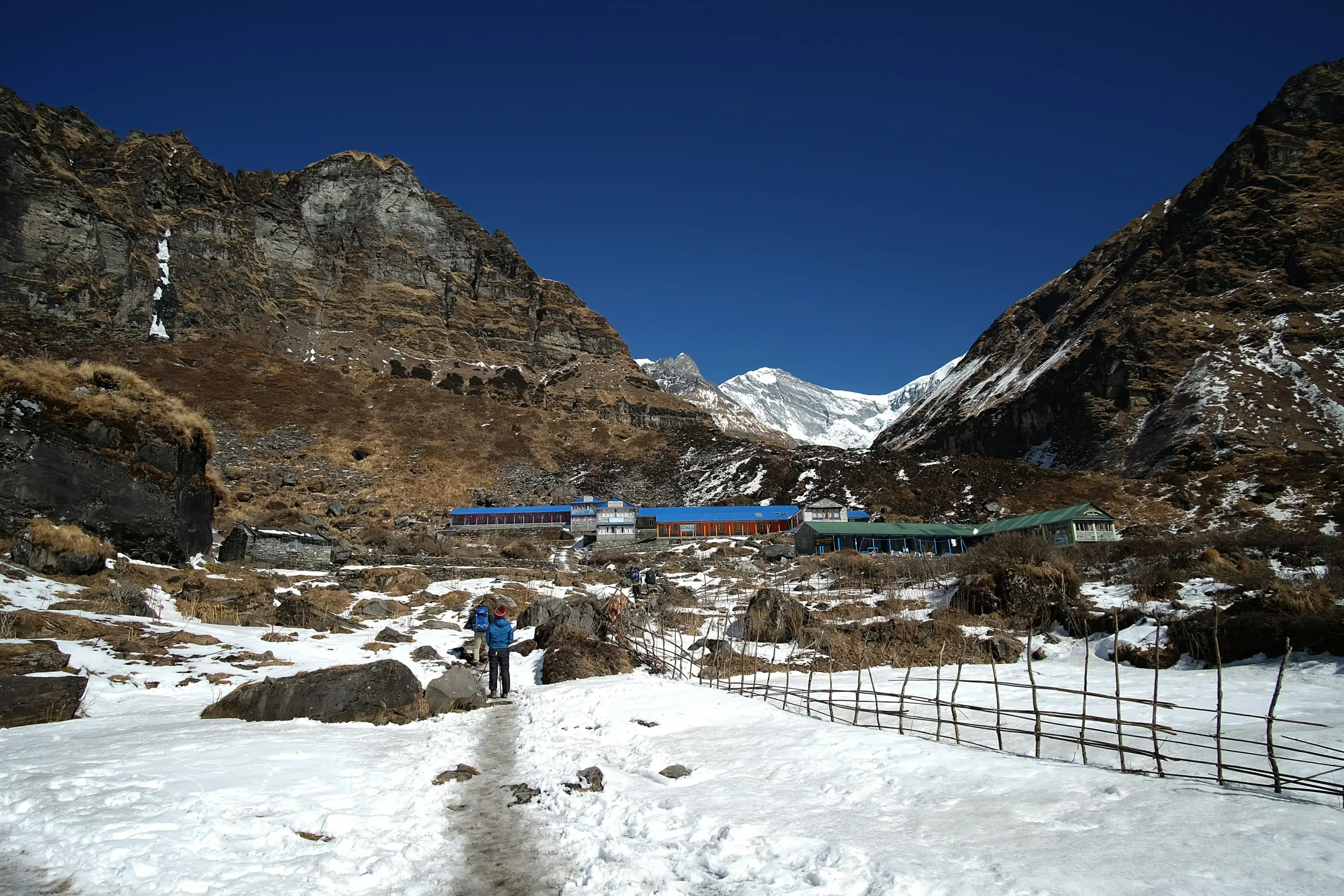
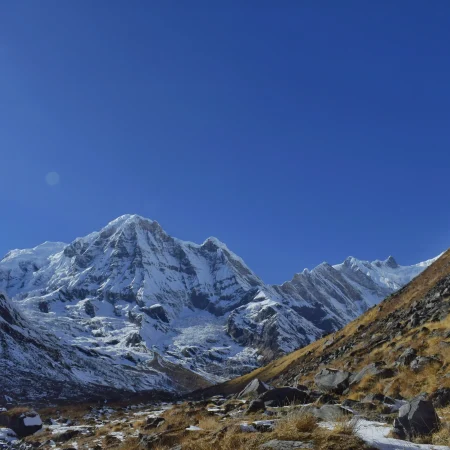
The journey unfolds through terraced farmlands, traditional Gurung villages, dense rhododendron forests, and glacial valleys, gradually ascending to the spectacular Annapurna Base Camp (4,130m). With carefully balanced walking days, comfortable mountain lodges, and ample acclimatization, the trek provides a rewarding yet manageable adventure, culminating in unforgettable close-up views of Annapurna I, Machhapuchhre (Fishtail), Hiunchuli, and Annapurna South.
Why Choose Euro Asia Tours for This Trek
Choosing the right operator elevates your trek from a simple walk to a safe, enriching, and seamless experience.
- 30+ Years of Himalayan Expertise: Euro Asia Tours is a heritage trekking company with three decades of operational excellence. We have guided thousands of trekkers safely into the Annapurna Sanctuary, refining our logistics to perfection.
- Safety & Risk Management First: Altitude sickness is a real factor at 4,130m. Our guides are trained in wilderness first aid and follow strict acclimatization protocols. We carry comprehensive medical kits and monitor your health daily to ensure a safe ascent.
- Deep Local Connections: Our guides and porters are often from the very regions we trek through. This ensures you get genuine cultural insights—not just a guide, but a local host who can explain the legends, flora, and traditions of the mountains.
- Responsible & Ethical Trekking: We are committed to preserving the fragile sanctuary ecosystem. We enforce a “leave no trace” policy, discourage single-use plastics, and ensure all our field staff are insured and paid fairly, setting a standard for ethical tourism.
- Carefully Designed Acclimatization Itinerary: This itinerary is thoughtfully structured to allow gradual altitude gain, strategic overnight stops, and sufficient recovery time. Proper acclimatization is especially important on the trek, where facilities are limited. Our pacing and route design help minimize altitude-related issues while maintaining a rewarding trekking experience.
Online Trip Briefing & Pre-Booking Consultation
Before you book, we offer a free online consultation to ensure this trek is right for you.
What we discuss:
- Fitness & altitude readiness
- Trek difficulty & daily walking hours
- Packing & gear guidance
- Best season selection
- Rooming & group dynamics
- Customization or extensions
ABC Trek Highlights
- Annapurna Sanctuary experience: Walk into a natural high-altitude amphitheatre surrounded by towering Himalayan giants, including Annapurna I (8,091m).
- Diverse landscapes: Journey through subtropical forests, alpine meadows, glacial moraines, and river valleys, experiencing Nepal’s remarkable ecological diversity.
- Cultural immersion: Stay in traditional Gurung and Magar villages, experiencing warm hospitality and insight into mountain life.
- Well-paced trekking: Gradual altitude gain with thoughtfully spaced days, ensuring comfort, safety, and enjoyment throughout the journey.
- Balanced adventure: Combine scenic road journeys, peaceful trekking days, and time to relax in Pokhara’s lakeside setting before and after the trek.
ABC Trek Detailed itinerary
-
Drive to Birethanti & Trek to Tikhedhunga - Gateway to the Annapurna Trails
Day
01
(Approx. 41km; 1.5 hours by road)
(Approx. Elevation: 1,540m )
After breakfast in Pokhara, enjoy a scenic drive to Birethanti, the official starting point of the Annapurna foothill treks where trekking permits are registered. The drive follows river valleys and terraced hills, offering your first glimpses of rural mountain life.
From Birethanti, the trek begins gently along the Modi Khola, passing through small villages. The gentle trail allows time for acclimatization while offering scenic beauty and cultural encounters.
Walking time: Approx. 5 hours
Overnight: Tikhedhunga (Mountain Lodge)
-
Trek from Tikhedhunga to Ghorepani – Forests & Mountain Trails
Day
02
(Approx. Elevation: 2,874 m)
After breakfast, the trail climbs steeply to Ulleri village via a famous stone staircase. Beyond Ulleri, the landscape transforms into dense rhododendron and oak forests. During spring, the forest bursts into color with blooming rhododendrons.
Followed by a peak at Mt. Annapurna south, Heuchuli, and Mt. Fishtail at some point, the air becomes cooler and fresher as you gain altitude. The trail gently ascends through Banthanti and Nangethanti before reaching Ghorepani, a historic resting place for traders.
Walking time: Approx. 5–6 hours
Overnight: Ghorepani (Mountain Lodge)
-
Poon Hill Sunrise & Trek to Tadapani
Day
03
Early Morning Hike: Approx. 1 hour ascent to Poon Hill (3,210m)
Before sunrise, hike to Poon Hill, one of Nepal’s most celebrated viewpoints. Watch as the first light of day illuminates the Annapurna and Dhaulagiri ranges – a truly unforgettable Himalayan panorama.
After returning to Ghorepani for breakfast, continue trekking through forested ridges toward Tadapani, enjoying peaceful mountain trails, passing Deurali and descending slightly before climbing again through rhododendron forests.
Overnight: Tadapani (Mountain Lodge)
-
Trek from Tadapani to Chhomrong - Into the Annapurna Sanctuary
Day
04
(Approx. Elevation: 2,170m)
Leaving Tadapani, the trail descends through dense forests before crossing rivers and climbing gradually toward Chhomrong. Throughout the day, the views open toward Annapurna South and Hiunchuli, creating a strong sense of entering the heart of the Annapurna region.
Chhomrong is a lively mountain village and an important gateway to the Annapurna Sanctuary. The setting, overlooking the Modi Khola valley, offers both comfort and anticipation for the days ahead.
Walking time: Approx. 6 hours
Overnight: Teahouse in Chhomrong
-
Trek from Chhomrong to Dovan - Following the Modi Khola Valley
Day
05
(Approx. Elevation: 2,600m)
After descending a long stone staircase to the river, the trail gradually ascends through bamboo groves and dense forest, following the Modi Khola deeper into the sanctuary.
The environment becomes quieter and more alpine as you approach the Dovan, a small settlement surrounded by steep valley walls and flowing streams. The sense of remoteness grows, enhancing the wilderness experience.
Walking time: Approx. 5–6 hours
Overnight: Teahouse in Dovan
-
Trek from Dovan to Machhapuchhre Base Camp
Day
06
(Approx. Elevation: 3,700m)
Today’s trek leads through dramatic landscapes of narrow valleys, glacial rivers, and towering cliffs. As you gain altitude, trees thin out and the scenery opens into a high alpine environment.
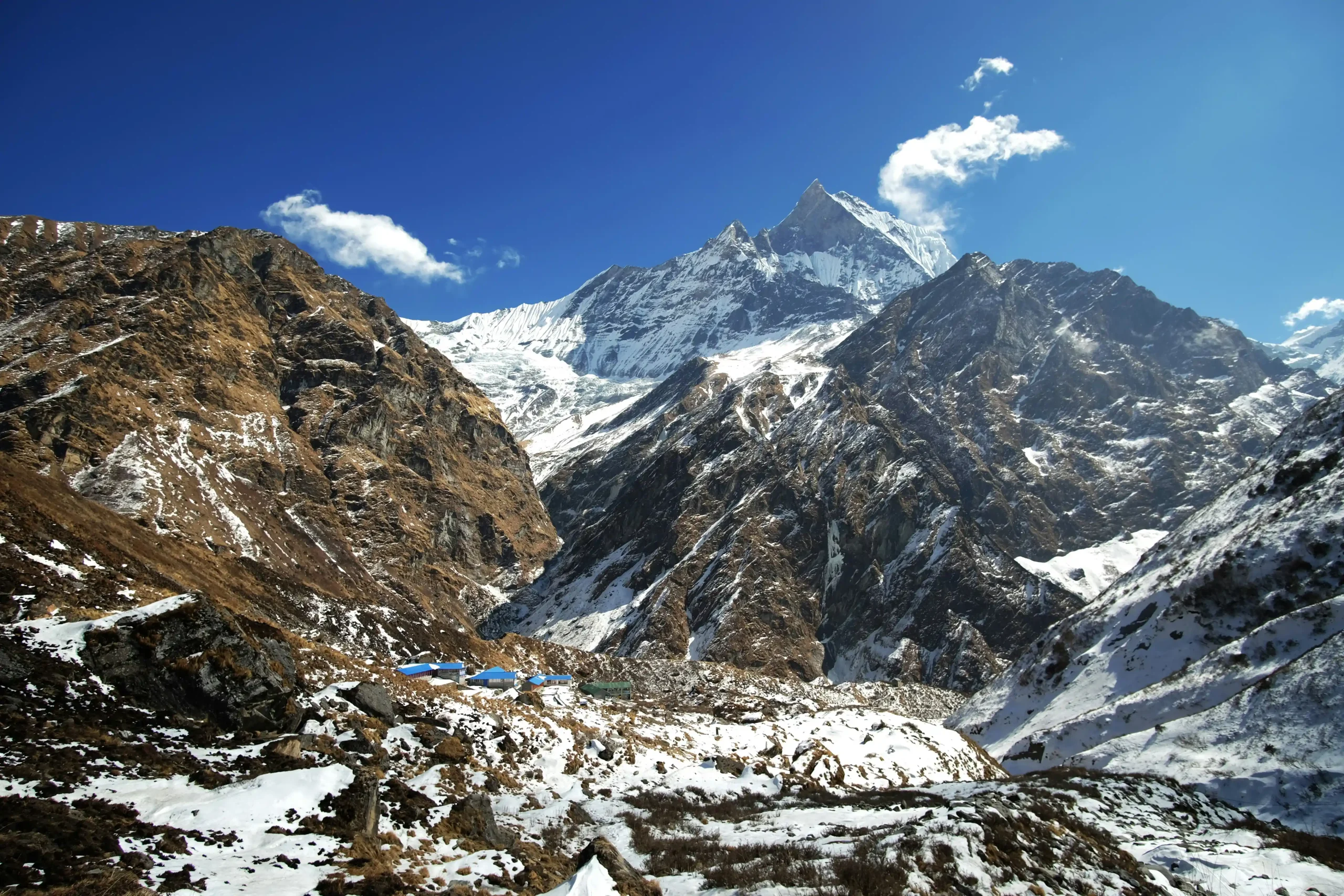
Arriving at Machhapuchhre Base Camp, the valley widens dramatically, revealing breathtaking views of Machhapuchhre (Fishtail) and surrounding peaks. The setting feels powerful and serene, offering a strong sense of achievement.
Walking time: Approx. 6–7 hours
Overnight: Teahouse at Machhapuchhre Base Camp
-
Trek to Annapurna Base Camp and Return to Dovan
Day
07
(Approx. Elevation: 4,130m)
An early start brings one of the most profound days of the journey. The trail leads into the Annapurna Base Camp – a vast natural amphitheatre surrounded by towering Himalayan giants, including Annapurna I, Annapurna South, Hiunchuli, and Machhapuchhre.
After spending time at Annapurna Base Camp, absorbing the scale and silence of the mountains, begin the descent back through the valley to the Dovan. Returning to lower altitude provides comfort and restful sleep.
Walking time: Approx. 7–8 hours
Overnight: Teahouse at Dova
-
Trek Downhill from Dovan to Chhomrong
Day
08
(Approx. Elevation: 2,170m)
Today’s descent follows familiar trails back through bamboo forests and river valleys. The warmer air and greener surroundings signal a gradual return to lower elevations.
Arriving back in Chhomrong, enjoy a relaxed afternoon with views across the valley — a comfortable and well-earned pause after reaching the high point of the trek.
Walking time: Approx. 5–6 hours
Overnight: Teahouse in Chhomrong
-
Trek from Chhomrong to Pritam Deurali (Pothana Area)
Day
09
(Approx. Elevation: 1,900m)
Leaving Chhomrong, the trail traverses forested ridges and traditional settlements, offering a quieter route away from the main sanctuary trail. The landscape becomes more pastoral, with terraced fields and distant mountain views.
Pritam Deurali is a peaceful hilltop area near Pothana, providing a calm and scenic setting for your final night on the trail.
Walking time: Approx. 5–6 hours
Overnight: Teahouse in Pritam Deurali
-
Trek from Pritam Deurali to Phedi. Drive to Pokhara
Day
10
A short downhill walk through forest paths and stone steps leads to Phedi, marking the end of your trek. Enjoy final views of the hills and valleys before meeting your vehicle.
Drive back to Pokhara, where the comforts of the city and lakeside relaxation await.
Overnight: Pokhara
ABC Trek Price details
Price includes
- Accommodation as per above
- Full Board Meal during trekking
- All transfers as per the itinerary
- Basic English Speaking Trek Guide throughout the trek
- 1 x Porter per 2 person during trekking (12-15 kg per person)
- Annapurna Trekking Permit
Price excludes
- Visa Fees of Nepal (On arrival visa given)
- Insurance of any kind / medical expenses
- Beverages (alcoholic /non–alcoholic)
- Expenses of personal nature (like tipping, laundry, Telephone/fax calls, camera/video fees, shopping, etc)
- Airfare & airport taxes flight from Kathmandu to Pokhara & V.V. mentioned in Supplement
- Lunch and Dinner
- Services not mentioned in inclusions.
ABC Trek Map
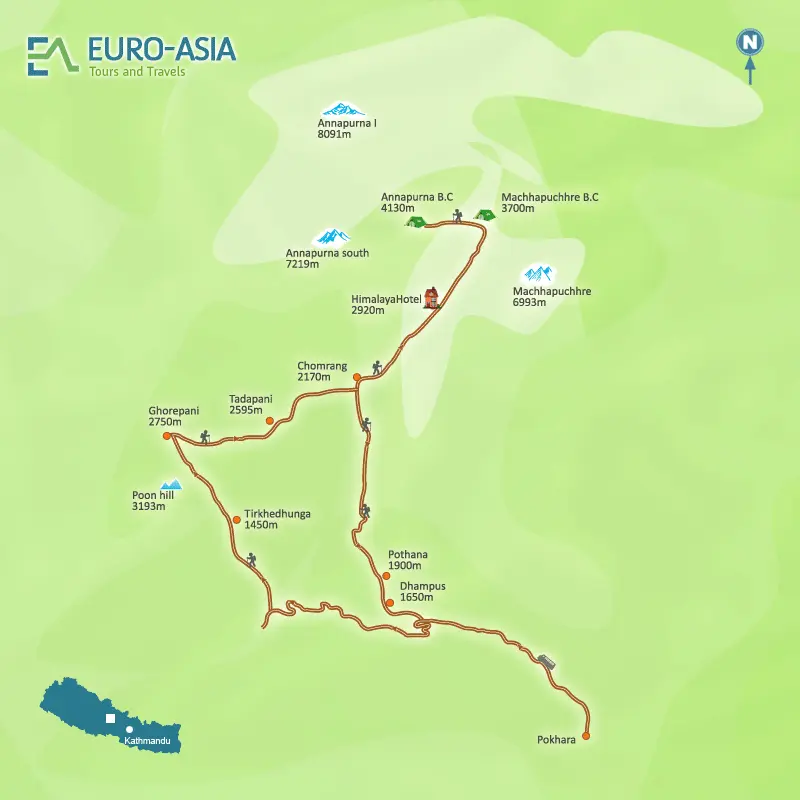
ABC Trek Information
Best Time to Trek Annapurna Base Camp
- Spring (March to May) – The Season of Color: Spring is magical in the Annapurna foothills. The forests come alive with blooming rhododendrons (Nepal’s national flower) in shades of red, pink, and white. Temperatures are mild, making the walking pleasant, though afternoons can see some cloud buildup.
Spring is ideal for:
- Trekkers seeking clear mountain views
- Nature lovers and landscape photographers
- Experienced trekkers looking for stable conditions
- Autumn (September to November) – The Season of Clarity: Post-monsoon, the dust is washed away, leaving the clearest skies of the year. The mountain views are razor-sharp, and the weather is generally stable. This is the most popular season, so the trails are vibrant with fellow trekkers.
This season is ideal for:
- Trekkers seeking optimal weather and safety
- Those interested in long-distance Himalayan views
- Adventurers prioritizing reliability and trail conditions
Packing List for Annapurna Base Camp Trek
- Head & Face
- Sun Hat / Cap: Essential for the lower altitudes to protect your face and neck from the strong Himalayan sun.
- Warm Beanie / Woolen Hat: You lose a significant amount of heat through your head. A warm beanie is mandatory for mornings, evenings, and the higher altitude days (specifically from Dovan onwards).
- Buff / Neck Gaiter: A versatile piece of gear. It protects your neck from sunburn, keeps you warm in the cold wind, and can be pulled up over your nose and mouth to prevent “Khumbu Cough” (dry throat caused by breathing cold, dry air).
- Sunglasses: High-quality UV-protection sunglasses are non-negotiable. At higher altitudes, the UV intensity is much stronger, and snow reflection at Base Camp can cause snow blindness.
- Upper Body (Torso)
- Base Layer (2-3 pairs): Moisture-wicking thermal tops (Merino wool or synthetic). These sit next to your skin and keep you dry.
- Trekking Shirts (2-3 pairs): Lightweight, quick-drying short and long-sleeved shirts for hiking in the lower, warmer elevations.
- Mid-Layer (Insulation): A medium-weight fleece jacket or a soft-shell jacket. This traps body heat and is breathable enough to hike in when it gets chilly.
- Outer Shell (Wind/Rain Proof): A high-quality waterproof and windproof hard-shell jacket (Gore-Tex or similar). This protects you from rain, snow, and biting winds.
- Down Jacket (Puffer): A high-quality down jacket rated to at least -10°C to -15°C. You likely won’t hike in this, but it is essential for staying warm in the unheated teahouses during the evenings and mornings.
- Lower Body (Legs)
- Trekking Pants (2 pairs): Lightweight, quick-drying hiking trousers. Convertible pants (zip-off) are excellent for the changing temperatures of the lower valleys.
- Thermal Trousers / Leggings: To be worn underneath your trekking pants on the coldest days (Machhapuchhre Base Camp to ABC) or used as warm pajamas at night.
- Waterproof Over-Trousers: Lightweight rain pants to pull over your trekking trousers in case of sudden downpours or snow.
- Casual Track Pants / Fleece Pants: A comfortable, clean pair to change into at the teahouse after a long day of hiking.
- Footwear
- Hiking Boots: Sturdy, waterproof boots with good ankle support are highly recommended. Ensure they are well broken-in before you arrive to prevent blisters.
- Camp Shoes / Sandals: Lightweight running shoes or Crocs/sandals to wear in the teahouses in the evening. It is a relief to take off your heavy boots at the end of the day.
- Trekking Socks (4-5 pairs): Merino wool hiking socks are best for temperature regulation and odor control. Bring a mix of thin liners and thicker summit socks.
- Hands
- Inner Gloves: Thin, lightweight liner gloves (fleece or silk) for dexterity and mild cold.
- Outer Gloves / Mittens: Warm, waterproof, and windproof gloves for the final push to Base Camp and cold mornings.
- Carrying & Sleeping
- Daypack (30L – 40L): You will carry this yourself. It should be large enough to hold your water bottles, rain jacket, down jacket, camera, snacks, and valuables. Look for one with a comfortable hip belt.
- Duffle Bag (Provided by Porter): We provide a duffle bag for your main gear (up to 12.5kg), which will be carried by the porters.
- Sleeping Bag: Rated to -10°C to -15°C. Teahouse bedrooms are not heated. (Note: Sleeping bags can often be rented in Kathmandu or Pokhara if you do not wish to buy one).
- Sleeping Bag Liner: A silk or cotton liner adds warmth and hygiene.
First Aid Kits & Medications
(Note: Our guides carry a main medical kit. However, a personal kit is strongly recommended for quick access.)
- Blister plasters (Compeed or moleskin for hot spots).
- Sunscreen (high SPF) (UV exposure increases with altitude).
- Lip balm with SPF (Prevents windburn and cracking in cold air).
- Pain relievers (Paracetamol or Ibuprofen for muscle soreness or headaches).
- Personal prescription medications (Carry enough for the entire trek duration).
- Altitude medication (if prescribed) (Consult your doctor before use).
Other Essentials
- Passport (Required for ACAP and TIMS permit checkpoints).
- Passport-sized photos (2 copies) (For permits or SIM cards, if needed).
- Reusable water bottle (Nalgene or metal; reducing single-use plastic is encouraged).
- Water purification tablets or filtration system (LifeStraw or similar).
- Toiletries (Toothbrush, toothpaste, biodegradable soap, hand sanitizer).
- Quick-dry towel (Teahouses usually do not provide towels).
- Toilet paper (2 rolls) (Remove cardboard cores to save space).
- Wet wipes (Very useful for “dry baths” on colder days).
- Trekking poles (Highly recommended for steep ascents and long descents).
- Cash (Nepali Rupees) (Small denominations for snacks, Wi-Fi, charging, and hot showers; no ATMs on the trail).
Optional Items
- Power bank (Charging is limited and often paid at higher teahouses).
- Camera or smartphone (For capturing close-up views of Machapuchare and Annapurna).
- Book, journal, or playing cards (Evenings can be quiet and reflective).
- Earplugs (Teahouse walls are thin; helpful for light sleepers).
- Energy snacks (Chocolate bars, nuts, protein bars for quick energy boosts).
Important Note: You can buy or rent most trekking gear in Thamel (Kathmandu) or Lakeside (Pokhara) before the trek. Our team and guides are happy to assist you in selecting appropriate, good-quality gear at fair prices, especially if this is your first Himalayan trek.
Cultural Encounters & Local Life
The Annapurna Base Camp trek offers a deep dive into the heart of Gurung culture. Unlike the remote North face, this route passes through thriving villages that have hosted mountaineers for decades, yet still retain their authentic rhythm.
- The Gurung Heartland: You will trek through major settlements like Ghandruk, Chhomrong, and Ghorepani. These villages are famous for their slate-roofed stone houses, neatly terraced fields, and rich military history—many of the famous Gorkha soldiers hail from this region.
- Daily Rhythms: As you walk, you will witness daily mountain life up close—mule trains transporting rice and supplies, farmers plowing fields with oxen, and families weaving baskets or drying corn in their courtyards.
- Teahouse Culture: The “teahouse” is the social hub of the trek. In the evenings, the dining hall becomes a gathering place where travelers from around the world mix with local guides and porters. It is a space for storytelling, card games, and cultural exchange.
- Spiritual Symbols: The trail is dotted with chortens (stone shrines), fluttering prayer flags on high passes, and mane walls carved with Buddhist mantras. The blend of Hinduism (in lower valleys) and Buddhism (higher up) reflects the spiritual harmony of Nepal.
Flora, Fauna & Natural Beauty
The Annapurna Sanctuary trek is an ecological journey that takes you through almost every vegetation zone Nepal has to offer in just a few days.
- The Rhododendron Forests: Between Tikhedhunga, Ghorepani, and Tadapani, you walk through one of the largest rhododendron forests in the world. In spring (March-April), these hillsides explode into red, pink, and white blooms—a truly magical sight.
- Bamboo & Alpine Zones: As you enter the narrow Modi Khola gorge past Chhomrong, the landscape shifts to dense bamboo thickets (home to the Red Panda) and cool, damp fern forests. Higher up near Machhapuchhre Base Camp, the trees vanish, replaced by alpine scrub, juniper, and raw glacial moraines.
- Wildlife: While shy, wildlife is present. Keep an eye out for:
- Himalayan Thar (Wild Goat): Often seen on cliffs near MBC.
- Langur Monkeys: Frequently spotted in the forests below Chhomrong.
- Danphe (Himalayan Monal): Nepal’s colorful pheasant.
- Musk Deer: Elusive but present in the birch forests.
Accommodation & Comfort Level
City Accommodation In Kathmandu and Pokhara, you stay in well-located, comfortable hotels (3-star standard or higher upon request) with modern amenities, attached bathrooms, and Wi-Fi, ensuring you start and end your trek well-rested.
Teahouse Accommodation (During the Trek) Unlike the camping-style North Base Camp trek, this route is a classic “Teahouse Trek.”
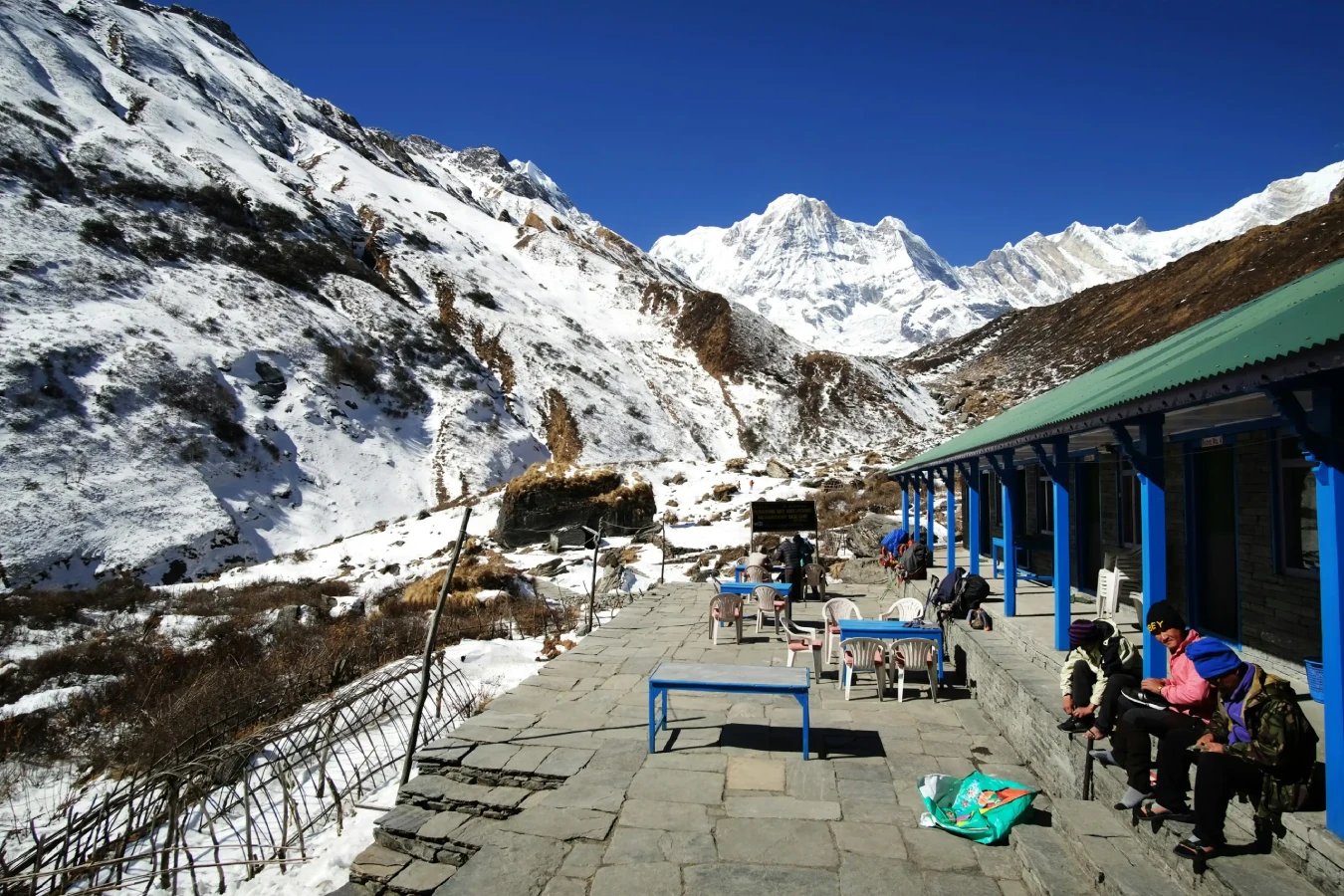
- The Rooms: You will stay in locally owned mountain lodges. Rooms are simple, usually with two twin beds, foam mattresses, pillows, and warm blankets. (We still recommend bringing your own sleeping bag for hygiene and extra warmth).
- Facilities: Most teahouses in the lower regions (Ghorepani, Chhomrong) offer attached bathrooms and hot showers (often gas or solar). As you go higher (Dovan, MBC, ABC), facilities become more basic with shared squat toilets and bucket showers.
- Charging & Wi-Fi: Electricity is available in all villages for charging phones/cameras (usually for a small fee). Wi-Fi is available throughout the trek, even at Base Camp (Everest Link or local service), though speeds can be variable.
Meals During the Trek
The “Teahouse Menu” is surprisingly extensive and caters to western palates while offering local staples.
- Dal Bhat Power: The ultimate trekking meal. A platter of steamed rice, lentil soup, vegetable curry, spinach, and pickles. It is fresh, balanced, and the only meal where “refills” are free.
- Breakfast: Porridge (oats/tsampa), eggs (omelet/boiled/scrambled), toast, pancakes, and Tibetan bread.
- Lunch/Dinner: Pasta, noodles (Chowmein), momos (dumplings), fried rice, pizza, and spring rolls.
- Drinks: Hot lemon, ginger honey tea, masala tea, and coffee are available everywhere to keep you warm and hydrated.
Food Safety Tips
- Water purification methods neutralize harmful bacteria effectively. Chlorine tablets, iodine drops, or filtration systems like LifeStraw make tap water safe for consumption. Treating your own water prevents waterborne illnesses and reduces plastic waste in the conservation area.
- Vegetarian meals reduce the risk of food poisoning. Meat preservation becomes difficult at high altitudes due to unreliable refrigeration in remote teahouses. Choosing lentils, rice, and vegetables ensures you eat fresh, locally sourced ingredients daily.
- Freshly cooked dishes guarantee higher hygiene standards. Ordering popular items like Dal Bhat or noodle soup ensures high turnover and fresh preparation. Avoid pre-cooked foods or raw salads that may have been exposed to unwashed surfaces.
- Hand sanitizer eliminates germs before every meal. Washing hands with soap is often difficult due to cold water temperatures. Carrying a small bottle of alcohol-based sanitizer ensures your hands remain clean despite limited washing facilities.
Acclimatization During the Annapurna Base Camp Trek
Reaching 4,130m is a significant altitude achievement, but the profile of this trek is safer than many others because you do not spend long durations at high sleeping altitudes. However, caution is still required.
- The “Sleep Low” Advantage: The itinerary naturally helps you acclimatize. For example, after reaching Ghorepani (2,874m), you drop down to the river before climbing again. This “sawtooth” profile helps your body adjust.
- Critical Zone (Day 6-7): The jump from Dovan (2,600m) to MBC (3,700m) is the biggest altitude gain. We take this day slowly.
- Hydration: Cold air suppresses thirst, but you lose moisture rapidly through breathing. Aim for 3–4 liters of fluid daily (water, soup, tea). Clear urine is the best indicator of good hydration.
- Guide Monitoring: Your guide is trained to recognize AMS (Acute Mountain Sickness). They will monitor your pace, appetite, and blood oxygen levels.
- Listen to Your Body: Mild headaches are common, but if you feel dizzy, nauseous, or have a headache that doesn’t go away with water and paracetamol, tell your guide immediately. The cure is simple: descend.
- Diamox: Consult your doctor about bringing Acetazolamide (Diamox). It helps accelerate acclimatization but is not a substitute for a slow ascent.
Responsible & Sustainable Trekking Practices
At Euro Asia Tours & Travels, we are committed to protecting the Himalayas and supporting local communities. By choosing this trek, you are actively contributing to sustainable tourism in Nepal.
Our responsible trekking approach includes:
- Employing local guides and porters: We prioritize hiring staff from nearby communities, ensuring that economic benefits stay local.
- Fair wages and ethical working conditions: All team members receive appropriate pay, rest periods, and safe working conditions.
- Supporting community-owned teahouses: We encourage stays at locally run lodges to promote community development and authentic experiences.
- Encouraging minimal plastic use: We reduce single-use plastics on treks and support initiatives for waste management.
- Promoting cultural respect: Trekkers are guided on local customs, traditions, and appropriate behavior while visiting villages, monasteries, and sacred sites.
By adhering to these practices, every trekker contributes to preserving the natural and cultural heritage of the Annapurna region.
Eco-Friendly Trekking Tips
Small changes in daily trekking habits make a big difference in protecting fragile mountain ecosystems. Participants are encouraged to:
- Carry refillable water bottles to reduce single-use plastic.
- Avoid single-use plastics like packaging and disposable utensils.
- Use eco-friendly toiletries such as biodegradable soap, shampoo, and toothpaste.
- Respect wildlife and natural habitats by observing from a distance and not disturbing animals or plants.
- Dispose of waste responsibly, either in designated bins or by carrying it back to larger settlements.
- Stay on marked trails to prevent erosion and protect fragile vegetation.
Simple, conscious actions help maintain the pristine beauty of the Himalayas for future generations of trekkers.
Visa Information for Nepal
Nepal offers Visa on Arrival for most nationalities at Tribhuvan International Airport in Kathmandu, making travel planning convenient and straightforward.
Requirements for Visa on Arrival:
- Passport valid for at least 6 months from the date of entry.
- Passport-size photos (usually 2–3 copies).
- Visa fee, payable in USD or other major currencies (USD recommended for convenience).
- Completed arrival forms, provided at the airport.
Our team provides pre-arrival guidance to ensure a smooth visa process. We advise on documentation, fees, and travel tips so you can start your trek without delays or complications.
Permits Required for Annapurna Base Camp Trek
- Annapurna Conservation Area Project (ACAP) permit: Allows entry into the protected Annapurna region. This essential document grants access to the sanctuary, which spans 7,629 sq. km of diverse flora and fauna. The permit fee directly supports local conservation initiatives and sustainable development projects in surrounding communities.
- Trekkers’ Information Management System (TIMS) card; Tracks trekker movements to ensure safety. This registration links you to a central database used by authorities to monitor trekkers’ activities. In case of emergencies or natural hazards, rescue teams rely on TIMS data to locate trekkers quickly.
Travel Insurance Requirement
Coverage Requirements
- Must include emergency helicopter rescue and evacuation up to 4,000 meters.
- Himal reaches 4,500 meters—high-altitude coverage is essential.
- Helicopter evacuation costs can exceed USD 3,000.
Medical Coverage
- Pays for injuries and altitude-related illnesses (e.g., sprains, AMS).
- Hospitalization may be required in Pokhara or Kathmandu.
Trip Cancellation Insurance
- Protects against sudden delays, weather disruptions, or flight cancellations.
- Recovers non-refundable costs for missed flights or trekking days.
Policy Carry Requirement
- Always carry a printed copy of your insurance policy.
- Proof of coverage accelerates emergency response.
Tipping Guides & Porters on the Trek
- Purpose
- Voluntary gesture of gratitude for guides and porters.
- Important supplement to their seasonal income.
- Recommended Rates
- Guides: USD 10–15 per day (approx. 1,300–2,000 NPR).
- Porters: USD 8–10 per day (approx. 1,000–1,300 NPR).
- Group Contribution: Pool tips to ensure fair distribution, ~10–15% of total trek cost.
- Distribution Tips
- Hand tips directly to each team member.
- Use small envelopes for a professional and respectful gesture.
- Timing & Currency
- Best given during the final dinner of the trek.
- Nepalese Rupees (NPR) preferred; USD accepted but less practical in rural areas.
- Ensure foreign currency notes are clean and intact.
Annapurna Base Camp Trek for Different Age Groups
The Annapurna Base Camp (ABC) trek is one of the most accessible high-altitude adventures in the Himalayas. Unlike remote expedition-style treks, this route is supported by a well-established network of teahouses, making it suitable for a wider range of travelers. While age is not a barrier, the famous stone staircases of the Annapurna region do require specific physical considerations for each demographic.
Younger Adults (ages 20–35)
- The Experience: This age group often thrives on the social and energetic atmosphere of the ABC trail. The route is a melting pot of global travelers, offering a vibrant mix of cultural exchange and adventure.
- Physical Adaptation: Younger trekkers typically recover quickly from the daily physical exertion and adapt well to the “Nepali flat” (constant up and down) terrain.
- Highlights: The iconic sunrise at Poon Hill and the “Instagram-worthy” amphitheater of the Sanctuary are major draws. Evenings in the teahouses are often spent playing cards, sharing stories with other trekkers, and enjoying the camaraderie of the communal dining halls.
- Key Strength: High energy levels help in tackling the steep ascents to Ghorepani and Chhomrong with relative ease.
Middle-Aged Participants (ages 36–50)
- The Experience: This demographic often views the trek as a valuable disconnect from professional life and a chance to reconnect with nature. They tend to appreciate the balance of physical challenge and the comfort provided by teahouse accommodation (hot meals and beds).
- Pacing & Strategy: Mental resilience is a key strength for this group. While they may not sprint up the hills, their steady, consistent pacing often leads to better acclimatization and energy conservation than younger, faster trekkers.
- Highlights: The cultural immersion—visiting Gurung museums, interacting with local lodge owners, and understanding the history of the region—is often as rewarding as the mountain views.
- Advice: Stretching routines in the evening are vital to prevent muscle stiffness, ensuring you wake up fresh for the next day’s walk.
Active Seniors (ages 50+)
- The Experience: We frequently host trekkers in their 60s and 70s who successfully complete this trek. Success in this age group depends on cardiovascular health, prior hiking experience, and joint mobility.
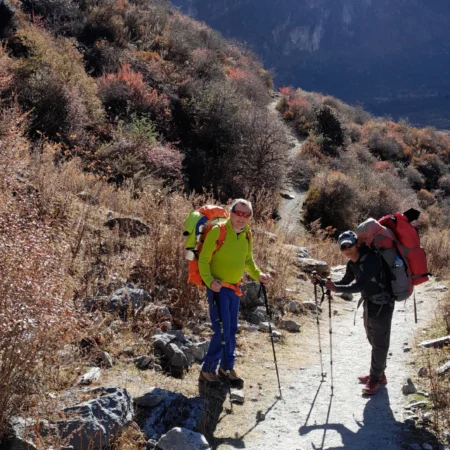
- The Challenge (Knees): The Annapurna region is famous for its thousands of stone steps. For seniors, the descent is often harder than the ascent. We strongly recommend the use of trekking poles to reduce impact on knees and hips by up to 25%.
- Support System: Hiring a porter is non-negotiable for this demographic to ensure safety and enjoyment. Carrying a light daypack allows you to focus on your footing and breathing.
- Pacing: “Slow and steady” is the golden rule. Our guides are trained to adjust the pace, ensuring plenty of time for hydration and photos, eliminating the pressure to “keep up.”
Advice for All Ages
- Medical Check-up: A pre-trip visit to your doctor is recommended to check for cardiovascular health, especially given the altitude (4,130m).
- Joint Care: Due to the steep stone steps, bringing high-quality knee braces or supports is wise if you have any history of joint issues.
- Hydration: The rule of thumb is 3–4 liters of water daily. Staying hydrated oxygenates your blood and significantly helps with altitude adaptation.
- Porter Support: regardless of age, having a porter carry your main gear (up to 12kg) transforms the trek from a grueling haul into an enjoyable journey.
Trek Difficulty, Fitness & Preparation
Difficulty Level: Moderate
The Annapurna Base Camp trek is graded as Moderate. It is achievable for anyone with a good level of fitness and determination. However, do not underestimate the terrain; while you don’t need technical climbing skills, the physical demand is sustained over 10 days.
- Compared to other treks: It is more physically demanding than the Poon Hill trek due to higher altitude and longer duration, but generally considered more accessible than the Manaslu Circuit or Everest Three Passes because of the lower maximum altitude and better infrastructure.
- The “Staircase” Factor: The defining challenge of this trek is the stone steps. You will encounter thousands of them—climbing up to Ulleri, descending to the river at Chhomrong, and climbing back up to Sinuwa.
Daily Walking
- Duration: Expect to walk 5 to 7 hours per day on average.
- The Rhythm: Days usually start around 7:30 AM and finish by 3:00 PM or 4:00 PM. This leaves ample time for rest and recovery in the late afternoon.
- Summit Day: The hike to Base Camp (Day 7) is exciting but involves gaining altitude. We take this slowly to prevent Acute Mountain Sickness (AMS).
Terrain & Trail Conditions
- Lower Trails: Well-maintained stone paths passing through terraced rice fields and humid subtropical forests.
- Forests: Soft soil trails through dense oak and rhododendron forests (can be slippery if it rains).
- The Sanctuary: As you climb past Dovan, the trail becomes rockier and the vegetation disappears. The final approach to ABC is on a gradual incline through an alpine glacial moraine surrounded by snow and ice.
- Bridges: You will cross several long steel suspension bridges that hang high above roaring rivers.
Rest Days & Altitude Adjustment
- Natural Acclimatization: The itinerary is designed so that you trek “high” during the day but sleep “low” on several nights (like the dip into the Chhomrong valley). This naturally helps your body adjust.
- Safe Ascent Profile: We adhere to safety guidelines by capping the altitude gain on critical days (specifically from Dovan to MBC) to ensure you remain healthy.
- Guide Monitoring: Your guide will check your blood oxygen levels and heart rate daily to monitor your response to the thin air.
Fitness Preparation
You do not need to be an athlete, but you should be “hiking fit.” We recommend starting a training routine 6–8 weeks before your departure.
Suggested Training Regime:
- Stair Climbing (Crucial): This is the best specific training for Annapurna. Find a tall building, a stadium, or a hill with steps. Practice climbing up and down to condition your quadriceps and calves.
- Cardio Endurance: Engage in running, swimming, cycling, or brisk walking 3-4 times a week to build your heart and lung capacity.
- Leg Strength: Squats, lunges, and calf raises will help prepare your legs for the constant elevation changes.
- Practice Hikes: If possible, do a few weekend hikes with the boots and daypack you intend to use. This helps break in your boots and gets your shoulders used to the weight of the bag.
- Mental Prep: Prepare yourself for basic living conditions (squat toilets in some places, simple rooms) and the physical fatigue of consecutive walking days. A positive attitude is your best gear!
ABC Trek Reviews





Annapurna Base Camp Trek – 10 Days
Related trips
Other similar you may be interested in
Duration: 08 Days
Max altitude: 4,200 m (Annapurna North Base Camp)
Annapurna North Base Camp Trek – 08 Days
Duration: 12 Days
Max altitude: 4,500 m (Mardi Himal Base Camp)